THE ADVENTURE COLLECTIVE® · Independent discovery and booking for outdoor travel

Glide across As Conchas in a quiet electric boat to see half-submerged Roman ruins, hear local legends, and learn how this transboundary landscape links Galicia with northern Portugal. A 75-minute guided outing perfect for birdwatching and low-impact exploration.
Glide across As Conchas in a quiet electric boat to see half-submerged Roman ruins, hear local legends, and learn how this transboundary landscape links Galicia with northern Portugal. A 75-minute guided outing perfect for birdwatching and low-impact exploration.
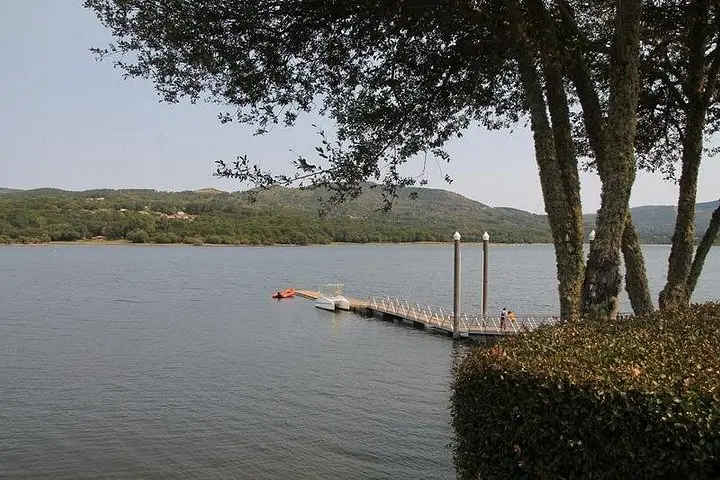
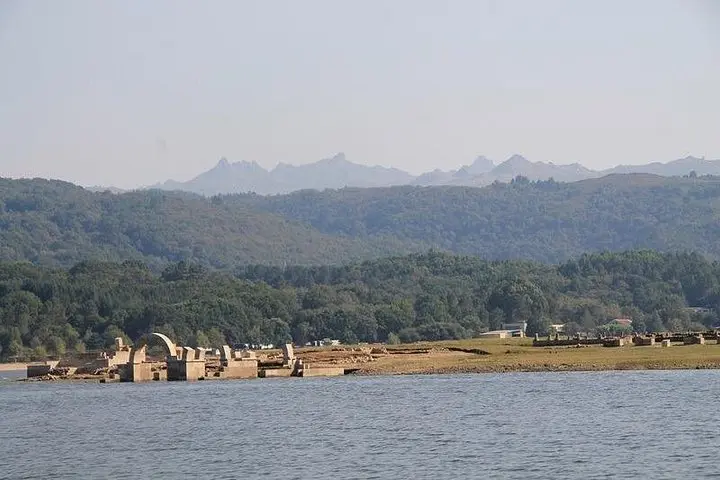
Dawn breaks over As Conchas and the reservoir lies almost speechless—glass-dark water punctured by the stone ribs of half-submerged bridges and the square outline of Aquis Querquennis peeking where season and level allow. The five-seat electric boat slips forward in near silence; the motor hums, and the guide’s voice threads history into the bankside scrub as vultures wheel above the granite ridges.
Verified experiences and guided adventures in the surrounding area.
Operated by Troulanda · Lobios, Ourense
Dawn breaks over As Conchas and the reservoir lies almost speechless—glass-dark water punctured by the stone ribs of half-submerged bridges and the square outline of Aquis Querquennis peeking where season and level allow. The five-seat electric boat slips forward in near silence; the motor hums, and the guide’s voice threads history into the bankside scrub as vultures wheel above the granite ridges.
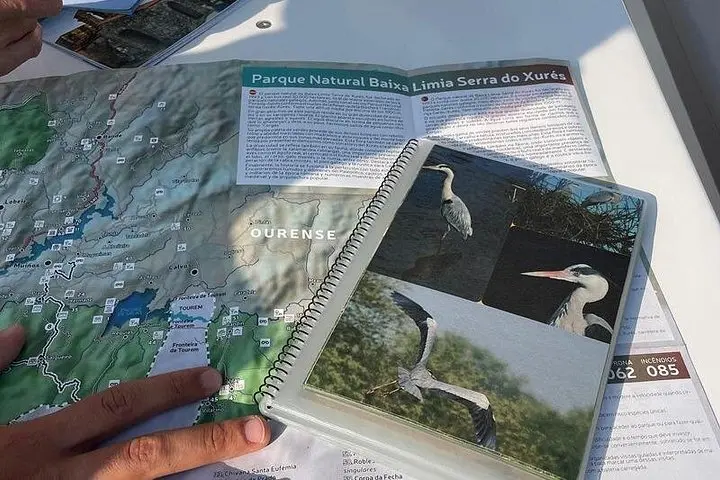
This corner of the Baixa Limia - Serra do Xurés Natural Park sits on a porous frontier of Galicia and Portugal, carved by ancient rivers and human choices. Geology here is rugged—metamorphic schists and granite outcrops that channel crisp streams into the slow, dark basin created by the As Conchas dam. Centuries of human occupation—from Castro settlements to Roman outposts like Aquis Querquennis—lie partially underwater; when levels drop they reappear as weathered stones and buried roads.
Culturally the area is sparse and resilient: villages moved or abandoned when the reservoir rose, leaving stories, thermal springs, and trail routes to explore on land. Expect birdlife at the treeline and occasional mountain goats on rocky terraces; the guide will point out how upstream pollution and cross-border water management affect this fragile chain of life.
Practical note: trips run about 75 minutes from the Muíños pier, with small-group boarding and an expert skipper. Dress in windproof layers, bring binoculars and a waterproof camera, and plan for variable weather—spring and autumn bring the clearest archaeological sightings while summer offers longer daylight for photography.
The experience lasts about 75 minutes from boarding at the Muíños pier and returns to the same point.
Yes—small, stable five-seat electric boats are used and the operator notes the tour is suitable for all physical fitness levels, though mobility limitations should be declared when booking.
Guides approach Aquis Querquennis when water levels allow; visibility depends on reservoir levels and season, with spring and fall often offering the best sightlines.
The standard tour focuses on guided interpretation and transport; bring water and snacks if needed, and check booking details for any inclusions.
Troulanda operates guided outdoor trips and adventures with an emphasis on safety, stewardship, and memorable experiences.
Dawn breaks over As Conchas and the reservoir lies almost speechless—glass-dark water punctured by the stone ribs of half-submerged bridges and the square outline of Aquis Querquennis peeking where season and level allow. The five-seat electric boat slips forward in near silence; the motor hums, and the guide’s voice threads history into the bankside scrub as vultures wheel above the granite ridges.
Dawn breaks over As Conchas and the reservoir lies almost speechless—glass-dark water punctured by the stone ribs of half-submerged bridges and the square outline of Aquis Querquennis peeking where season and level allow. The five-seat electric boat slips forward in near silence; the motor hums, and the guide’s voice threads history into the bankside scrub as vultures wheel above the granite ridges.
This corner of the Baixa Limia - Serra do Xurés Natural Park sits on a porous frontier of Galicia and Portugal, carved by ancient rivers and human choices. Geology here is rugged—metamorphic schists and granite outcrops that channel crisp streams into the slow, dark basin created by the As Conchas dam. Centuries of human occupation—from Castro settlements to Roman outposts like Aquis Querquennis—lie partially underwater; when levels drop they reappear as weathered stones and buried roads.
Culturally the area is sparse and resilient: villages moved or abandoned when the reservoir rose, leaving stories, thermal springs, and trail routes to explore on land. Expect birdlife at the treeline and occasional mountain goats on rocky terraces; the guide will point out how upstream pollution and cross-border water management affect this fragile chain of life.
Practical note: trips run about 75 minutes from the Muíños pier, with small-group boarding and an expert skipper. Dress in windproof layers, bring binoculars and a waterproof camera, and plan for variable weather—spring and autumn bring the clearest archaeological sightings while summer offers longer daylight for photography.