THE ADVENTURE COLLECTIVE® · Independent discovery and booking for outdoor travel

See Barcelona by Segway: coast to Modernisme in three hours. Glide from Barceloneta beach through Parc de la Ciutadella to Passeig de Gràcia and the Olympic Port with a local guide and short photo stops.
See Barcelona by Segway: coast to Modernisme in three hours. Glide from Barceloneta beach through Parc de la Ciutadella to Passeig de Gràcia and the Olympic Port with a local guide and short photo stops.
The tour begins where the Mediterranean air meets Barceloneta’s sand — the sea bristles at your feet and the harbor calls you forward. After a brief safety session you glide past fishermen’s nets and modern sculptures, Segway wheels humming as the city opens up: Parc de la Ciutadella’s leafy alleys, the column of Columbus pointing seaward, and then the wide, ordered sweep of Passeig de Gràcia where Casa Batlló and La Pedrera rise with their curved facades.
Verified experiences and guided adventures in the surrounding area.
Operated by Robotcity · Barcelona, Catalonia
The tour begins where the Mediterranean air meets Barceloneta’s sand — the sea bristles at your feet and the harbor calls you forward. After a brief safety session you glide past fishermen’s nets and modern sculptures, Segway wheels humming as the city opens up: Parc de la Ciutadella’s leafy alleys, the column of Columbus pointing seaward, and then the wide, ordered sweep of Passeig de Gràcia where Casa Batlló and La Pedrera rise with their curved facades.
Barcelona’s streets are a study in layered history: Roman grid bones meet Cerdà’s 19th-century expansion and Antoni Gaudí’s organic Modernisme. The Olympic redevelopment of 1992 reshaped the waterfront — transformed warehouses and docks into the Olympic Port and the twin towers by the sea — and the Forum area marks more recent civic reinvention. Culture here is tactile: café terraces, wrought-iron balconies, and the cadence of tapas service between monuments.
Practically, expect three hours of mostly paved urban riding with short photo stops and occasional pedestrian traffic. Guides provide helmets, a training run, and local commentary; the group format covers 8–99 riders depending on booking. Minimal exertion is required but staying alert in busy junctions is essential. Bring closed-toe shoes, a refillable water bottle, sun protection, and a layered jacket for coastal winds. Morning slots are cooler and quieter; late afternoons give warm light on Gaudí’s stonework. Note weight and age restrictions apply and operators prohibit riding under the influence. For first-time riders this tour is an efficient way to cover Barcelona’s waterfront, Modernisme icons, and Olympic-era urbanism while keeping the pace light and photo-ready.
Participants must be at least 15 years old and weigh between 35 kg and 110 kg (approx. 77–242 lbs).
Yes — helmets are supplied and required during the ride; bring your own if you prefer.
No — the tour includes a short training session before you start and staff supervise until everyone is comfortable.
The tour is light activity but requires balance and standing; it’s not recommended for those with serious mobility issues or pregnancy.
Robotcity operates guided outdoor trips and adventures with an emphasis on safety, stewardship, and memorable experiences.
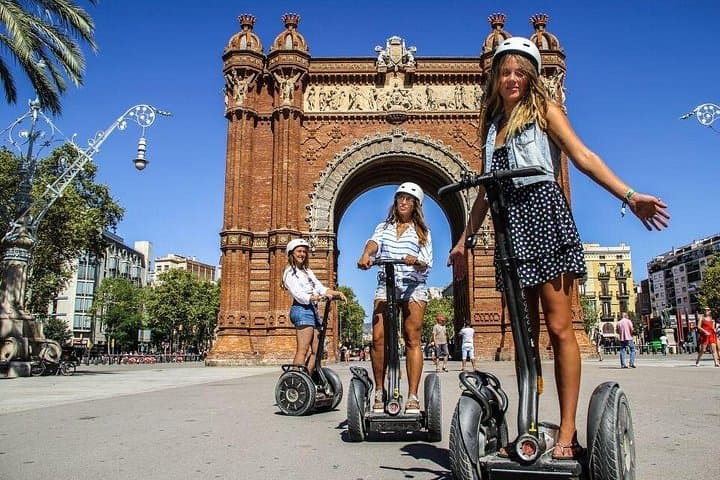
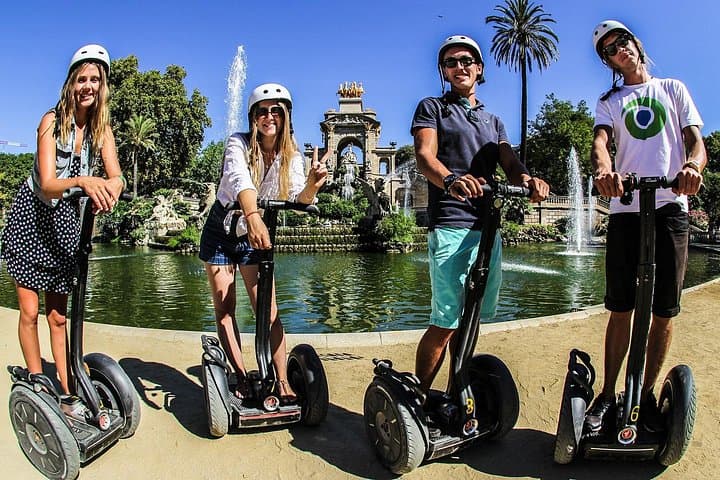
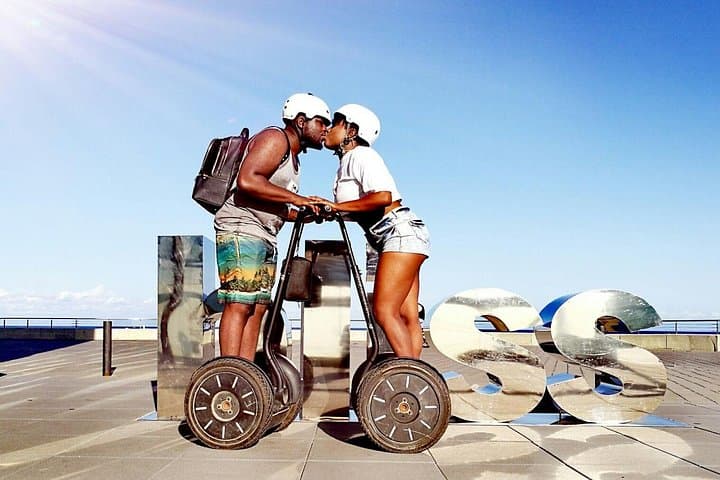
The tour begins where the Mediterranean air meets Barceloneta’s sand — the sea bristles at your feet and the harbor calls you forward. After a brief safety session you glide past fishermen’s nets and modern sculptures, Segway wheels humming as the city opens up: Parc de la Ciutadella’s leafy alleys, the column of Columbus pointing seaward, and then the wide, ordered sweep of Passeig de Gràcia where Casa Batlló and La Pedrera rise with their curved facades.
The tour begins where the Mediterranean air meets Barceloneta’s sand — the sea bristles at your feet and the harbor calls you forward. After a brief safety session you glide past fishermen’s nets and modern sculptures, Segway wheels humming as the city opens up: Parc de la Ciutadella’s leafy alleys, the column of Columbus pointing seaward, and then the wide, ordered sweep of Passeig de Gràcia where Casa Batlló and La Pedrera rise with their curved facades.
Barcelona’s streets are a study in layered history: Roman grid bones meet Cerdà’s 19th-century expansion and Antoni Gaudí’s organic Modernisme. The Olympic redevelopment of 1992 reshaped the waterfront — transformed warehouses and docks into the Olympic Port and the twin towers by the sea — and the Forum area marks more recent civic reinvention. Culture here is tactile: café terraces, wrought-iron balconies, and the cadence of tapas service between monuments.
Practically, expect three hours of mostly paved urban riding with short photo stops and occasional pedestrian traffic. Guides provide helmets, a training run, and local commentary; the group format covers 8–99 riders depending on booking. Minimal exertion is required but staying alert in busy junctions is essential. Bring closed-toe shoes, a refillable water bottle, sun protection, and a layered jacket for coastal winds. Morning slots are cooler and quieter; late afternoons give warm light on Gaudí’s stonework. Note weight and age restrictions apply and operators prohibit riding under the influence. For first-time riders this tour is an efficient way to cover Barcelona’s waterfront, Modernisme icons, and Olympic-era urbanism while keeping the pace light and photo-ready.