THE ADVENTURE COLLECTIVE® · Independent discovery and booking for outdoor travel

Glide the Seine your way with Batobus: a 24- or 48-hour hop-on hop-off service linking nine central stops from the Eiffel Tower to Hôtel de Ville. It’s an efficient, low-effort way to see Paris’ top riverfront sights with real-time schedules and multilingual audio.
Glide the Seine your way with Batobus: a 24- or 48-hour hop-on hop-off service linking nine central stops from the Eiffel Tower to Hôtel de Ville. It’s an efficient, low-effort way to see Paris’ top riverfront sights with real-time schedules and multilingual audio.
Early morning on the Seine feels like a city taking a breath: the water pulls you forward, barges and rowers yielding to the steady slide of a low-profile Batobus. From the open rear terrace the Eiffel Tower rises, the Louvre’s glass prism glints, and Notre‑Dame keeps watch as the boat hums between nine city stops.
Verified experiences and guided adventures in the surrounding area.
Operated by Batobus · Paris, Île-de-France
Early morning on the Seine feels like a city taking a breath: the water pulls you forward, barges and rowers yielding to the steady slide of a low-profile Batobus. From the open rear terrace the Eiffel Tower rises, the Louvre’s glass prism glints, and Notre‑Dame keeps watch as the boat hums between nine city stops.
The Seine has been Paris’s spine for two millennia — a trading artery, a line in countless prints and postcards, a changing geological ribbon where river terraces mark ancient flood cycles. Batobus puts that history into motion, linking quays by metro-accessible docks near landmarks such as Musée d’Orsay, Saint‑Germain‑des‑Prés and Hôtel de Ville. The route is designed for short hops: boats circulate every 25–30 minutes and passes run for 24 or 48 consecutive hours, giving a slow, flexible way to stitch together museums, cafés and riverside promenades.
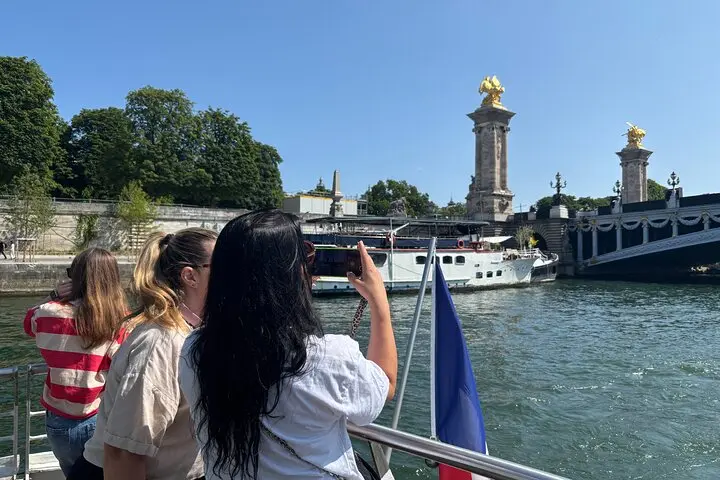
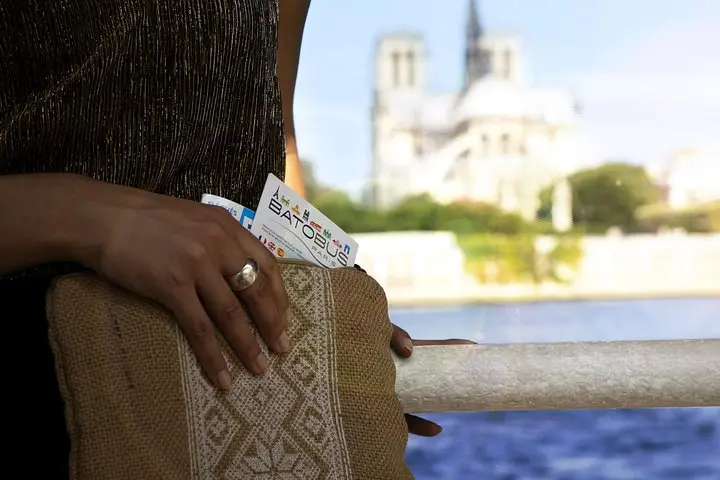
Practicalities matter: tickets are mobile-friendly, multilingual audio and a webapp provide context and real-time departures, and there’s an open back deck for photos. Expect bag checks and a luggage limit—bulky bags over roughly 16 liters may be refused. Services run seasonally with longer hours in summer; wait times increase during weekends and July 14th has an early final departure.
Plan to board at the earliest departure for a less crowded first loop, carry a light layer against river breezes, and allow extra time to connect from nearby metros. The Batobus is easy for families, accessible for strollers, and a low-effort way to turn the Seine into a moving city map.
A single loop without stops takes about 1–1.5 hours, but schedules vary; boats typically run every 25–30 minutes.
Yes — passes are valid for 24 or 48 consecutive hours starting from first boarding.
Yes — multilingual audio commentary (French, English, Spanish, German, Italian) is accessible via the Batobus webapp.
Yes — the service is stroller‑friendly and allows service animals; however, bulky luggage may be restricted.
Batobus operates guided outdoor trips and adventures with an emphasis on safety, stewardship, and memorable experiences.
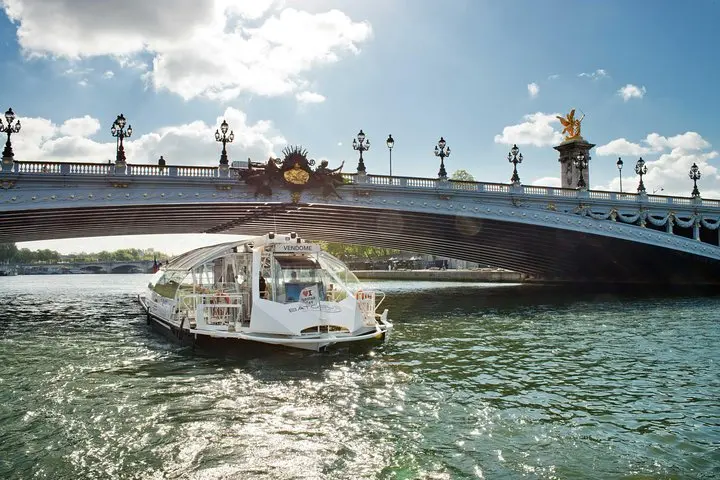
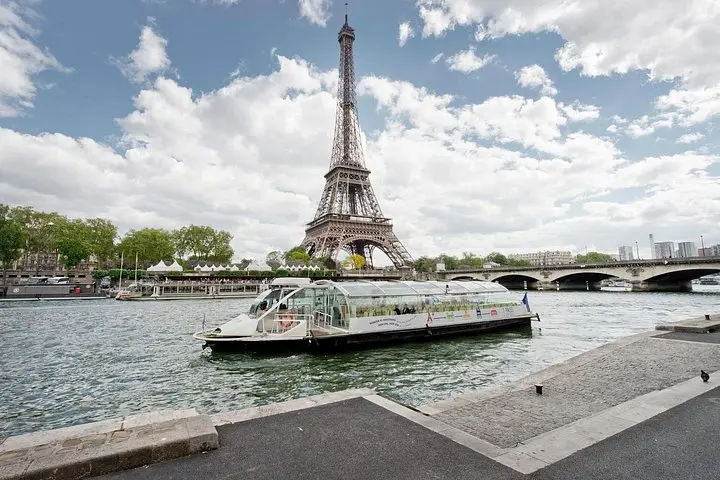
Early morning on the Seine feels like a city taking a breath: the water pulls you forward, barges and rowers yielding to the steady slide of a low-profile Batobus. From the open rear terrace the Eiffel Tower rises, the Louvre’s glass prism glints, and Notre‑Dame keeps watch as the boat hums between nine city stops.
Early morning on the Seine feels like a city taking a breath: the water pulls you forward, barges and rowers yielding to the steady slide of a low-profile Batobus. From the open rear terrace the Eiffel Tower rises, the Louvre’s glass prism glints, and Notre‑Dame keeps watch as the boat hums between nine city stops.
The Seine has been Paris’s spine for two millennia — a trading artery, a line in countless prints and postcards, a changing geological ribbon where river terraces mark ancient flood cycles. Batobus puts that history into motion, linking quays by metro-accessible docks near landmarks such as Musée d’Orsay, Saint‑Germain‑des‑Prés and Hôtel de Ville. The route is designed for short hops: boats circulate every 25–30 minutes and passes run for 24 or 48 consecutive hours, giving a slow, flexible way to stitch together museums, cafés and riverside promenades.
Practicalities matter: tickets are mobile-friendly, multilingual audio and a webapp provide context and real-time departures, and there’s an open back deck for photos. Expect bag checks and a luggage limit—bulky bags over roughly 16 liters may be refused. Services run seasonally with longer hours in summer; wait times increase during weekends and July 14th has an early final departure.
Plan to board at the earliest departure for a less crowded first loop, carry a light layer against river breezes, and allow extra time to connect from nearby metros. The Batobus is easy for families, accessible for strollers, and a low-effort way to turn the Seine into a moving city map.