THE ADVENTURE COLLECTIVE® · Independent discovery and booking for outdoor travel

Skip guided charters and pilot your own inflatable along La Gomera’s southern cliffs. No license required — explore hidden coves, snorkel over rocky reefs and set your own pace between 3 and 10 hours.
Skip guided charters and pilot your own inflatable along La Gomera’s southern cliffs. No license required — explore hidden coves, snorkel over rocky reefs and set your own pace between 3 and 10 hours.
A small harbor yawns open and the Atlantic tugs at the bow as you push off from a pebble beach on La Gomera’s sun-browned south coast. The island’s basalt cliffs lean toward the sea, and the wind writes quick lines across blue water that dares you to explore the coves only reachable by boat.
Verified experiences and guided adventures in the surrounding area.
Operated by Gomera Rent a Boat · Playa de Santiago, Santa Cruz de Tenerife
A small harbor yawns open and the Atlantic tugs at the bow as you push off from a pebble beach on La Gomera’s sun-browned south coast. The island’s basalt cliffs lean toward the sea, and the wind writes quick lines across blue water that dares you to explore the coves only reachable by boat.
Geology here is volcanic: black rock cliffs, wave-cut coves and offshore stacks formed by lava flows and later erosion. Historically La Gomera served as a provisioning stop for early transatlantic sailors and still carries a working-mariner culture — fishermen’s sheds, scattered hamlets and simple harbors where locals fix nets. From the deck you’ll see laurel forest rims high above the shore, a reminder of the island’s diverse microclimates.
This rental gives you the freedom to navigate the quieter southern coastline without a formal license; boats are offered with basic orientation and fuel is included. Expect to spend anywhere from a half-day (3 hours) to a full day (up to 10 hours) moving between isolated pebble coves, anchoring for a snorkel over rocky reefs, or pulling in for a picnic on a sheltered beach.
Practical edge: check weather and wind forecasts before launch, keep an eye on sea state and tides, and respect local anchoring restrictions to protect nearshore habitats. Bring plenty of water, reef-safe sunscreen, a charged phone or VHF, and a simple anchor — mornings and late afternoons are calmer and best for snorkeling. Leave no trace: pack out all trash and avoid tying to fragile rocks or vegetation.
No — the rental is designed for non-licensed users; the operator provides a brief orientation on controls, safety and local rules.
Yes, fuel is included in the rental; confirm estimated range with the operator and plan conservatively for return trips.
Launch points are typically small harbors or calm pebble beaches on the south coast such as Playa de Santiago; the operator will confirm exact meeting and return locations.
Yes — some nearshore areas restrict anchoring to protect habitats; follow operator guidance and local signage, and avoid sensitive reefs.
Gomera Rent a Boat operates guided outdoor trips and adventures with an emphasis on safety, stewardship, and memorable experiences.
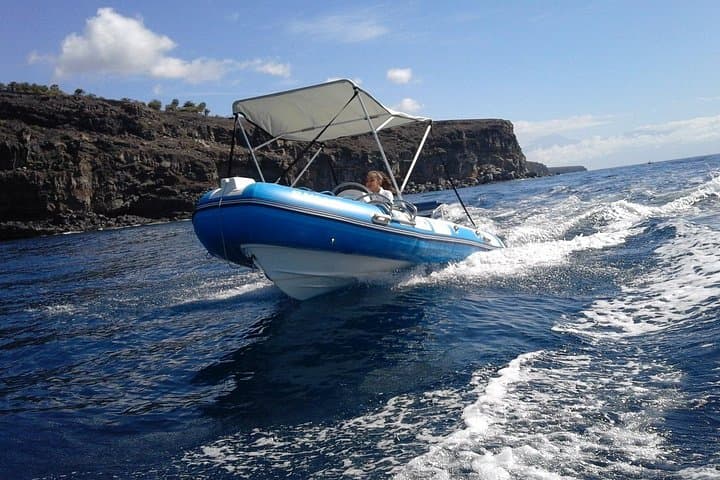


A small harbor yawns open and the Atlantic tugs at the bow as you push off from a pebble beach on La Gomera’s sun-browned south coast. The island’s basalt cliffs lean toward the sea, and the wind writes quick lines across blue water that dares you to explore the coves only reachable by boat.
A small harbor yawns open and the Atlantic tugs at the bow as you push off from a pebble beach on La Gomera’s sun-browned south coast. The island’s basalt cliffs lean toward the sea, and the wind writes quick lines across blue water that dares you to explore the coves only reachable by boat.
Geology here is volcanic: black rock cliffs, wave-cut coves and offshore stacks formed by lava flows and later erosion. Historically La Gomera served as a provisioning stop for early transatlantic sailors and still carries a working-mariner culture — fishermen’s sheds, scattered hamlets and simple harbors where locals fix nets. From the deck you’ll see laurel forest rims high above the shore, a reminder of the island’s diverse microclimates.
This rental gives you the freedom to navigate the quieter southern coastline without a formal license; boats are offered with basic orientation and fuel is included. Expect to spend anywhere from a half-day (3 hours) to a full day (up to 10 hours) moving between isolated pebble coves, anchoring for a snorkel over rocky reefs, or pulling in for a picnic on a sheltered beach.
Practical edge: check weather and wind forecasts before launch, keep an eye on sea state and tides, and respect local anchoring restrictions to protect nearshore habitats. Bring plenty of water, reef-safe sunscreen, a charged phone or VHF, and a simple anchor — mornings and late afternoons are calmer and best for snorkeling. Leave no trace: pack out all trash and avoid tying to fragile rocks or vegetation.