THE ADVENTURE COLLECTIVE® · Independent discovery and booking for outdoor travel

Pilot your own petrol‑electric rail car along Ngongotahā’s rails for a two‑hour, family‑friendly journey past 1,000‑year‑old native forest, Lake Rotorua views, and cultural sites. Comfortable seating, an audio guide, and a log‑cabin stop at Mamaku make this an easy, scenic outing.
Pilot your own petrol‑electric rail car along Ngongotahā’s rails for a two‑hour, family‑friendly journey past 1,000‑year‑old native forest, Lake Rotorua views, and cultural sites. Comfortable seating, an audio guide, and a log‑cabin stop at Mamaku make this an easy, scenic outing.
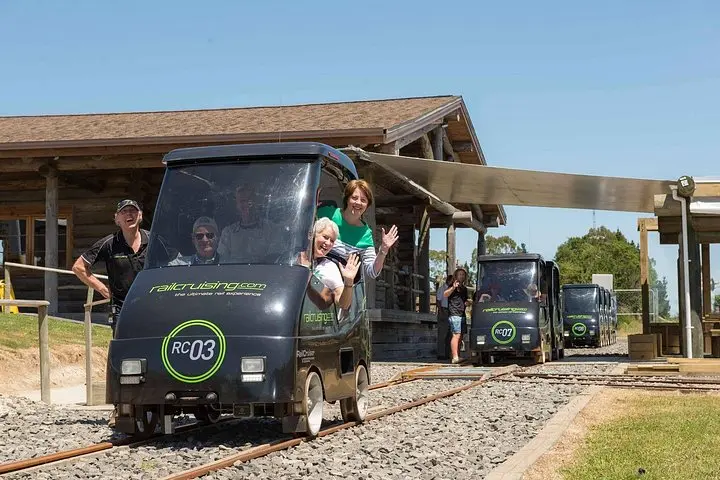
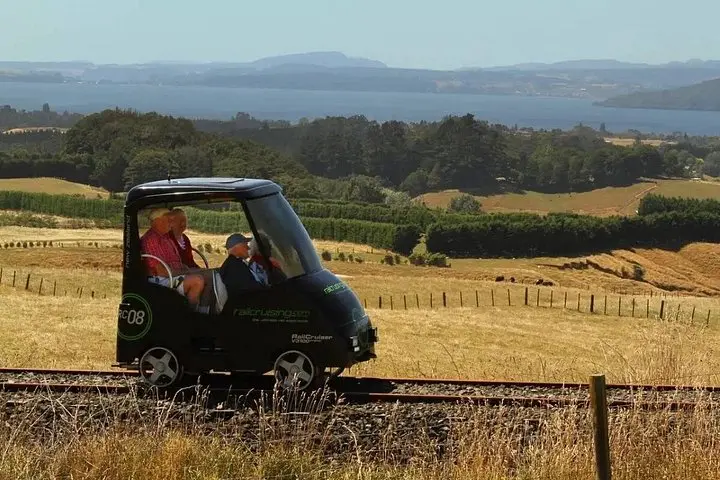
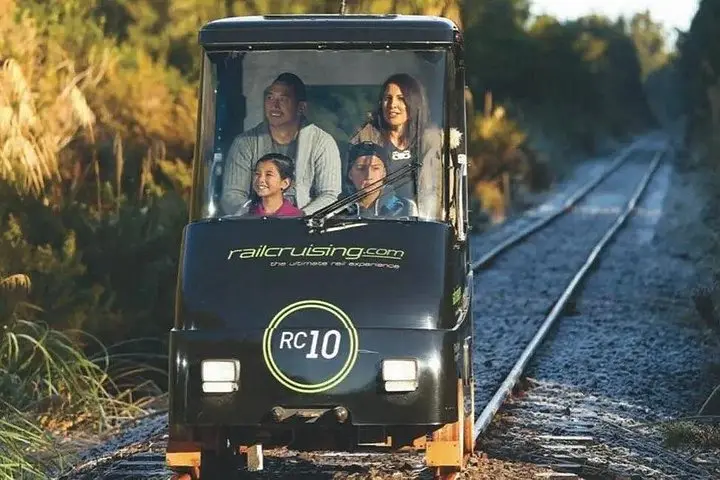
The rail car rocks into motion at a gentle 20 km/h and the world opens in measured frames: pasture, a dark wall of rimu and tawa, then the silver sweep of Lake Rotorua with Mount Tarawera brooding on the horizon. You sit facing waterproof sides, audio guide cued, and the landscape does the talking — volcanic lake basins, farm drains cutting across old rail embankments, and pockets of 1,000‑year‑old native forest that remind you how long these trees have stood.
Verified experiences and guided adventures in the surrounding area.
Operated by Rotorua Rail Cruising · Rotorua, Bay of Plenty
The rail car rocks into motion at a gentle 20 km/h and the world opens in measured frames: pasture, a dark wall of rimu and tawa, then the silver sweep of Lake Rotorua with Mount Tarawera brooding on the horizon. You sit facing waterproof sides, audio guide cued, and the landscape does the talking — volcanic lake basins, farm drains cutting across old rail embankments, and pockets of 1,000‑year‑old native forest that remind you how long these trees have stood.
This trip follows a short but storied piece of New Zealand rail history, threading past former stations such as Tarukenga and beside cultural landmarks like Tarukenga Marae. Geologically, Rotorua sits on a caldera network; the terrain alternates between lake terraces and forested volcanic slopes. Culturally, the route traces land important to the Te Arawa confederation, and interpretive stops at Mamaku offer local context and archival footage.
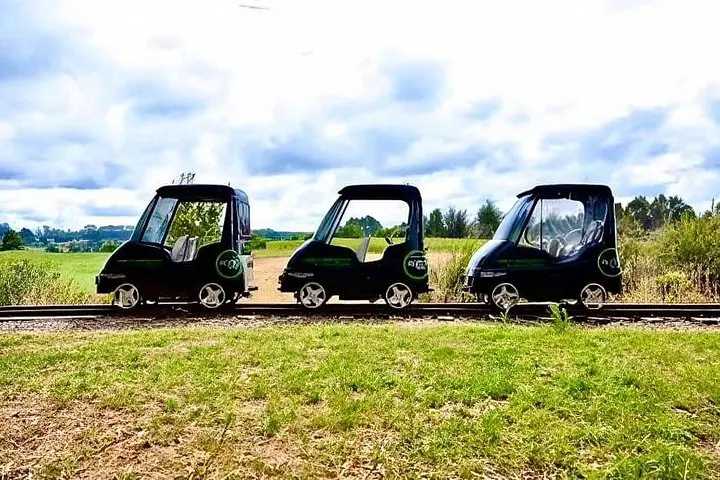
Practicalities are straightforward: the round trip runs about two hours, suitable for families and first‑time riders. Cars seat four, are petrol‑electric for smooth, low‑speed cruising, and Mamaku Station provides hot drinks, toilets, and a small exhibition. Expect narrow seats and some vibration; people with spinal issues should take this into account.
Plan for changeable weather (bring a windproof layer), a camera with a polarizer for lake glare, and arrive 15 minutes early for briefing. The pace invites observation — read the audio notes, watch for native birds, and treat nearby reserves and the marae with quiet respect.
The advertised duration is approximately two hours round trip, including a short stop at Mamaku Station.
Yes — cars seat up to four and infants may sit on laps; service animals are allowed but check operator rules for pets.
The experience is described as physically easy and stroller accessible, but those with severe spinal issues should avoid it due to vibration.
Yes — Mamaku Station offers hot drinks (tea, coffee, hot chocolate) and a cookie, plus restroom facilities.
Rotorua Rail Cruising operates guided outdoor trips and adventures with an emphasis on safety, stewardship, and memorable experiences.
The rail car rocks into motion at a gentle 20 km/h and the world opens in measured frames: pasture, a dark wall of rimu and tawa, then the silver sweep of Lake Rotorua with Mount Tarawera brooding on the horizon. You sit facing waterproof sides, audio guide cued, and the landscape does the talking — volcanic lake basins, farm drains cutting across old rail embankments, and pockets of 1,000‑year‑old native forest that remind you how long these trees have stood.
The rail car rocks into motion at a gentle 20 km/h and the world opens in measured frames: pasture, a dark wall of rimu and tawa, then the silver sweep of Lake Rotorua with Mount Tarawera brooding on the horizon. You sit facing waterproof sides, audio guide cued, and the landscape does the talking — volcanic lake basins, farm drains cutting across old rail embankments, and pockets of 1,000‑year‑old native forest that remind you how long these trees have stood.
This trip follows a short but storied piece of New Zealand rail history, threading past former stations such as Tarukenga and beside cultural landmarks like Tarukenga Marae. Geologically, Rotorua sits on a caldera network; the terrain alternates between lake terraces and forested volcanic slopes. Culturally, the route traces land important to the Te Arawa confederation, and interpretive stops at Mamaku offer local context and archival footage.
Practicalities are straightforward: the round trip runs about two hours, suitable for families and first‑time riders. Cars seat four, are petrol‑electric for smooth, low‑speed cruising, and Mamaku Station provides hot drinks, toilets, and a small exhibition. Expect narrow seats and some vibration; people with spinal issues should take this into account.
Plan for changeable weather (bring a windproof layer), a camera with a polarizer for lake glare, and arrive 15 minutes early for briefing. The pace invites observation — read the audio notes, watch for native birds, and treat nearby reserves and the marae with quiet respect.