THE ADVENTURE COLLECTIVE® · Independent discovery and booking for outdoor travel

Explore Srebarna Reserve at your own pace with a personalized electronic guide. Watch Dalmatian pelicans, reed specialists and migration funnels along flat, easy loops while enjoying low-cost flexibility.
Explore Srebarna Reserve at your own pace with a personalized electronic guide. Watch Dalmatian pelicans, reed specialists and migration funnels along flat, easy loops while enjoying low-cost flexibility.
On a cool morning the reedbeds at Srebarna push sound and light toward you: reed stems click, water reflects the Danube’s low clouds, and a pelican tilts its head like a slow metronome. This self-guided e-tour lets you move at that human pace—stop, listen, and watch—without a fixed itinerary.
Verified experiences and guided adventures in the surrounding area.
Operated by VisitBulgariaOn Bespoke Experiences · Srebarna, Ruse Province
On a cool morning the reedbeds at Srebarna push sound and light toward you: reed stems click, water reflects the Danube’s low clouds, and a pelican tilts its head like a slow metronome. This self-guided e-tour lets you move at that human pace—stop, listen, and watch—without a fixed itinerary.
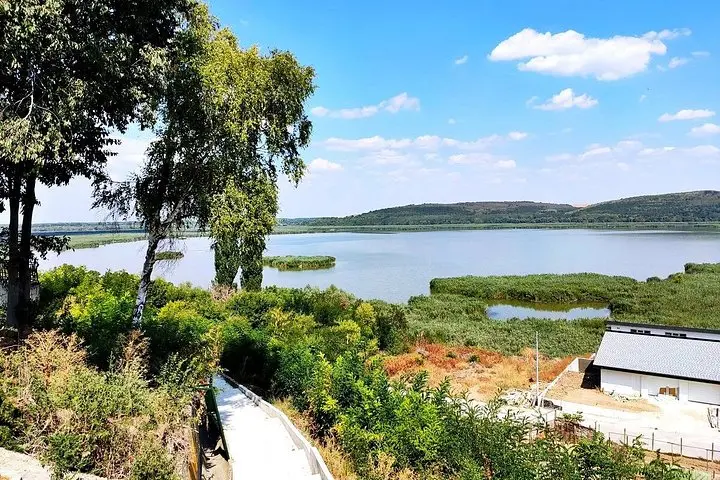
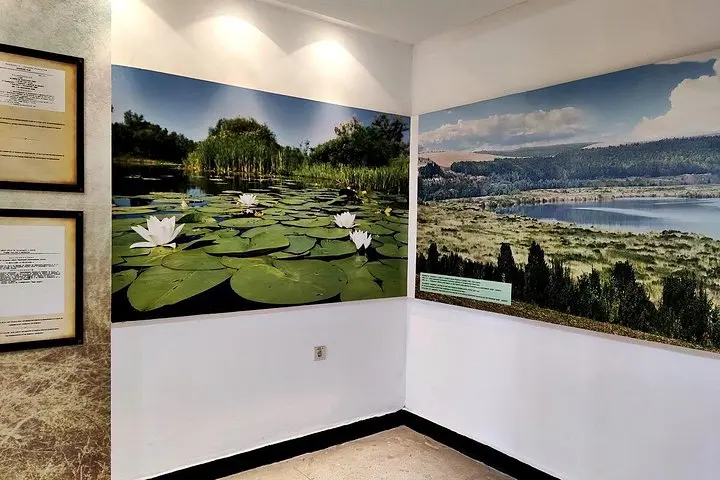
Srebarna sits on a shallow lake fed by the Danube and spring seepage; it was declared a UNESCO biosphere reserve and Ramsar site for its rare freshwater marsh habitat and important role on the Black Sea–Danube flyway. Geologically the site is flat alluvium, with sedimentary soils that support dense reedbeds and flooded meadows. Culturally, the area reflects traditional Danube fishing villages; local communities still fish and harvest reed in small-scale ways.
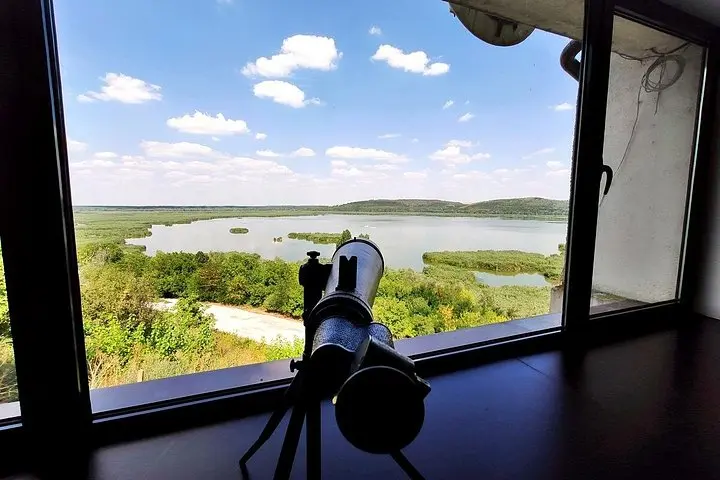
Expect long, flat walking loops of roughly 2–6 km over compact paths and short boardwalks; elevation gain is negligible. Key species to watch for include Dalmatian pelicans, pygmy cormorants, marsh harriers and reed warblers, especially during spring and autumn migration. The reserve rewards patience: a single blind or shoreline will reveal different species hour to hour.
Practically, load the personalized e-guide on your device before arrival and bring binoculars, insect protection, and water. Follow marked paths, keep noise low, and use a zoom lens rather than approaching nests. Plan for changing light—early morning and late afternoon deliver the best behavior and light for photography. With straightforward logistics and a landscape that quietly insists on attention, Srebarna is ideal for birders who prefer self-paced discovery over guided groups.
The reserve is publicly accessible but some areas and hides require entrance fees or local regulation compliance—check local reserve signage or the e-guide for current rules.
Yes—this product provides a personalized electronic guide intended to be loaded on your device for offline use; download it before arrival.
Peak migration and pelican activity occur in spring (April–May) and autumn (September–October); early morning and late afternoon offer the best light and bird activity.
Some observation points have short boardwalks but not all paths are wheelchair accessible; contact local visitor information for specific accessible route details.
VisitBulgariaOn Bespoke Experiences operates guided outdoor trips and adventures with an emphasis on safety, stewardship, and memorable experiences.
On a cool morning the reedbeds at Srebarna push sound and light toward you: reed stems click, water reflects the Danube’s low clouds, and a pelican tilts its head like a slow metronome. This self-guided e-tour lets you move at that human pace—stop, listen, and watch—without a fixed itinerary.
On a cool morning the reedbeds at Srebarna push sound and light toward you: reed stems click, water reflects the Danube’s low clouds, and a pelican tilts its head like a slow metronome. This self-guided e-tour lets you move at that human pace—stop, listen, and watch—without a fixed itinerary.
Srebarna sits on a shallow lake fed by the Danube and spring seepage; it was declared a UNESCO biosphere reserve and Ramsar site for its rare freshwater marsh habitat and important role on the Black Sea–Danube flyway. Geologically the site is flat alluvium, with sedimentary soils that support dense reedbeds and flooded meadows. Culturally, the area reflects traditional Danube fishing villages; local communities still fish and harvest reed in small-scale ways.
Expect long, flat walking loops of roughly 2–6 km over compact paths and short boardwalks; elevation gain is negligible. Key species to watch for include Dalmatian pelicans, pygmy cormorants, marsh harriers and reed warblers, especially during spring and autumn migration. The reserve rewards patience: a single blind or shoreline will reveal different species hour to hour.
Practically, load the personalized e-guide on your device before arrival and bring binoculars, insect protection, and water. Follow marked paths, keep noise low, and use a zoom lens rather than approaching nests. Plan for changing light—early morning and late afternoon deliver the best behavior and light for photography. With straightforward logistics and a landscape that quietly insists on attention, Srebarna is ideal for birders who prefer self-paced discovery over guided groups.