THE ADVENTURE COLLECTIVE® · Independent discovery and booking for outdoor travel

Explore Manchester at your own pace with a GPS-guided audio walk that traces the city’s industrial rise, cultural reinvention, and surprising local stories. Ideal for independent travellers who want context-rich storytelling with offline convenience.
Explore Manchester at your own pace with a GPS-guided audio walk that traces the city’s industrial rise, cultural reinvention, and surprising local stories. Ideal for independent travellers who want context-rich storytelling with offline convenience.
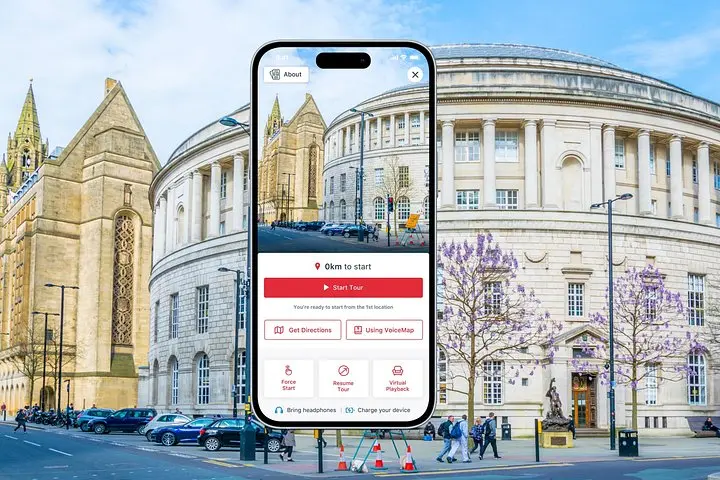
The pavement hums underfoot as you stand before the neo-classical curve of Manchester Central Library, the city's past already whispering through stone and iron.
Verified experiences and guided adventures in the surrounding area.
Operated by VoiceMap Audio Tours · Manchester, Greater Manchester
The pavement hums underfoot as you stand before the neo-classical curve of Manchester Central Library, the city's past already whispering through stone and iron.
This self-guided audio tour threads roughly 3–4 km through Manchester’s centre—St Peter’s Square, the Northern Quarter, Chinatown, and pockets of industrial conversion—over 75–90 minutes on mostly flat, paved streets with minimal elevation gain.
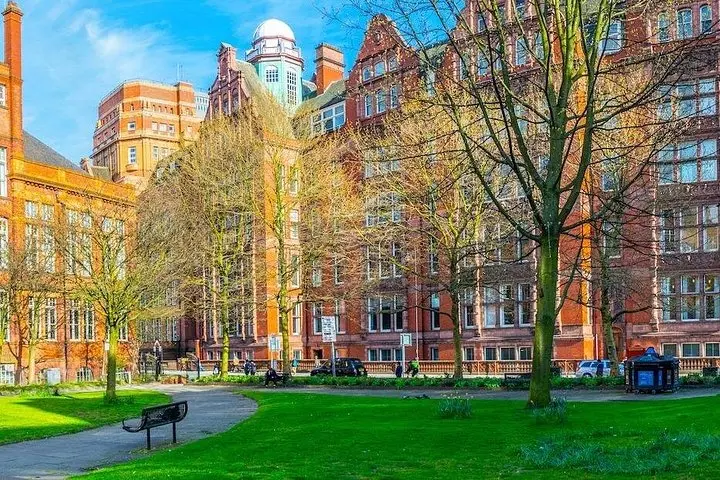
Manchester rose to fame during the Industrial Revolution as a global textile hub—‘Cottonopolis’—its mills fed by canals and coal. The city’s redbrick warehouses have been repurposed into bars, galleries, and tech offices, revealing layers of urban reinvention. Listen for stories of innovation and irony: a chemist’s sober replacement drink that inspired a cocktail, and Alan Turing’s years here, marked by a modest memorial in the city’s green.
Geology matters mainly underfoot—Manchester sits on Permo-Triassic sandstones and glacial deposits that shaped the low, broad plain; canals and railways channeled trade across it. Culture turns up in street art, independent bookstores, and the electric atmosphere of the LGBTQ+ Corridor.
Practical guidance: download offline audio and maps before you start, set pace to allow stops at façades, markets, and plaques, and expect city noises—trams, buses, and weekend crowds. Wear supportive walking shoes and bring a compact rain shell; weather shifts quickly here. Start early to avoid lunchtime crowds and allow time to sit in a square for a podcast chapter or a coffee in a converted warehouse.
The audio route runs about 75–90 minutes covering roughly 3–4 km, but you can pause and explore side streets at any time.
Yes—it's rated easy and accessible for most ages, though you should allow extra breaks for those who need them.
No—offline access to audio, maps, and geodata is provided, but download before you start for best results.
The tour begins at Manchester Central Library in St Peter’s Square; directions to the exact start are included with the download.
VoiceMap Audio Tours operates guided outdoor trips and adventures with an emphasis on safety, stewardship, and memorable experiences.
The pavement hums underfoot as you stand before the neo-classical curve of Manchester Central Library, the city's past already whispering through stone and iron.
The pavement hums underfoot as you stand before the neo-classical curve of Manchester Central Library, the city's past already whispering through stone and iron.
This self-guided audio tour threads roughly 3–4 km through Manchester’s centre—St Peter’s Square, the Northern Quarter, Chinatown, and pockets of industrial conversion—over 75–90 minutes on mostly flat, paved streets with minimal elevation gain.
Manchester rose to fame during the Industrial Revolution as a global textile hub—‘Cottonopolis’—its mills fed by canals and coal. The city’s redbrick warehouses have been repurposed into bars, galleries, and tech offices, revealing layers of urban reinvention. Listen for stories of innovation and irony: a chemist’s sober replacement drink that inspired a cocktail, and Alan Turing’s years here, marked by a modest memorial in the city’s green.
Geology matters mainly underfoot—Manchester sits on Permo-Triassic sandstones and glacial deposits that shaped the low, broad plain; canals and railways channeled trade across it. Culture turns up in street art, independent bookstores, and the electric atmosphere of the LGBTQ+ Corridor.
Practical guidance: download offline audio and maps before you start, set pace to allow stops at façades, markets, and plaques, and expect city noises—trams, buses, and weekend crowds. Wear supportive walking shoes and bring a compact rain shell; weather shifts quickly here. Start early to avoid lunchtime crowds and allow time to sit in a square for a podcast chapter or a coffee in a converted warehouse.