THE ADVENTURE COLLECTIVE® · Independent discovery and booking for outdoor travel

Glide across Lake Cootharaba into the quiet channels of the Noosa Everglades on a 6‑hour self‑guided kayak trip. Follow mapped loops to Kin Kin Creek and Harry’s Hut while watching for sea eagles and black swans.
Glide across Lake Cootharaba into the quiet channels of the Noosa Everglades on a 6‑hour self‑guided kayak trip. Follow mapped loops to Kin Kin Creek and Harry’s Hut while watching for sea eagles and black swans.
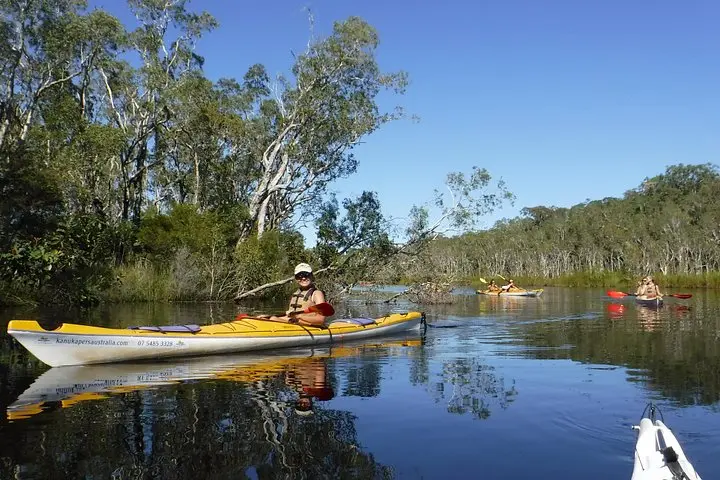
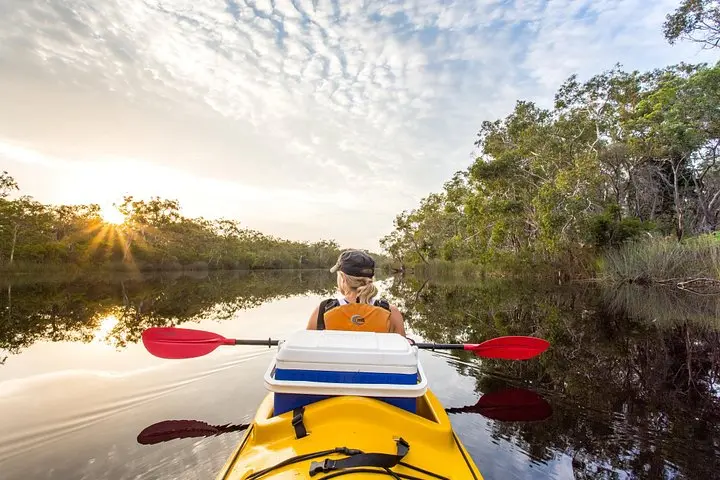
The paddle begins at Elanda Point with the smell of eucalyptus and tea‑stained water opening like a road ahead. You launch from a small sandy bank, settle into a stable sit‑on‑top kayak and push into Lake Cootharaba; reeds whisper alongside your bow as white‑bellied sea eagles wheel above.
Verified experiences and guided adventures in the surrounding area.
Operated by Kanu Kapers Australia · Noosa Heads, Queensland
The paddle begins at Elanda Point with the smell of eucalyptus and tea‑stained water opening like a road ahead. You launch from a small sandy bank, settle into a stable sit‑on‑top kayak and push into Lake Cootharaba; reeds whisper alongside your bow as white‑bellied sea eagles wheel above.
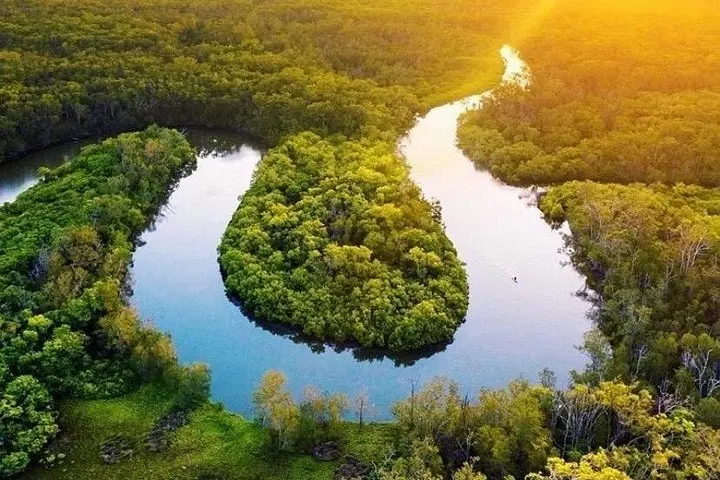
This stretch of the Cooloola section of Great Sandy National Park sits on a giant coastal dune system shaped over millennia by wind and river, where ancient sand blows, coastal she-oaks and melaleuca wetlands meet. The Everglades were long tended by the Gubbi Gubbi (Kabi Kabi) people; today the area is prized for quiet paddling and rich wildlife rather than motorboats and crowds.
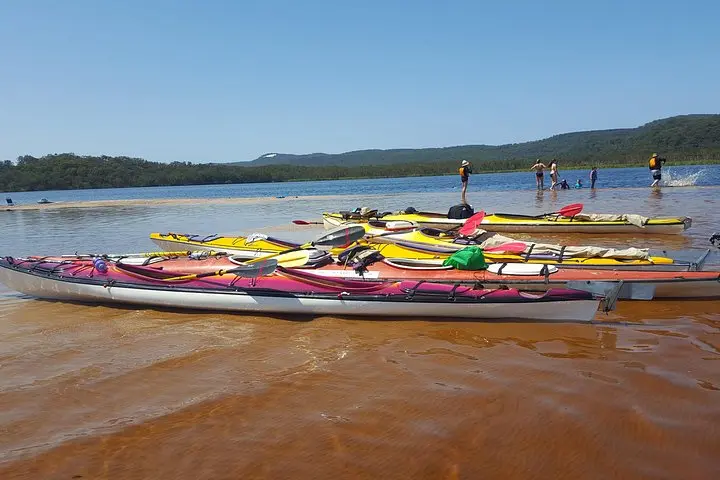
On a self‑guided 6‑hour route you’ll cross open lake, thread mangrove channels and choose loop options through Kin Kin Creek and Fig Tree Lake. Harry’s Hut, a weathered shingle shelter on the river, makes a popular mid‑trip swim stop in tannin‑stained water. Expect varied water: flat, reflective sheets on calm mornings and narrow creek squeezes that demand steering and steady cadence.
Practicalities matter: the operator provides kayak, safety gear and a briefing, but you’re responsible for navigation, food and two litres of water. Sun protection, insect repellent and a waterproof phone pouch are essential. Plan launches with the tide and wind forecasts; mornings are cooler and calmer. The route rewards measured effort—steady paddling opens wide horizons and quiet pockets where wildlife dares you to slow down.
No—brief orientation and basic lessons are provided, but participants should be comfortable paddling and steering for several hours.
Yes—many paddlers stop there for a swim in tea‑coloured water; always assess conditions and swim near the shore or your kayak.
Pick‑up can be arranged if you supply your Noosa accommodation name—confirm with the operator ahead of time.
The minimum age listed is 4 years; children must ride with an adult and meet safety guidance from staff.
Kanu Kapers Australia operates guided outdoor trips and adventures with an emphasis on safety, stewardship, and memorable experiences.
The paddle begins at Elanda Point with the smell of eucalyptus and tea‑stained water opening like a road ahead. You launch from a small sandy bank, settle into a stable sit‑on‑top kayak and push into Lake Cootharaba; reeds whisper alongside your bow as white‑bellied sea eagles wheel above.
The paddle begins at Elanda Point with the smell of eucalyptus and tea‑stained water opening like a road ahead. You launch from a small sandy bank, settle into a stable sit‑on‑top kayak and push into Lake Cootharaba; reeds whisper alongside your bow as white‑bellied sea eagles wheel above.
This stretch of the Cooloola section of Great Sandy National Park sits on a giant coastal dune system shaped over millennia by wind and river, where ancient sand blows, coastal she-oaks and melaleuca wetlands meet. The Everglades were long tended by the Gubbi Gubbi (Kabi Kabi) people; today the area is prized for quiet paddling and rich wildlife rather than motorboats and crowds.
On a self‑guided 6‑hour route you’ll cross open lake, thread mangrove channels and choose loop options through Kin Kin Creek and Fig Tree Lake. Harry’s Hut, a weathered shingle shelter on the river, makes a popular mid‑trip swim stop in tannin‑stained water. Expect varied water: flat, reflective sheets on calm mornings and narrow creek squeezes that demand steering and steady cadence.
Practicalities matter: the operator provides kayak, safety gear and a briefing, but you’re responsible for navigation, food and two litres of water. Sun protection, insect repellent and a waterproof phone pouch are essential. Plan launches with the tide and wind forecasts; mornings are cooler and calmer. The route rewards measured effort—steady paddling opens wide horizons and quiet pockets where wildlife dares you to slow down.