THE ADVENTURE COLLECTIVE® · Independent discovery and booking for outdoor travel

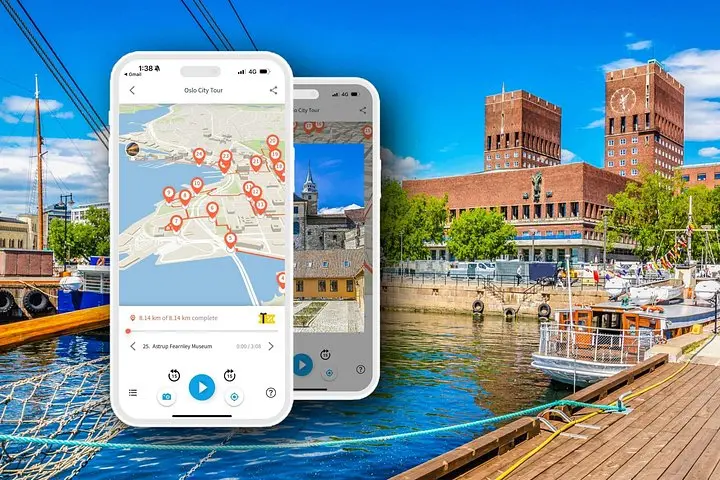
Walk from Oslo Central Station to the fjord with a historian in your ear. This 2–3 hour self-guided audio tour links the city’s major landmarks with offline maps and 25 narrated stops.
Walk from Oslo Central Station to the fjord with a historian in your ear. This 2–3 hour self-guided audio tour links the city’s major landmarks with offline maps and 25 narrated stops.
You step out of Oslo Central Station into brisk city air and the bronze tiger watches you with a half-playful snarl. The route slips through wide boulevards and sudden harborside views: Karl Johans gate’s steady parade of people, the clean angles of the Opera House roof, and finally the fjord that almost dares you to stop and stare.
Verified experiences and guided adventures in the surrounding area.
Operated by TouringBee · Oslo, Oslo
You step out of Oslo Central Station into brisk city air and the bronze tiger watches you with a half-playful snarl. The route slips through wide boulevards and sudden harborside views: Karl Johans gate’s steady parade of people, the clean angles of the Opera House roof, and finally the fjord that almost dares you to stop and stare.
This self-guided audio tour threads together Oslo’s civic heart and maritime edge. Listen for history: Akershus Fortress—stone walls from the 13th century—keeps a low, weathered watch over the harbor; the City Hall’s murals tell labor stories; the Munch Museum anchors modern Norway’s cultural reckoning. Geology is visible in the waterfront—glacially scoured bedrock meets reclaimed docks—and the fjord shapes everything from urban planning to the light that painters chased.
Culture here is immediate: Nobel laureates, wartime resistance, and contemporary artists share neighborhood addresses. The app bundles 25 historian-narrated recordings and an offline map so you can pace the story. Practicalities matter: the tour takes about 2–3 hours on foot, museum entry and timed tickets aren’t included, and public transport is close if you shorten the loop.
For best results, download the guide before you leave, bring comfortable shoes, and allow extra time for viewpoints and cafés. The city is friendly to walkers but weather can flip—dress in layers. Follow the GPS route, use headphones for the narration, and know that this is a walking day: compact, instructive, and open to detours.
No—the tour and offline map can be downloaded in advance so you can navigate and listen without mobile data.
No—museum and attraction tickets are not included and should be purchased separately, often with timed entry in peak season.
Much of central Oslo is flat and accessible, but some areas (cobblestones, the Opera roof slope) may be challenging—check the app route and local accessibility info for specific stops.
Yes—the audio guide is self-paced: pause at cafés, detour to a gallery, and resume where you left off on the map.
TouringBee operates guided outdoor trips and adventures with an emphasis on safety, stewardship, and memorable experiences.



You step out of Oslo Central Station into brisk city air and the bronze tiger watches you with a half-playful snarl. The route slips through wide boulevards and sudden harborside views: Karl Johans gate’s steady parade of people, the clean angles of the Opera House roof, and finally the fjord that almost dares you to stop and stare.
You step out of Oslo Central Station into brisk city air and the bronze tiger watches you with a half-playful snarl. The route slips through wide boulevards and sudden harborside views: Karl Johans gate’s steady parade of people, the clean angles of the Opera House roof, and finally the fjord that almost dares you to stop and stare.
This self-guided audio tour threads together Oslo’s civic heart and maritime edge. Listen for history: Akershus Fortress—stone walls from the 13th century—keeps a low, weathered watch over the harbor; the City Hall’s murals tell labor stories; the Munch Museum anchors modern Norway’s cultural reckoning. Geology is visible in the waterfront—glacially scoured bedrock meets reclaimed docks—and the fjord shapes everything from urban planning to the light that painters chased.
Culture here is immediate: Nobel laureates, wartime resistance, and contemporary artists share neighborhood addresses. The app bundles 25 historian-narrated recordings and an offline map so you can pace the story. Practicalities matter: the tour takes about 2–3 hours on foot, museum entry and timed tickets aren’t included, and public transport is close if you shorten the loop.
For best results, download the guide before you leave, bring comfortable shoes, and allow extra time for viewpoints and cafés. The city is friendly to walkers but weather can flip—dress in layers. Follow the GPS route, use headphones for the narration, and know that this is a walking day: compact, instructive, and open to detours.