THE ADVENTURE COLLECTIVE® · Independent discovery and booking for outdoor travel

Explore Salem’s 1692 witch-trial sites at your own pace with a detailed digital guidebook. The tour maps key locations, offers historical context, and includes practical tips for timing, transit, and nearby dining.
Explore Salem’s 1692 witch-trial sites at your own pace with a detailed digital guidebook. The tour maps key locations, offers historical context, and includes practical tips for timing, transit, and nearby dining.
Cobblestones click underfoot as the guidebook’s timeline unfurls on your phone and the harbor breeze carries distant foghorns. The digital guide turns Salem’s downtown into a mapped narrative: an 18th‑century house that once belonged to a sheriff, a compact graveyard where names and dates crowd close together, and a brick hall where famous figures once spoke.
Verified experiences and guided adventures in the surrounding area.
Operated by History with Action · Salem, Massachusetts
Cobblestones click underfoot as the guidebook’s timeline unfurls on your phone and the harbor breeze carries distant foghorns. The digital guide turns Salem’s downtown into a mapped narrative: an 18th‑century house that once belonged to a sheriff, a compact graveyard where names and dates crowd close together, and a brick hall where famous figures once spoke.
History here is blunt. The 1692 witch trials accelerated through a tight network of courts, clergy, and town officials; buildings like the Witch House and Joshua Ward House hold structural echoes of that era. Geology is subtle but present — glacially rounded bedrock underlies the streets and short hills that frame harbor views, while the urban tree canopy softens brick facades.
Local culture mixes maritime New England with literary inheritance — Nathaniel Hawthorne’s presence is audible in statues and plaques — and tourism has made Salem a town that alternates between quiet residential blocks and concentrated museums.
Practical guidance is direct: expect a 2–3 hour self‑guided walk covering a few miles of mostly flat sidewalks, short steps at older buildings, and tight cemetery plots. The guidebook supplies historical context, directions, dining and parking notes, and suggested visit windows to avoid crowds. Bring a charged device and a backup battery; permissions vary at indoor sites. Move respectfully through cemeteries and private property, and allow time to linger at Hamilton Hall or a harbor overlook. This digital guidebook is best for history-minded travelers who want structured autonomy — it points, explains, and leaves the walking to you.
No — the digital guidebook provides directions and context but does not include admission fees for museums or historic houses.
Yes — the guidebook includes options to download content and maps for offline use; download before you arrive where possible.
Much of the route follows sidewalks and flat streets, but some historic sites have steps or uneven ground; check specific locations for accessibility details.
Yes — Salem is served by commuter rail from Boston and local buses; the guidebook lists transit options and parking tips.
History with Action operates guided outdoor trips and adventures with an emphasis on safety, stewardship, and memorable experiences.
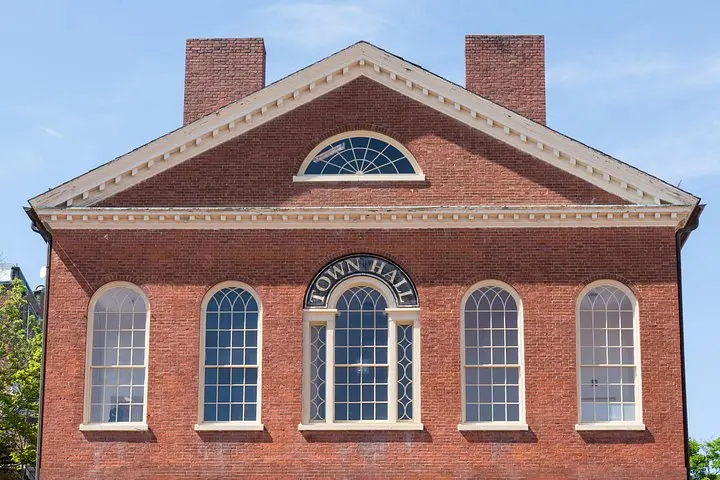

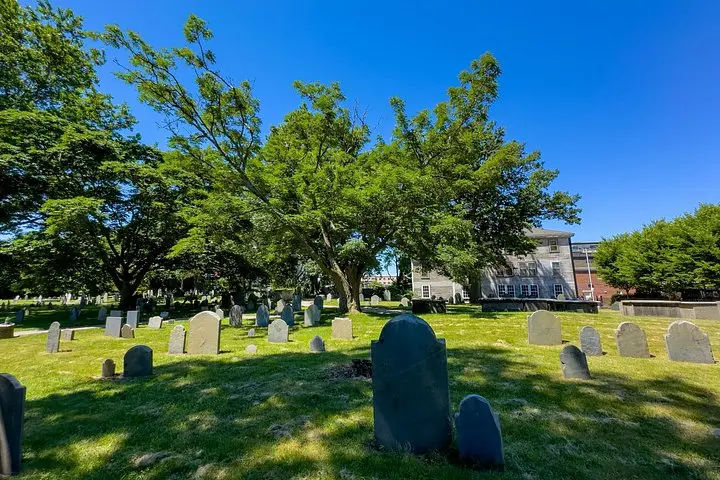

Cobblestones click underfoot as the guidebook’s timeline unfurls on your phone and the harbor breeze carries distant foghorns. The digital guide turns Salem’s downtown into a mapped narrative: an 18th‑century house that once belonged to a sheriff, a compact graveyard where names and dates crowd close together, and a brick hall where famous figures once spoke.
Cobblestones click underfoot as the guidebook’s timeline unfurls on your phone and the harbor breeze carries distant foghorns. The digital guide turns Salem’s downtown into a mapped narrative: an 18th‑century house that once belonged to a sheriff, a compact graveyard where names and dates crowd close together, and a brick hall where famous figures once spoke.
History here is blunt. The 1692 witch trials accelerated through a tight network of courts, clergy, and town officials; buildings like the Witch House and Joshua Ward House hold structural echoes of that era. Geology is subtle but present — glacially rounded bedrock underlies the streets and short hills that frame harbor views, while the urban tree canopy softens brick facades.
Local culture mixes maritime New England with literary inheritance — Nathaniel Hawthorne’s presence is audible in statues and plaques — and tourism has made Salem a town that alternates between quiet residential blocks and concentrated museums.
Practical guidance is direct: expect a 2–3 hour self‑guided walk covering a few miles of mostly flat sidewalks, short steps at older buildings, and tight cemetery plots. The guidebook supplies historical context, directions, dining and parking notes, and suggested visit windows to avoid crowds. Bring a charged device and a backup battery; permissions vary at indoor sites. Move respectfully through cemeteries and private property, and allow time to linger at Hamilton Hall or a harbor overlook. This digital guidebook is best for history-minded travelers who want structured autonomy — it points, explains, and leaves the walking to you.