THE ADVENTURE COLLECTIVE® · Independent discovery and booking for outdoor travel

Walk from Forsyth Park to River Street with an interactive audio guide that blends history, architecture and local color. This 2-hour self-guided route covers 2.8 km and lets you explore Savannah at your own pace.
Walk from Forsyth Park to River Street with an interactive audio guide that blends history, architecture and local color. This 2-hour self-guided route covers 2.8 km and lets you explore Savannah at your own pace.
Forsyth Park opens like a public room: live oaks arch overhead, Spanish moss brushing your shoulders as the fountain trills. A solo traveler or small group can step into that green shade and follow a smartphone-guided route that threads through quiet squares, Gothic spires and the cobbles of River Street.
Verified experiences and guided adventures in the surrounding area.
Operated by Ciceru · Savannah, Georgia
Forsyth Park opens like a public room: live oaks arch overhead, Spanish moss brushing your shoulders as the fountain trills. A solo traveler or small group can step into that green shade and follow a smartphone-guided route that threads through quiet squares, Gothic spires and the cobbles of River Street.
The walk traces layers of Savannah’s past—Oglethorpe’s 1733 grid, antebellum townhouses, and the uneasy margins of Colonial Park Cemetery where stones mark lives interrupted by epidemic and war. Geologically the city sits on low, silty marshlands; the river’s tide shaped commerce and the red-brick wharves you end at. Culturally, Savannah trades heavily in preservation: public squares, restored storefronts and museums keep stories visible while cafes and artisans write the present-day chapter.
For planning, expect about 2.8 km (1.7 miles) and roughly two hours at a relaxed pace. The route is flat and paved, with short cobbled sections near the river—good for steady walking shoes, not thin-soled sandals. Audio stops give historical context and short quizzes to engage memory and curiosity. Start early to avoid midday heat and busy tour groups; late afternoon light on the river highlights the brick facades.
Practical tips: keep your phone charged, use cellular data or download the audio beforehand, and carry water—public restrooms are limited on the loop. Respect cemetery signage and private property, and leave no trace in the squares. This self-guided format offers flexibility without a guide’s pace—an efficient, atmospheric way to read Savannah’s streets on your own terms.
Activate your Ciceru ticket at ciceru.com/start using the link sent after booking; follow the prompt at Forsyth Park to begin.
Most streets and squares are paved and generally accessible, but some cobblestone sections near the river can be bumpy—check local accessibility resources if mobility is a concern.
Yes—the self-guided format lets you stop between audio stops and resume later; your activation window is valid for 48 hours once started.
The audio guide is offered in multiple languages including English, German, Italian, French, Spanish, Portuguese and Chinese.
Ciceru operates guided outdoor trips and adventures with an emphasis on safety, stewardship, and memorable experiences.

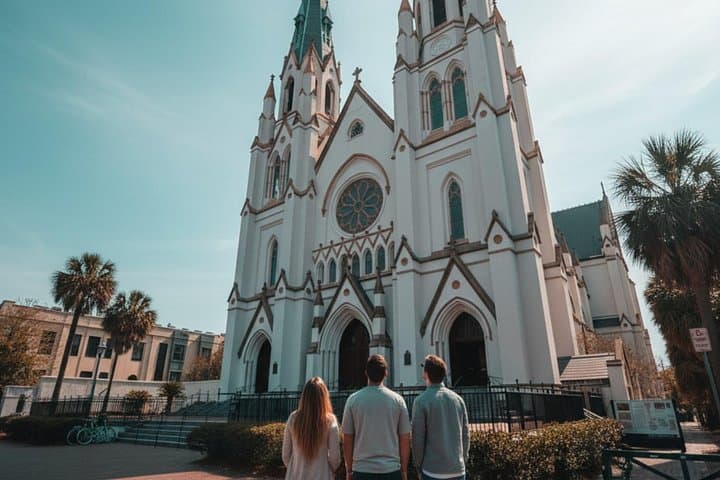

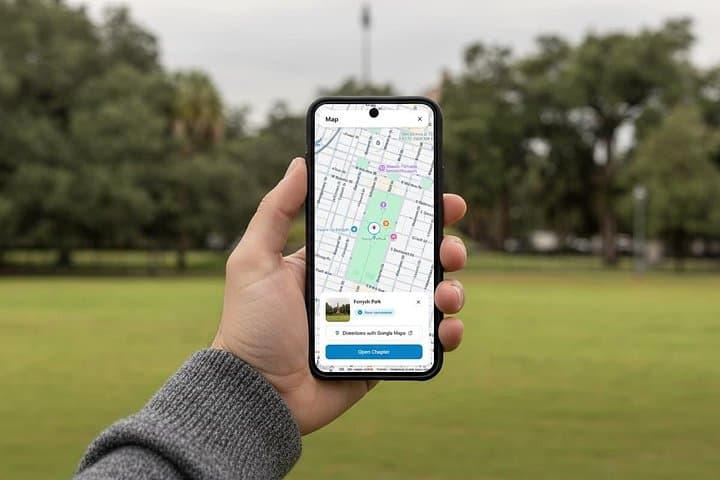
Forsyth Park opens like a public room: live oaks arch overhead, Spanish moss brushing your shoulders as the fountain trills. A solo traveler or small group can step into that green shade and follow a smartphone-guided route that threads through quiet squares, Gothic spires and the cobbles of River Street.
Forsyth Park opens like a public room: live oaks arch overhead, Spanish moss brushing your shoulders as the fountain trills. A solo traveler or small group can step into that green shade and follow a smartphone-guided route that threads through quiet squares, Gothic spires and the cobbles of River Street.
The walk traces layers of Savannah’s past—Oglethorpe’s 1733 grid, antebellum townhouses, and the uneasy margins of Colonial Park Cemetery where stones mark lives interrupted by epidemic and war. Geologically the city sits on low, silty marshlands; the river’s tide shaped commerce and the red-brick wharves you end at. Culturally, Savannah trades heavily in preservation: public squares, restored storefronts and museums keep stories visible while cafes and artisans write the present-day chapter.
For planning, expect about 2.8 km (1.7 miles) and roughly two hours at a relaxed pace. The route is flat and paved, with short cobbled sections near the river—good for steady walking shoes, not thin-soled sandals. Audio stops give historical context and short quizzes to engage memory and curiosity. Start early to avoid midday heat and busy tour groups; late afternoon light on the river highlights the brick facades.
Practical tips: keep your phone charged, use cellular data or download the audio beforehand, and carry water—public restrooms are limited on the loop. Respect cemetery signage and private property, and leave no trace in the squares. This self-guided format offers flexibility without a guide’s pace—an efficient, atmospheric way to read Savannah’s streets on your own terms.