THE ADVENTURE COLLECTIVE® · Independent discovery and booking for outdoor travel

Explore redwood gullies, ocean views, and the quirky residential colleges of UC Santa Cruz at your own pace. This app-led, self-guided walk pairs campus history and geology with practical route choices for 1–3 hours of exploration.
Explore redwood gullies, ocean views, and the quirky residential colleges of UC Santa Cruz at your own pace. This app-led, self-guided walk pairs campus history and geology with practical route choices for 1–3 hours of exploration.
Morning light sifts through redwood trunks and the campus smells of damp duff and salt from the bay — you step onto a narrow path above the ocean and the university unfolds like a neighborhood of hidden viewpoints. This self-guided walking tour uses an app to guide you through oak-bordered meadows, paved quads, and shaded redwood gullies, letting you pause at a viewpoint or linger inside a college courtyard.
Verified experiences and guided adventures in the surrounding area.
Operated by Pintours · Santa Cruz, California
Morning light sifts through redwood trunks and the campus smells of damp duff and salt from the bay — you step onto a narrow path above the ocean and the university unfolds like a neighborhood of hidden viewpoints. This self-guided walking tour uses an app to guide you through oak-bordered meadows, paved quads, and shaded redwood gullies, letting you pause at a viewpoint or linger inside a college courtyard.
UC Santa Cruz sits on terraces of the Santa Cruz Mountains above Monterey Bay; the campus was founded in the 1960s with an experimental college system that still shapes its culture. Geology here is immediate: coastal uplift, marine terraces, and pockets of deep loam that give redwoods room to tower. The colleges — Cowell, Stevenson, Crown, Merrill, Oakes and others — each have a distinct character born of architecture and student life, from muraled commons to quiet libraries with ocean views.
Locals mix surf-town informality with academic intensity; expect student art, environmental activism history, and occasional public lectures. Short detours reward the curious: a bluff overlook toward Monterey Bay and wooded trails that feel wilder than their proximity to parking lots suggests.
Practical guidance: routes are mostly paved or packed dirt with stairs and short hills — plan 1–3 miles depending on stops and roughly 150–300 ft cumulative elevation change on a typical loop. Wear grippy walking shoes, bring water, and download the app before you arrive; the campus loop bus can save a steep climb to the East Field House. Aim for morning or late afternoon for cooler air and stronger light for photos.
No set time is required; after booking you'll receive a code to unlock the tour in the app and you can start anytime during daylight hours.
Many main quads and plazas are wheelchair accessible, but some trails and steps are not—plan a flatter route and consult the campus accessibility map before you go.
Expect 1–3 miles depending on which colleges and viewpoints you stop at, with roughly 150–300 ft of cumulative elevation change on a typical loop.
This listing is self-guided via app; UC Santa Cruz and local providers sometimes offer in-person tours separately—check campus visitor services for schedules.
Pintours operates guided outdoor trips and adventures with an emphasis on safety, stewardship, and memorable experiences.

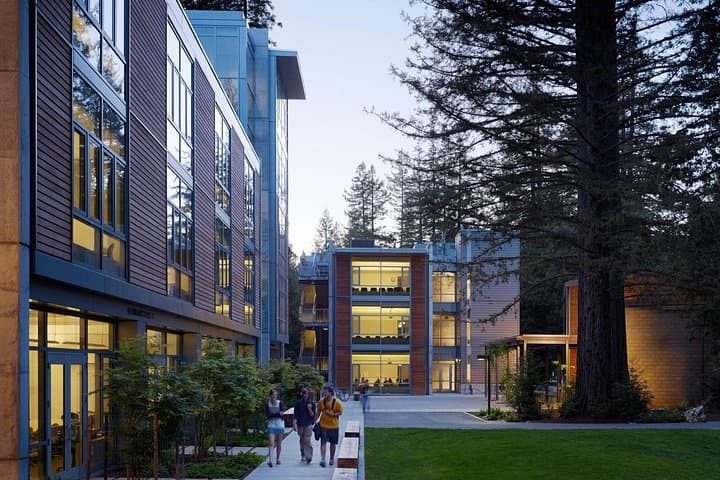


Morning light sifts through redwood trunks and the campus smells of damp duff and salt from the bay — you step onto a narrow path above the ocean and the university unfolds like a neighborhood of hidden viewpoints. This self-guided walking tour uses an app to guide you through oak-bordered meadows, paved quads, and shaded redwood gullies, letting you pause at a viewpoint or linger inside a college courtyard.
Morning light sifts through redwood trunks and the campus smells of damp duff and salt from the bay — you step onto a narrow path above the ocean and the university unfolds like a neighborhood of hidden viewpoints. This self-guided walking tour uses an app to guide you through oak-bordered meadows, paved quads, and shaded redwood gullies, letting you pause at a viewpoint or linger inside a college courtyard.
UC Santa Cruz sits on terraces of the Santa Cruz Mountains above Monterey Bay; the campus was founded in the 1960s with an experimental college system that still shapes its culture. Geology here is immediate: coastal uplift, marine terraces, and pockets of deep loam that give redwoods room to tower. The colleges — Cowell, Stevenson, Crown, Merrill, Oakes and others — each have a distinct character born of architecture and student life, from muraled commons to quiet libraries with ocean views.
Locals mix surf-town informality with academic intensity; expect student art, environmental activism history, and occasional public lectures. Short detours reward the curious: a bluff overlook toward Monterey Bay and wooded trails that feel wilder than their proximity to parking lots suggests.
Practical guidance: routes are mostly paved or packed dirt with stairs and short hills — plan 1–3 miles depending on stops and roughly 150–300 ft cumulative elevation change on a typical loop. Wear grippy walking shoes, bring water, and download the app before you arrive; the campus loop bus can save a steep climb to the East Field House. Aim for morning or late afternoon for cooler air and stronger light for photos.