THE ADVENTURE COLLECTIVE® · Independent discovery and booking for outdoor travel

Walk Montpellier at your own pace with an offline audio and written guide that connects medieval streets, the world’s oldest medical school, and hidden archaeological surprises. Ideal for independent travelers who want history, architecture, and local color on a flexible 2–3 hour route.
Walk Montpellier at your own pace with an offline audio and written guide that connects medieval streets, the world’s oldest medical school, and hidden archaeological surprises. Ideal for independent travelers who want history, architecture, and local color on a flexible 2–3 hour route.
The stone underfoot is warm from a Provençal sun as the narrow streets of Montpellier open into their first square: a fountain gurgles, a tram fades at the far edge, and the city begins to tell stories.
Verified experiences and guided adventures in the surrounding area.
Operated by Tourific · Montpellier, Occitanie
The stone underfoot is warm from a Provençal sun as the narrow streets of Montpellier open into their first square: a fountain gurgles, a tram fades at the far edge, and the city begins to tell stories.
This self‑guided audio walk threads through Montpellier’s layered past — a fortified hill that grew into a medieval hub, the birthplace ties to Aragonese royalty, and the world’s oldest continuously operating medical school where students once debated anatomy by candlelight. Geology shows itself in the pale limestone façades and the small hill that marked the city’s origin; culture is audible in café chatter, regional Occitan signs, and the carved symbols on Louis XIV’s triumphal Porte du Peyrou.
Expect cobbled lanes, hidden courtyards, and a preserved 13th‑century mikvé beneath the pavement. The route balances iconic stops (Three Graces Fountain, Cathedral doorway) with local textures — bakeries, market stalls, and shaded botanical plots.
Practically, the tour runs about 2.5 hours and is fully offline once downloaded. Start early to avoid midday heat and allow time for detours: a museum pause or a café terrace. Navigation relies on an interactive map and images to match facades; no guide required, but wear comfortable shoes, carry water, and keep a phone battery for the audio. For accessibility, much is on paved streets though some alleys are uneven.
This walk is an urban exploration: history in stone, medicine in classrooms, and a city that rewards slow attention.
The suggested route takes about 2–3 hours (150 minutes), but you can shorten or extend it with detours to museums and cafés.
Yes — once downloaded the audio and map work offline for up to one year on iOS and Android.
Much of the central route is on paved streets, but some alleys and cobbled sections may be uneven; outdoor slopes exist near the Peyrou.
Yes — the self‑guided format and interactive map let you begin at the nearest listed stop and follow the audio chapters in any order.
Tourific operates guided outdoor trips and adventures with an emphasis on safety, stewardship, and memorable experiences.
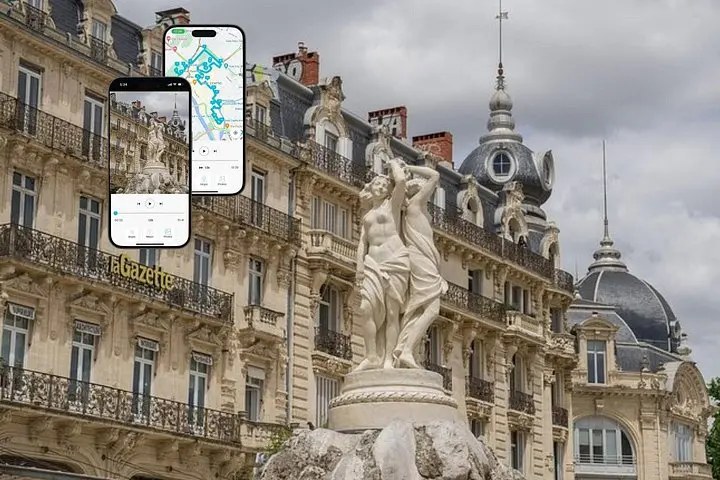



The stone underfoot is warm from a Provençal sun as the narrow streets of Montpellier open into their first square: a fountain gurgles, a tram fades at the far edge, and the city begins to tell stories.
The stone underfoot is warm from a Provençal sun as the narrow streets of Montpellier open into their first square: a fountain gurgles, a tram fades at the far edge, and the city begins to tell stories.
This self‑guided audio walk threads through Montpellier’s layered past — a fortified hill that grew into a medieval hub, the birthplace ties to Aragonese royalty, and the world’s oldest continuously operating medical school where students once debated anatomy by candlelight. Geology shows itself in the pale limestone façades and the small hill that marked the city’s origin; culture is audible in café chatter, regional Occitan signs, and the carved symbols on Louis XIV’s triumphal Porte du Peyrou.
Expect cobbled lanes, hidden courtyards, and a preserved 13th‑century mikvé beneath the pavement. The route balances iconic stops (Three Graces Fountain, Cathedral doorway) with local textures — bakeries, market stalls, and shaded botanical plots.
Practically, the tour runs about 2.5 hours and is fully offline once downloaded. Start early to avoid midday heat and allow time for detours: a museum pause or a café terrace. Navigation relies on an interactive map and images to match facades; no guide required, but wear comfortable shoes, carry water, and keep a phone battery for the audio. For accessibility, much is on paved streets though some alleys are uneven.
This walk is an urban exploration: history in stone, medicine in classrooms, and a city that rewards slow attention.