THE ADVENTURE COLLECTIVE® · Independent discovery and booking for outdoor travel

Take an early flight from Zanzibar for a compact, full-day safari into Selous Game Reserve (Nyerere National Park). Expect game drives, a bush lunch, and riverine landscapes where elephants, hippos, and prolific birdlife define the day.
Take an early flight from Zanzibar for a compact, full-day safari into Selous Game Reserve (Nyerere National Park). Expect game drives, a bush lunch, and riverine landscapes where elephants, hippos, and prolific birdlife define the day.
You lift off from Zanzibar before dawn and the ocean shrinks beneath you as the aircraft banks toward the deep greens and wide rivers of Selous — now officially part of Nyerere National Park. By midmorning the land is close: flat floodplains braided with oxbow lakes, fever trees lining sluggish channels, and a horizon that seems to breathe with wildlife.
Verified experiences and guided adventures in the surrounding area.
Operated by Gecko Adventure Tanzania · Selous Game Reserve, Ruvuma Region
You lift off from Zanzibar before dawn and the ocean shrinks beneath you as the aircraft banks toward the deep greens and wide rivers of Selous — now officially part of Nyerere National Park. By midmorning the land is close: flat floodplains braided with oxbow lakes, fever trees lining sluggish channels, and a horizon that seems to breathe with wildlife.
Selous covers roughly 50,000 km² and was named a UNESCO World Heritage Site in 1982 for its intact ecosystems and large mammal populations. Geologically the reserve is a low-lying basin crisscrossed by the Rufiji River system; culturally it sits on the margins of small fishing and pastoral communities whose livelihoods still follow seasonal water. Boat channels and game tracks create a patchwork of viewing opportunities where hippos dare the river and lions watch the plains.
The tour rhythm is practical: an early domestic flight from Zanzibar, a guided game drive with coffee break, a set bush lunch, then return flight the same afternoon. Expect dusty tracks, open-sided vehicles, and variable game sightings — elephant herds and crocodiles are common, sightings of big cats depend on luck and season.
Plan for small-aircraft baggage limits, strong sun, and insects. Wear neutral colors, bring binoculars and a camera with a long lens, and carry water and motion-sickness remedies. Timing your visit in the dry months increases road access and visibility; rains bring lush scenery but muddier tracks.
This is a compact way to experience one of Africa’s largest protected landscapes in a single day — brief, intense, and shaped by the river that keeps the park alive.
The itinerary includes an early domestic flight from Zanzibar to an airstrip near Selous (Nyerere). Transfers to and from your Zanzibar pickup point are arranged as part of the tour.
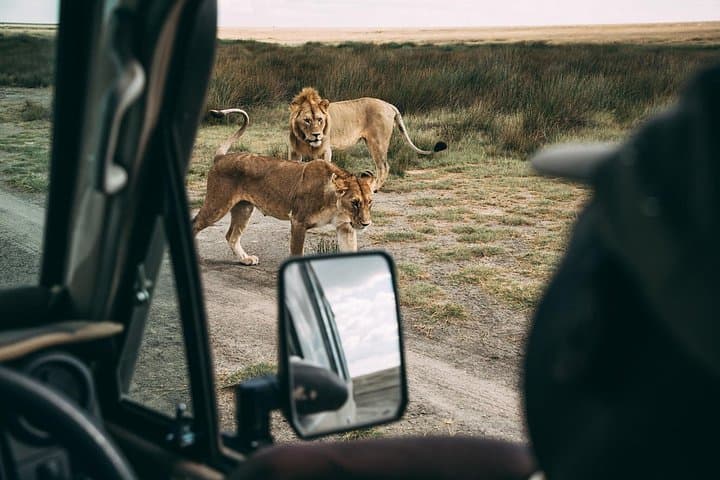
Common sightings include elephants, hippos, crocodiles, giraffes, buffalo and a wide range of waterbirds; sightings of lions and leopards are possible but not guaranteed on a single day.
Yes — small charter aircraft have strict weight and size limits. Travel light and pack essentials in a soft-sided daypack; check with the operator for exact limits before travel.
The operator notes infants must sit on laps and the trip is not recommended for pregnant travelers or those with spinal/heart conditions; check health advisories before booking.
Gecko Adventure Tanzania operates guided outdoor trips and adventures with an emphasis on safety, stewardship, and memorable experiences.



You lift off from Zanzibar before dawn and the ocean shrinks beneath you as the aircraft banks toward the deep greens and wide rivers of Selous — now officially part of Nyerere National Park. By midmorning the land is close: flat floodplains braided with oxbow lakes, fever trees lining sluggish channels, and a horizon that seems to breathe with wildlife.
You lift off from Zanzibar before dawn and the ocean shrinks beneath you as the aircraft banks toward the deep greens and wide rivers of Selous — now officially part of Nyerere National Park. By midmorning the land is close: flat floodplains braided with oxbow lakes, fever trees lining sluggish channels, and a horizon that seems to breathe with wildlife.
Selous covers roughly 50,000 km² and was named a UNESCO World Heritage Site in 1982 for its intact ecosystems and large mammal populations. Geologically the reserve is a low-lying basin crisscrossed by the Rufiji River system; culturally it sits on the margins of small fishing and pastoral communities whose livelihoods still follow seasonal water. Boat channels and game tracks create a patchwork of viewing opportunities where hippos dare the river and lions watch the plains.
The tour rhythm is practical: an early domestic flight from Zanzibar, a guided game drive with coffee break, a set bush lunch, then return flight the same afternoon. Expect dusty tracks, open-sided vehicles, and variable game sightings — elephant herds and crocodiles are common, sightings of big cats depend on luck and season.
Plan for small-aircraft baggage limits, strong sun, and insects. Wear neutral colors, bring binoculars and a camera with a long lens, and carry water and motion-sickness remedies. Timing your visit in the dry months increases road access and visibility; rains bring lush scenery but muddier tracks.
This is a compact way to experience one of Africa’s largest protected landscapes in a single day — brief, intense, and shaped by the river that keeps the park alive.