
Semenggoh Wildlife Centre Tour: Discover Sarawak’s Orangutans Near Kuching
Visit Semenggoh Wildlife Centre to watch semi‑wild orangutans during scheduled feedings and learn how rehabilitation returns individuals to the forest. This short, accessible tour from Kuching combines easy walking, interpretive exhibits, and strong conservation messaging.
An Adventure In Kuching.
Visit Semenggoh Wildlife Centre to watch semi‑wild orangutans during scheduled feedings and learn how rehabilitation returns individuals to the forest. This short, accessible tour from Kuching combines easy walking, interpretive exhibits, and strong conservation messaging.
Read the full experience
You step from an air‑conditioned van into humid forest air, the sound of leaves and distant calls folding around the small clearing where the feeding platform waits. Morning light slants through tall dipterocarp trunks; guides point out trails worn into the humus where semi‑wild orangutans sometimes pass by on their own terms.
You step from an air‑conditioned van into humid forest air, the sound of leaves and distant calls folding around the small clearing where the feeding platform waits. Morning light slants through tall dipterocarp trunks; guides point out trails worn into the humus where semi‑wild orangutans sometimes pass by on their own terms.
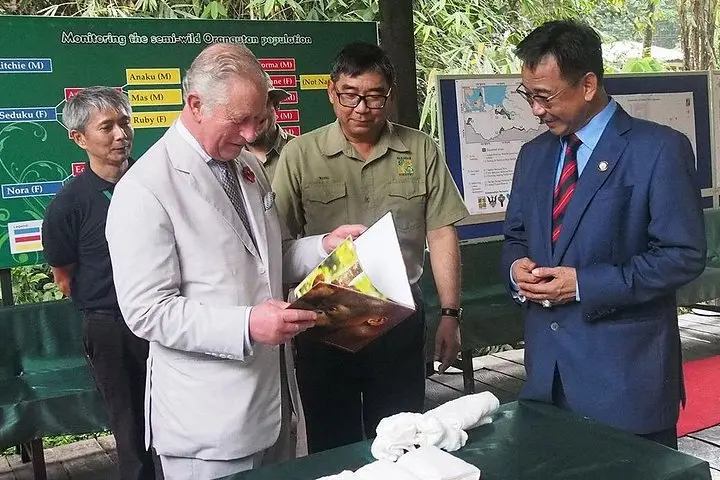
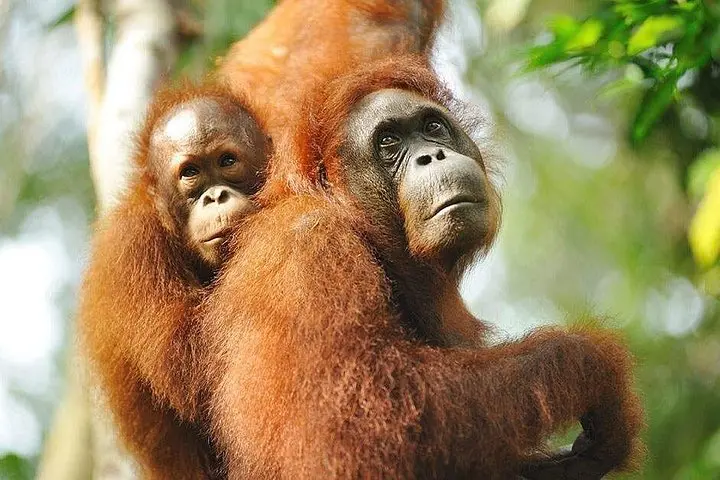
Opened in 1975, Semenggoh grew as Sarawak’s primary orangutan rehabilitation site — a working program that taught rescued and orphaned apes to forage and build nests. The reserve sits on lowland tropical forest typical of the Kuching hinterland; soil is lateritic, terrain gently rolling, with seasonal fruiting that dictates how often animals visit the platform. Local communities around Kuching have long interacted with the forest, and the centre includes an Orangutan Gallery and botanical research features that explain both cultural links and the science behind release programs.
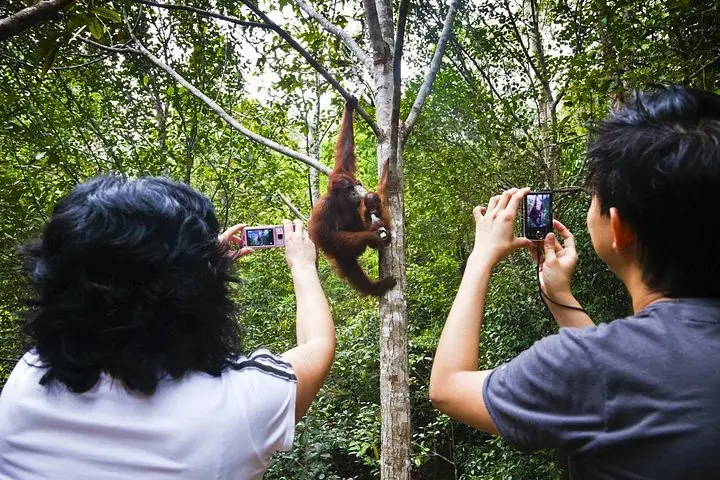
On a 3‑hour visit you’ll walk short, easy paths, spend time at the observation platform during scheduled feedings (usually 09:00 and 15:00) and learn the rehabilitation story from staff. Expect muddy trails after rain, binoculars to pick out lone adults high in the canopy, and the occasional hornbill or macaque as company.
Practical guidance: book morning slots to avoid heat and afternoon rain, follow strict viewing rules (no flash photography, no approach), wear sturdy shoes and insect protection, and bring small change for onsite donations or park fees. A successful visit mixes patience, quiet, and respect for animals that are being readied — or already learning — to live free.
Frequently asked questions
The tour runs about 3 hours total including transfer time from Kuching, with roughly 1–2 hours spent at Semenggoh during feeding and walks.
No—sightings aren’t guaranteed; fruiting in the forest can keep animals away from the feeding platform, which is a positive sign of successful rehabilitation.
Yes; the site is family‑friendly though infants must sit on laps during transport and children should be supervised at all times near the platform.
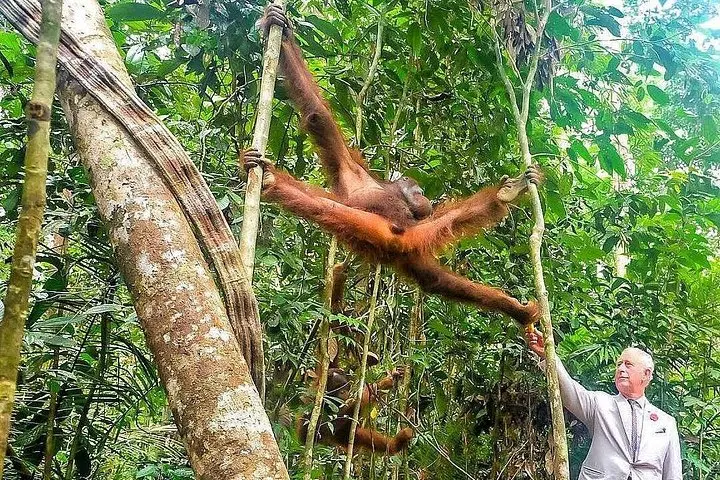
No—feeding or touching is prohibited to protect both animals and visitors and to support their return to wild behavior.
About This Experience
Asni Tours & Travel (M) Sdn Bhd operates guided outdoor trips and adventures with an emphasis on safety, stewardship, and memorable experiences.
Adventure tips
Recommended gear
- Binoculars: Helps spot orangutans high in the canopy and observe behavior without approaching.
- Insect repellent: Tropical forests host mosquitoes and midges—repellent improves comfort on trails.
- Light rain jacket: Afternoon showers are common; a compact waterproof keeps you dry between shuttle and exhibits.
- Sturdy closed‑toe shoes: Protects feet on muddy or uneven forest paths during the short walk to viewing areas.
Photos of the experience
Related adventures & guides
Read the full experience
You step from an air‑conditioned van into humid forest air, the sound of leaves and distant calls folding around the small clearing where the feeding platform waits. Morning light slants through tall dipterocarp trunks; guides point out trails worn into the humus where semi‑wild orangutans sometimes pass by on their own terms.
You step from an air‑conditioned van into humid forest air, the sound of leaves and distant calls folding around the small clearing where the feeding platform waits. Morning light slants through tall dipterocarp trunks; guides point out trails worn into the humus where semi‑wild orangutans sometimes pass by on their own terms.
Opened in 1975, Semenggoh grew as Sarawak’s primary orangutan rehabilitation site — a working program that taught rescued and orphaned apes to forage and build nests. The reserve sits on lowland tropical forest typical of the Kuching hinterland; soil is lateritic, terrain gently rolling, with seasonal fruiting that dictates how often animals visit the platform. Local communities around Kuching have long interacted with the forest, and the centre includes an Orangutan Gallery and botanical research features that explain both cultural links and the science behind release programs.
On a 3‑hour visit you’ll walk short, easy paths, spend time at the observation platform during scheduled feedings (usually 09:00 and 15:00) and learn the rehabilitation story from staff. Expect muddy trails after rain, binoculars to pick out lone adults high in the canopy, and the occasional hornbill or macaque as company.
Practical guidance: book morning slots to avoid heat and afternoon rain, follow strict viewing rules (no flash photography, no approach), wear sturdy shoes and insect protection, and bring small change for onsite donations or park fees. A successful visit mixes patience, quiet, and respect for animals that are being readied — or already learning — to live free.
Make a day of it nearby.
Verified experiences and guided adventures in the surrounding area.