THE ADVENTURE COLLECTIVE® · Independent discovery and booking for outdoor travel

Spend 5–6 hours moving from Diamond Head overlooks to the only royal palace in the U.S., with stops at Hawaiian Mission Houses and Bishop Museum. This semi‑private tour pairs coastal vistas with deep dives into Hawaiʻi’s political and cultural history.
Spend 5–6 hours moving from Diamond Head overlooks to the only royal palace in the U.S., with stops at Hawaiian Mission Houses and Bishop Museum. This semi‑private tour pairs coastal vistas with deep dives into Hawaiʻi’s political and cultural history.
You step out of an air‑conditioned minivan and the city exhales—salt from the nearshore breeze mixing with the sharper tang of diesel and cut grass from the Capitol grounds. The tour threads through Honolulu’s layered geography: a drive around Diamond Head’s coastal spine, a pause at an overlook that dares you to trace Molokai and Maui on the horizon, then into neighborhoods where pavement gives way to stone and history.
Verified experiences and guided adventures in the surrounding area.
Operated by Spiritual Tours Hawaii · Honolulu, Hawaii
You step out of an air‑conditioned minivan and the city exhales—salt from the nearshore breeze mixing with the sharper tang of diesel and cut grass from the Capitol grounds. The tour threads through Honolulu’s layered geography: a drive around Diamond Head’s coastal spine, a pause at an overlook that dares you to trace Molokai and Maui on the horizon, then into neighborhoods where pavement gives way to stone and history.
The route maps three distinct chapters of Oʻahu’s past. Ancient volcanic geology created the arc of ridges and bays you see from Diamond Head; 19th‑century missionaries left brick and timber marks at the Hawaiian Mission Houses and Kawaiahaʻo Church; and the Hawaiian monarchy’s political heart still sits in Iolani Palace, the only royal residence on U.S. soil. Bishop Museum houses scientific collections that chart the islands’ natural history and cultural continuity.
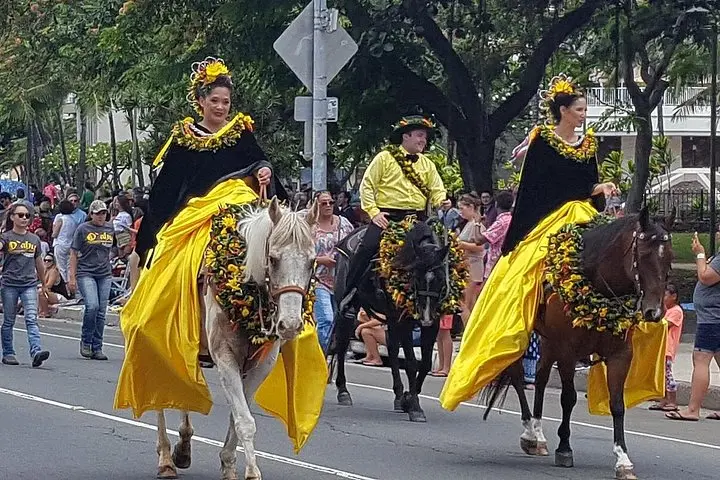
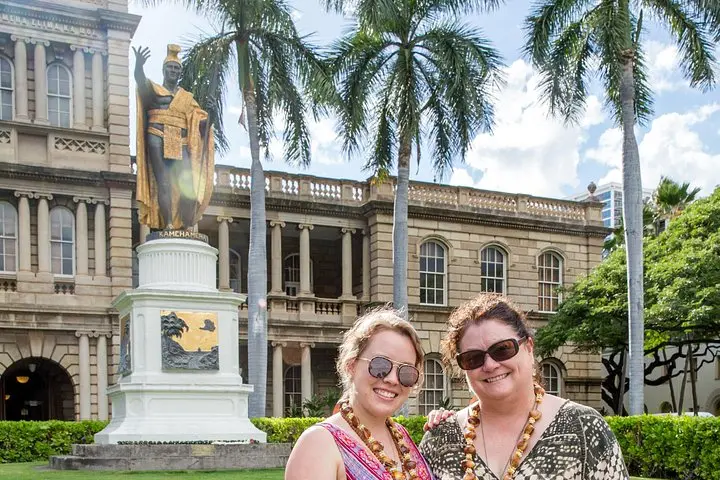
Culturally the tour balances stories of chiefs and missionaries, the rise of a unified kingdom under Kamehameha and the later constitutional shifts that led to the palace’s contested legacy. Guides typically point out surviving native stonework, courthouse facades, and the ways Honolulu’s urban grid overlays ancient ahupuaʻa boundaries.
Practical guidance: plan for a 5–6 hour day with several short walks and museum stops (admissions usually extra). Comfortable, sun‑protective clothing and steady shoes make transitions between van and sites easier; bring a reusable bottle—your guide supplies bottled water but refills save waste. Morning departures avoid the heaviest traffic and midday heat. The experience is low‑impact physically but rich in context—bring curiosity and a respect for the living cultural sites you’ll visit.
No—admission to Iolani Palace, Bishop Museum and similar sites is typically not included; bring cash or card and consider pre‑booking busy exhibits.
Yes—hotel pickup and drop‑off within specified Honolulu zones are included; confirm your pickup point when booking.
The tour and transport are wheelchair accessible, but some historic buildings have limited interior access—contact the operator for specifics.
Morning departures are best to avoid traffic, cooler temperatures, and larger midday crowds at popular sites.
Spiritual Tours Hawaii operates guided outdoor trips and adventures with an emphasis on safety, stewardship, and memorable experiences.
You step out of an air‑conditioned minivan and the city exhales—salt from the nearshore breeze mixing with the sharper tang of diesel and cut grass from the Capitol grounds. The tour threads through Honolulu’s layered geography: a drive around Diamond Head’s coastal spine, a pause at an overlook that dares you to trace Molokai and Maui on the horizon, then into neighborhoods where pavement gives way to stone and history.
You step out of an air‑conditioned minivan and the city exhales—salt from the nearshore breeze mixing with the sharper tang of diesel and cut grass from the Capitol grounds. The tour threads through Honolulu’s layered geography: a drive around Diamond Head’s coastal spine, a pause at an overlook that dares you to trace Molokai and Maui on the horizon, then into neighborhoods where pavement gives way to stone and history.
The route maps three distinct chapters of Oʻahu’s past. Ancient volcanic geology created the arc of ridges and bays you see from Diamond Head; 19th‑century missionaries left brick and timber marks at the Hawaiian Mission Houses and Kawaiahaʻo Church; and the Hawaiian monarchy’s political heart still sits in Iolani Palace, the only royal residence on U.S. soil. Bishop Museum houses scientific collections that chart the islands’ natural history and cultural continuity.
Culturally the tour balances stories of chiefs and missionaries, the rise of a unified kingdom under Kamehameha and the later constitutional shifts that led to the palace’s contested legacy. Guides typically point out surviving native stonework, courthouse facades, and the ways Honolulu’s urban grid overlays ancient ahupuaʻa boundaries.
Practical guidance: plan for a 5–6 hour day with several short walks and museum stops (admissions usually extra). Comfortable, sun‑protective clothing and steady shoes make transitions between van and sites easier; bring a reusable bottle—your guide supplies bottled water but refills save waste. Morning departures avoid the heaviest traffic and midday heat. The experience is low‑impact physically but rich in context—bring curiosity and a respect for the living cultural sites you’ll visit.