THE ADVENTURE COLLECTIVE® · Independent discovery and booking for outdoor travel

A five-day semi-private trek from Santa Marta to Ciudad Perdida combines steep stone steps, river baths and nights in basic campsites. The route finishes at the terraces of the Tayrona and includes an immersive visit to a Wiwa indigenous community.
A five-day semi-private trek from Santa Marta to Ciudad Perdida combines steep stone steps, river baths and nights in basic campsites. The route finishes at the terraces of the Tayrona and includes an immersive visit to a Wiwa indigenous community.
A humid pre-dawn in Santa Marta gives way to a private van ferrying a small group toward the Sierra Nevada’s green edge. You step out into heat and birdcalls, trade the last paved road for a dirt track, then begin walking: day one covers roughly 7.6 km through secondary rainforest, river crossings and crunchy leaf litter toward the first camp.
Verified experiences and guided adventures in the surrounding area.
Operated by Aracanto Colombia · Santa Marta, Magdalena
A humid pre-dawn in Santa Marta gives way to a private van ferrying a small group toward the Sierra Nevada’s green edge. You step out into heat and birdcalls, trade the last paved road for a dirt track, then begin walking: day one covers roughly 7.6 km through secondary rainforest, river crossings and crunchy leaf litter toward the first camp.
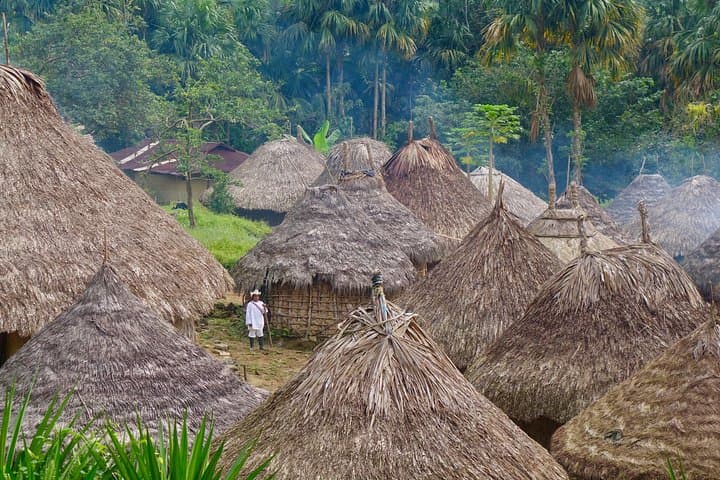
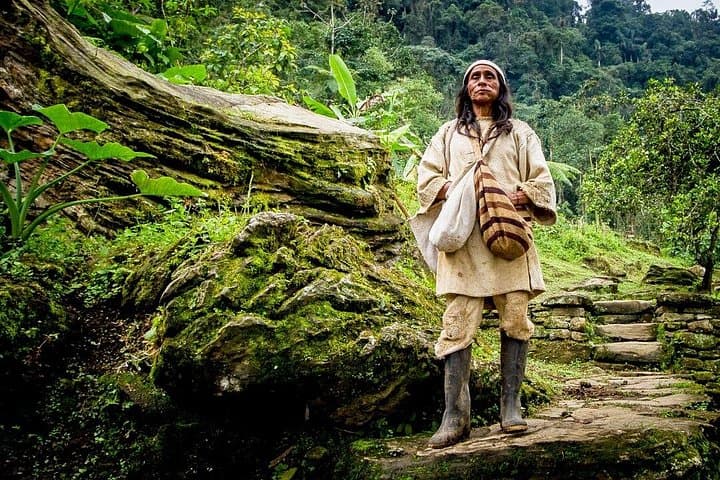
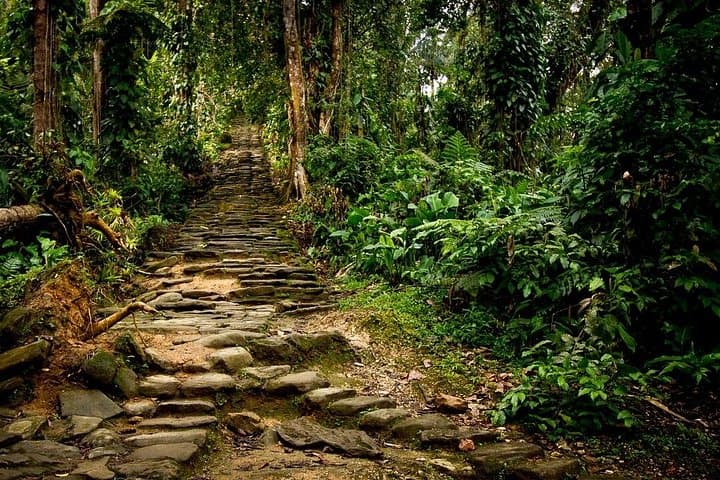
The Lost City (Ciudad Perdida) was built by the Tayrona from around 700 A.D.; its terraces, stone roads and plazas sat above river valleys and were part of a dense network of settlements. Geologically the site perches on the lower slopes of the Sierra Nevada de Santa Marta — steep, rapidly eroding mountains that push tropical rivers into tight gorges. Culturally the trek culminates not only at the stone terraces (after climbing about 1,200 carved steps) but with a visit to a Wiwa community where guides and hosts share stories, crafts and a living connection to the place.
Practically: expect challenging, sustained hiking on uneven stone steps and muddy trails, and basic campsites with showers, toilets and hammocks or bunk beds with mosquito nets. You’ll bathe in rivers, carry a daypack, and rely on staff for meals and tents. Private transport and a bilingual guide are included, as are entrance fees; trips also contribute donations and a Wiwa guide visit.
Plan for rain, bring waterproof footwear, and pace your ascent — the route rewards slow attention with cool river pools, birdsong and a palpable sense of history.
You should have a moderate-to-high fitness level; expect multiple days of 6–8 hour hikes on uneven terrain and to climb roughly 1,200 stone steps to reach the site.
Camps are basic but clean with showers, toilets and hammocks or bunk beds equipped with mosquito nets; guides handle meals and tent logistics.
The visit is part of this tour’s itinerary and includes an indigenous guide; follow local protocols and the guide’s instructions to ensure a respectful visit.
The drier months (roughly December–March) have more stable trails and fewer heavy rains, though the route is open year-round with wetter periods in April–May and September–November.
Aracanto Colombia operates guided outdoor trips and adventures with an emphasis on safety, stewardship, and memorable experiences.

A humid pre-dawn in Santa Marta gives way to a private van ferrying a small group toward the Sierra Nevada’s green edge. You step out into heat and birdcalls, trade the last paved road for a dirt track, then begin walking: day one covers roughly 7.6 km through secondary rainforest, river crossings and crunchy leaf litter toward the first camp.
A humid pre-dawn in Santa Marta gives way to a private van ferrying a small group toward the Sierra Nevada’s green edge. You step out into heat and birdcalls, trade the last paved road for a dirt track, then begin walking: day one covers roughly 7.6 km through secondary rainforest, river crossings and crunchy leaf litter toward the first camp.
The Lost City (Ciudad Perdida) was built by the Tayrona from around 700 A.D.; its terraces, stone roads and plazas sat above river valleys and were part of a dense network of settlements. Geologically the site perches on the lower slopes of the Sierra Nevada de Santa Marta — steep, rapidly eroding mountains that push tropical rivers into tight gorges. Culturally the trek culminates not only at the stone terraces (after climbing about 1,200 carved steps) but with a visit to a Wiwa community where guides and hosts share stories, crafts and a living connection to the place.
Practically: expect challenging, sustained hiking on uneven stone steps and muddy trails, and basic campsites with showers, toilets and hammocks or bunk beds with mosquito nets. You’ll bathe in rivers, carry a daypack, and rely on staff for meals and tents. Private transport and a bilingual guide are included, as are entrance fees; trips also contribute donations and a Wiwa guide visit.
Plan for rain, bring waterproof footwear, and pace your ascent — the route rewards slow attention with cool river pools, birdsong and a palpable sense of history.