THE ADVENTURE COLLECTIVE® · Independent discovery and booking for outdoor travel

Walk the Sentiero degli Dei with a local guide and trade postcard views for up-close stories of cliffs, terraces, and lemon groves. This private tour from Positano to Nocelle blends natural drama with local history and practical logistics.
Walk the Sentiero degli Dei with a local guide and trade postcard views for up-close stories of cliffs, terraces, and lemon groves. This private tour from Positano to Nocelle blends natural drama with local history and practical logistics.
The first steps are always an agreement with the sea. From Positano’s main square, the town’s pastel houses hang above the water like a pageant of stacked postcards, and the walk begins with that view cutting into your field of vision. The Path of the Gods—Sentiero degli Dei—lifts you up onto limestone ledges where the Mediterranean opens into a horizon of blue. On Alessandro’s private tour, the trail becomes a local story in motion: olive terraces, lemon groves, and cliffs that test your balance and reward your attention.
Verified experiences and guided adventures in the surrounding area.
Operated by Amalfi Coast Hikes · Positano, Campania
The first steps are always an agreement with the sea. From Positano’s main square, the town’s pastel houses hang above the water like a pageant of stacked postcards, and the walk begins with that view cutting into your field of vision. The Path of the Gods—Sentiero degli Dei—lifts you up onto limestone ledges where the Mediterranean opens into a horizon of blue. On Alessandro’s private tour, the trail becomes a local story in motion: olive terraces, lemon groves, and cliffs that test your balance and reward your attention.
This stretch of Amalfi Coast has been walked for centuries—ancient mule tracks linking hamlets high above the shoreline. Geologically it’s folded limestone: jagged strata and karst outcrops carved by wind and sea. Culturally it’s an agricultural landscape; you’ll pass terraces where grapes and fragrant lemons still grow, and hear tales of fishermen, monks, and local saints. Alessandro, a guide raised in the region, frames these details with myths—why the gods might have chosen such a runway of rock—and practical local insights about buses, coffees, and the 1,800-step descent to Positano.
The trail itself runs roughly 6–8 kilometers depending on route, with rolling ups and downs and a highest point around 600–650 meters. Terrain is rocky, often narrow, with occasional loose scree and short steep pitches. From Nocelle the world opens into uninterrupted sea views; Capri sits like a punctuation mark in the distance. Wildlife is subtle: lizards sun on stones, and seabirds wheel offshore; in spring, aromatic herbs scent the air.
For travelers, the walk is best approached like a half-day expedition. Start early to avoid midday heat and the busiest hours, wear sturdy shoes with grip, and carry 1.5–2 liters of water per person. The private tour provides local stories and snacks; if you prefer a picnic, request it in advance. Logistics are simple: meet at the Terminal restaurant in Positano (or take the SITA bus from Amalfi to Agerola and join there). At the end, choose between the hourly local bus from Nocelle or descending on foot via the long stone stairway into town.
Practical cautions: the trail can be exposed to sun and wind, and sections are uneven—those with limited mobility or cardiovascular issues should avoid steep stretches. Weather can alter the trail quickly; the operator cancels in heavy rain. But under clear skies, the Sentiero degli Dei offers one of Italy’s clearest conversations between land and sea—intense, immediate, and generous with views.
The trail is moderate—beginners with reasonable fitness can complete it, but expect rocky footing and short steep pitches; a private guide paces the group and can adapt stops.
You can take the local SITA bus (roughly hourly) down to Positano or descend the 1,800 stone steps into town; the bus is faster and easier after a long hike.
The tour includes snacks; water is not reliably provided so bring your own or request additional provisions when booking.
Children can join if they are used to multi-hour walks and uneven terrain; check with the guide about age and fitness before booking.
The operator cancels the tour in heavy rain for safety—refunds are available if cancelled at least 24 hours prior or by the operator for weather.
No—organizers advise against participation for travelers with significant spinal or cardiovascular conditions due to uneven terrain and elevation changes.
Amalfi Coast Hikes operates guided outdoor trips and adventures with an emphasis on safety, stewardship, and memorable experiences.
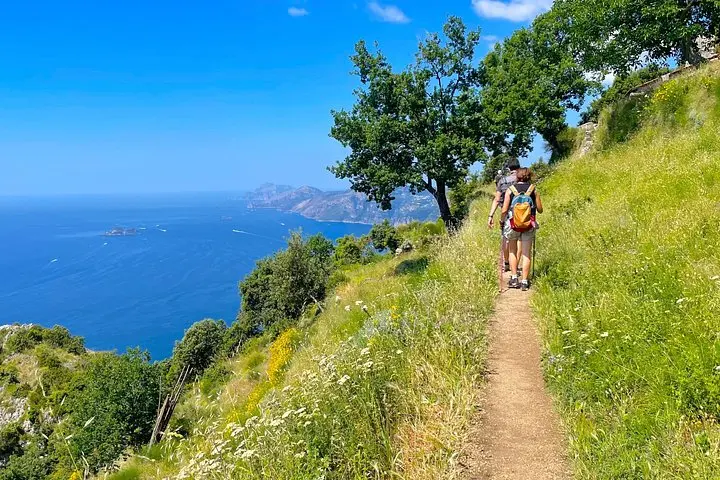
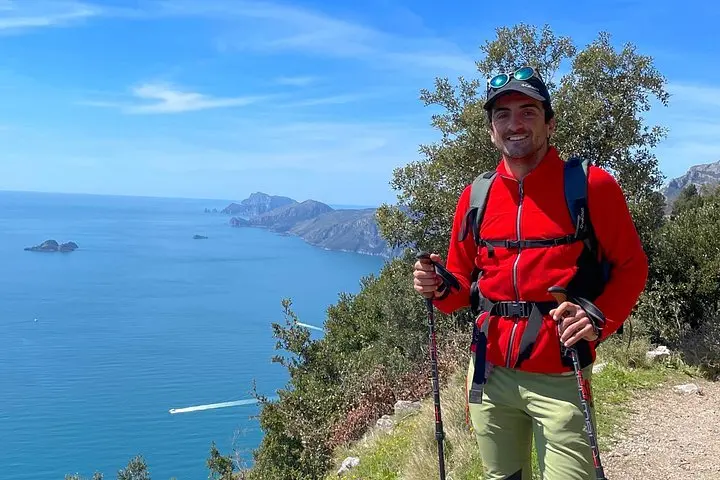
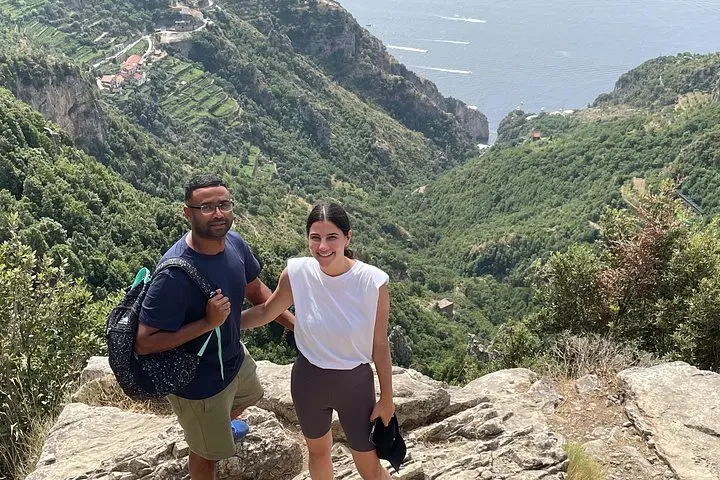
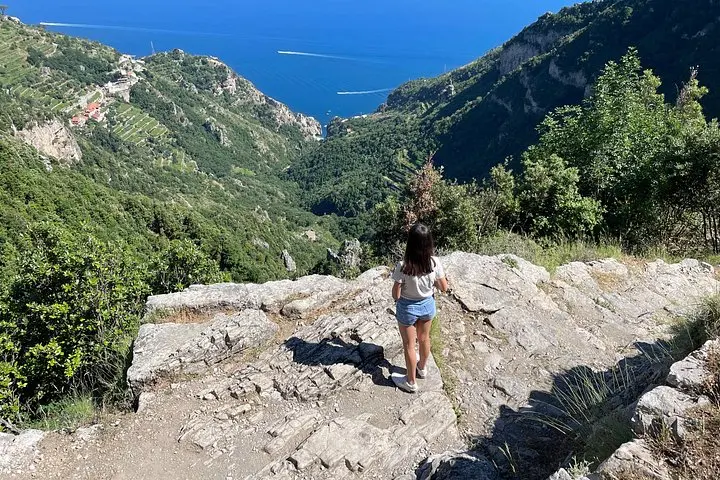
The first steps are always an agreement with the sea. From Positano’s main square, the town’s pastel houses hang above the water like a pageant of stacked postcards, and the walk begins with that view cutting into your field of vision. The Path of the Gods—Sentiero degli Dei—lifts you up onto limestone ledges where the Mediterranean opens into a horizon of blue. On Alessandro’s private tour, the trail becomes a local story in motion: olive terraces, lemon groves, and cliffs that test your balance and reward your attention.
The first steps are always an agreement with the sea. From Positano’s main square, the town’s pastel houses hang above the water like a pageant of stacked postcards, and the walk begins with that view cutting into your field of vision. The Path of the Gods—Sentiero degli Dei—lifts you up onto limestone ledges where the Mediterranean opens into a horizon of blue. On Alessandro’s private tour, the trail becomes a local story in motion: olive terraces, lemon groves, and cliffs that test your balance and reward your attention.
This stretch of Amalfi Coast has been walked for centuries—ancient mule tracks linking hamlets high above the shoreline. Geologically it’s folded limestone: jagged strata and karst outcrops carved by wind and sea. Culturally it’s an agricultural landscape; you’ll pass terraces where grapes and fragrant lemons still grow, and hear tales of fishermen, monks, and local saints. Alessandro, a guide raised in the region, frames these details with myths—why the gods might have chosen such a runway of rock—and practical local insights about buses, coffees, and the 1,800-step descent to Positano.
The trail itself runs roughly 6–8 kilometers depending on route, with rolling ups and downs and a highest point around 600–650 meters. Terrain is rocky, often narrow, with occasional loose scree and short steep pitches. From Nocelle the world opens into uninterrupted sea views; Capri sits like a punctuation mark in the distance. Wildlife is subtle: lizards sun on stones, and seabirds wheel offshore; in spring, aromatic herbs scent the air.
For travelers, the walk is best approached like a half-day expedition. Start early to avoid midday heat and the busiest hours, wear sturdy shoes with grip, and carry 1.5–2 liters of water per person. The private tour provides local stories and snacks; if you prefer a picnic, request it in advance. Logistics are simple: meet at the Terminal restaurant in Positano (or take the SITA bus from Amalfi to Agerola and join there). At the end, choose between the hourly local bus from Nocelle or descending on foot via the long stone stairway into town.
Practical cautions: the trail can be exposed to sun and wind, and sections are uneven—those with limited mobility or cardiovascular issues should avoid steep stretches. Weather can alter the trail quickly; the operator cancels in heavy rain. But under clear skies, the Sentiero degli Dei offers one of Italy’s clearest conversations between land and sea—intense, immediate, and generous with views.