THE ADVENTURE COLLECTIVE® · Independent discovery and booking for outdoor travel

A full-day private tour around Seogwipo that links waterfalls, a living folk village, a volcanic crater, a lava tube cave, coastal beach time and a forest path. Expect varied terrain, short hikes, and a close look at Jeju’s geology and culture.
A full-day private tour around Seogwipo that links waterfalls, a living folk village, a volcanic crater, a lava tube cave, coastal beach time and a forest path. Expect varied terrain, short hikes, and a close look at Jeju’s geology and culture.
Morning light slips between broad-leaved trees as your private guide gathers you for a day that moves from island coastlines into subterranean stone. You start with the hush at Cheonjiyeon Falls — water threading into a calm pool — then pass through a village where low, thatched roofs and stone walls still mark a way of island life.
Verified experiences and guided adventures in the surrounding area.
Operated by Opatrip.com South Korea · Seogwipo, Jeju-do
Morning light slips between broad-leaved trees as your private guide gathers you for a day that moves from island coastlines into subterranean stone. You start with the hush at Cheonjiyeon Falls — water threading into a calm pool — then pass through a village where low, thatched roofs and stone walls still mark a way of island life.
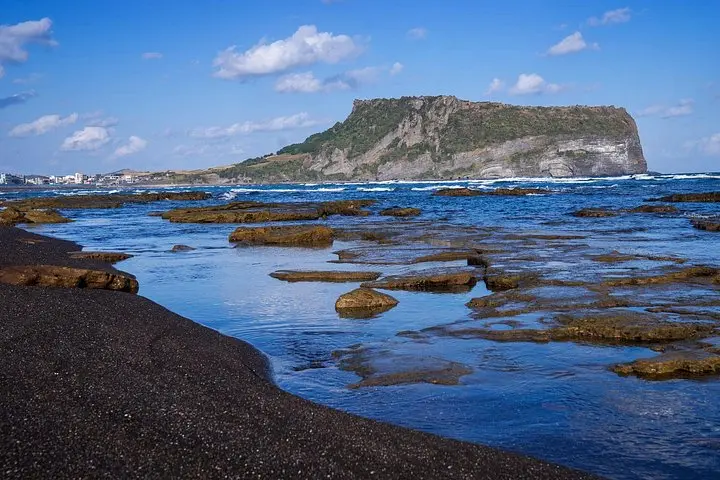
The island’s story is geological and human at once. Seongsan Ilchulbong (Sunrise Peak) is a tuff cone born of explosive interaction between lava and sea about 5,000 years ago; from its rim you read Jeju’s coastline in every swell and headland. Manjanggul Cave, one of the world’s longest lava tubes, offers an underground record of past eruptions in its flow lines and stalactites. At Seongeup Folk Village, centuries-old homes and customs explain how farmers and fishermen adapted to volcanic soil and ocean winds.
Hamdeok Beach provides a softer finish — shells, clear shallows, and a place to rinse the day off — before the gentle hush of Saryeoni Forest Path, where cedar trunks slow the pace. Expect easy-to-moderate walking, short stair sections at Seongsan, and cool, damp air in the cave.
Practical guidance: wear sturdy walking shoes, bring layered clothing (it can be windy on the coast and cool underground), and carry 1–1.5 liters of water. Many sites have modest entrance fees and variable crowds; starting early eases both. The tour supplies local transport and a guide; confirm pickup details in Seogwipo. Stick to marked trails in protected areas and avoid touching cave formations to preserve fragile geology.
Admission varies by site; some stops have modest entry fees that are typically not included—confirm with the operator before booking.
Yes; the itinerary is paced and considered easy to moderate, but Seongsan includes steep stairs and Manjanggul has uneven flooring—assess mobility case-by-case.
Expect multiple short walks and one moderate climb (Seongsan Ilchulbong) plus flat strolls on beach and forest paths; total walking is spread throughout the 9-hour day.
The tour includes transportation and guide services but not meals; pack snacks or plan to buy food at designated stops in Seogwipo.
Opatrip.com South Korea operates guided outdoor trips and adventures with an emphasis on safety, stewardship, and memorable experiences.
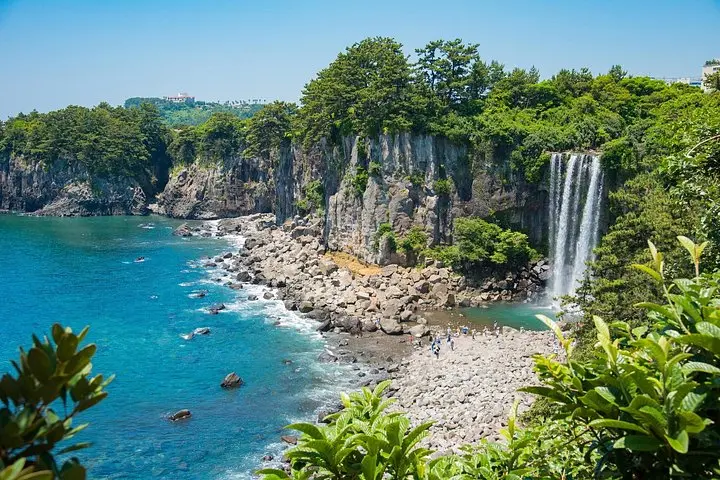

Morning light slips between broad-leaved trees as your private guide gathers you for a day that moves from island coastlines into subterranean stone. You start with the hush at Cheonjiyeon Falls — water threading into a calm pool — then pass through a village where low, thatched roofs and stone walls still mark a way of island life.
Morning light slips between broad-leaved trees as your private guide gathers you for a day that moves from island coastlines into subterranean stone. You start with the hush at Cheonjiyeon Falls — water threading into a calm pool — then pass through a village where low, thatched roofs and stone walls still mark a way of island life.
The island’s story is geological and human at once. Seongsan Ilchulbong (Sunrise Peak) is a tuff cone born of explosive interaction between lava and sea about 5,000 years ago; from its rim you read Jeju’s coastline in every swell and headland. Manjanggul Cave, one of the world’s longest lava tubes, offers an underground record of past eruptions in its flow lines and stalactites. At Seongeup Folk Village, centuries-old homes and customs explain how farmers and fishermen adapted to volcanic soil and ocean winds.
Hamdeok Beach provides a softer finish — shells, clear shallows, and a place to rinse the day off — before the gentle hush of Saryeoni Forest Path, where cedar trunks slow the pace. Expect easy-to-moderate walking, short stair sections at Seongsan, and cool, damp air in the cave.
Practical guidance: wear sturdy walking shoes, bring layered clothing (it can be windy on the coast and cool underground), and carry 1–1.5 liters of water. Many sites have modest entrance fees and variable crowds; starting early eases both. The tour supplies local transport and a guide; confirm pickup details in Seogwipo. Stick to marked trails in protected areas and avoid touching cave formations to preserve fragile geology.