
Seoul by Night: Gwangjang Market & Ikseon-dong Food Walk
Walk Seoul after dark through Gwangjang Market’s bustling food lanes and Ikseon-dong’s transformed hanok alleys. This three-hour evening tour pairs market snacks, Korean BBQ, and a quiet teahouse stop for a full-flavored snapshot of Seoul’s nightlife.
An Adventure In Seoul.
Walk Seoul after dark through Gwangjang Market’s bustling food lanes and Ikseon-dong’s transformed hanok alleys. This three-hour evening tour pairs market snacks, Korean BBQ, and a quiet teahouse stop for a full-flavored snapshot of Seoul’s nightlife.
Read the full experience
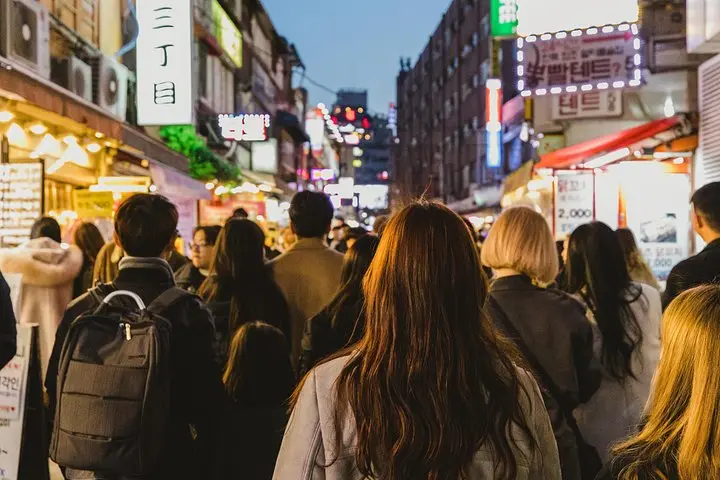
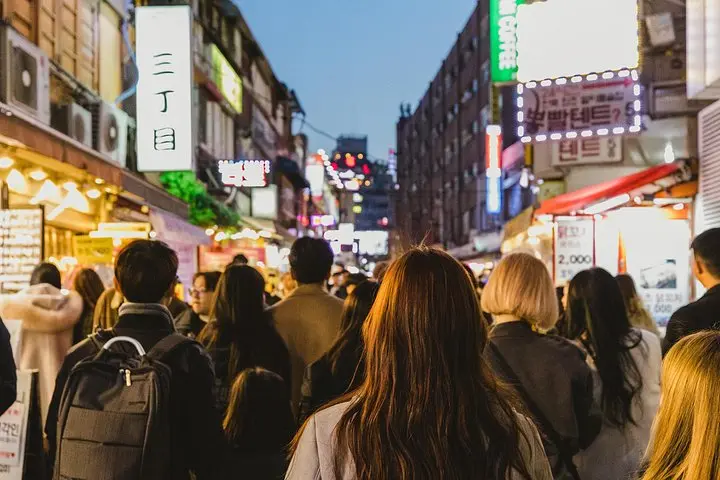
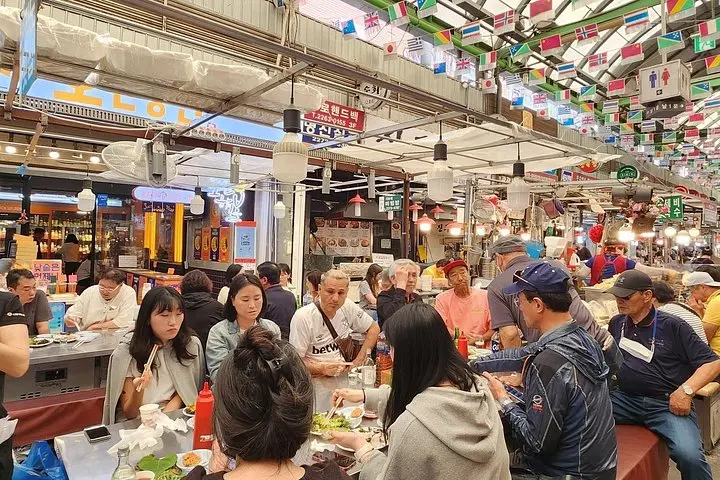
The evening arrives like a pulse through Seoul’s alleys: neon signs flicker on, the sizzle from grilled skewers threads into the air, and a steady stream of locals and visitors meanders toward market stalls. On this three-hour night walk you move with the current—first through Gwangjang Market’s fluorescent-lit corridors where vendors call out like old friends, then into Ikseon-dong’s narrow hanok lanes where wooden doors and modern cafes keep equally intimate company.
The evening arrives like a pulse through Seoul’s alleys: neon signs flicker on, the sizzle from grilled skewers threads into the air, and a steady stream of locals and visitors meanders toward market stalls. On this three-hour night walk you move with the current—first through Gwangjang Market’s fluorescent-lit corridors where vendors call out like old friends, then into Ikseon-dong’s narrow hanok lanes where wooden doors and modern cafes keep equally intimate company.
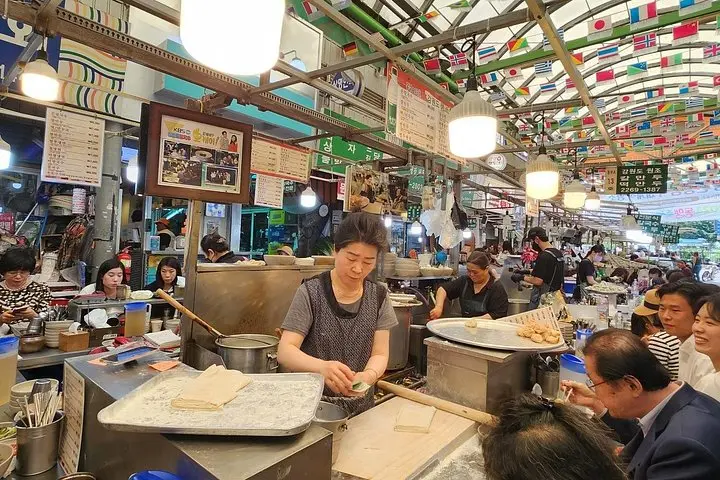
Gwangjang Market is one of Seoul’s oldest food markets, founded in the early 20th century, and its identity is rooted in practical, working-class fare—bindaetteok, mayak kimbap, and handmade noodles crowd the counters. Ikseon-dong, by contrast, highlights Seoul’s recent cultural remix: traditional hanok houses rewired into boutique eateries and teahouses since the 2010s. Walking these two neighborhoods offers a compact lesson in Seoul’s layered history—Joseon-era urban patterns meeting contemporary youth culture.
Expect a moderate pace of urban walking across paved streets, occasional steps, and crowded market alleys; the group size is small (up to 12), making it easy to navigate tight spaces. The tour includes three market snacks, a sit-down dinner (often Korean BBQ in a tucked-away spot), and traditional tea in a hanok teahouse. Practical notes: bring a transport card or local currency for small purchases, wear comfortable shoes for uneven market floors, and allow 3 hours in the evening when restaurants and stalls are busiest. Public transit connects both neighborhoods; the tour is wheelchair and stroller accessible but requires a moderate fitness level for standing and walking. Arrive with an appetite and a readiness to follow a guide through Seoul’s night rhythms.
Frequently asked questions
Yes—operators list the tour as wheelchair and stroller accessible, though some market alleys can be tight; contact the provider in advance to confirm arrangements.
The tour features specific market foods and a set dinner; notify the operator ahead of booking so they can advise on substitutions or nearby alternatives.
Standard meeting and finishing points are in the Gwangjang Market area with public transit access; exact pickup details are provided on booking confirmation.
Infants can ride in strollers or sit on laps, but the tour is not recommended for pregnant travelers—check health considerations with the operator before booking.
About This Experience
Gastro Tour Seoul operates guided outdoor trips and adventures with an emphasis on safety, stewardship, and memorable experiences.
Adventure tips
Recommended gear
- Comfortable walking shoes: Provides stability on crowded market floors and uneven alleys.
- T‑money transport card or small cash: Speeds subway travel and lets you pay vendors who prefer cash.
- Light, packable jacket: Keeps you warm on cooler nights and fits easily into a bag.
- Portable phone charger: Keeps your phone powered for photos, translation apps, and contact with the guide.
Photos of the experience
Related adventures & guides
Read the full experience
The evening arrives like a pulse through Seoul’s alleys: neon signs flicker on, the sizzle from grilled skewers threads into the air, and a steady stream of locals and visitors meanders toward market stalls. On this three-hour night walk you move with the current—first through Gwangjang Market’s fluorescent-lit corridors where vendors call out like old friends, then into Ikseon-dong’s narrow hanok lanes where wooden doors and modern cafes keep equally intimate company.
The evening arrives like a pulse through Seoul’s alleys: neon signs flicker on, the sizzle from grilled skewers threads into the air, and a steady stream of locals and visitors meanders toward market stalls. On this three-hour night walk you move with the current—first through Gwangjang Market’s fluorescent-lit corridors where vendors call out like old friends, then into Ikseon-dong’s narrow hanok lanes where wooden doors and modern cafes keep equally intimate company.
Gwangjang Market is one of Seoul’s oldest food markets, founded in the early 20th century, and its identity is rooted in practical, working-class fare—bindaetteok, mayak kimbap, and handmade noodles crowd the counters. Ikseon-dong, by contrast, highlights Seoul’s recent cultural remix: traditional hanok houses rewired into boutique eateries and teahouses since the 2010s. Walking these two neighborhoods offers a compact lesson in Seoul’s layered history—Joseon-era urban patterns meeting contemporary youth culture.
Expect a moderate pace of urban walking across paved streets, occasional steps, and crowded market alleys; the group size is small (up to 12), making it easy to navigate tight spaces. The tour includes three market snacks, a sit-down dinner (often Korean BBQ in a tucked-away spot), and traditional tea in a hanok teahouse. Practical notes: bring a transport card or local currency for small purchases, wear comfortable shoes for uneven market floors, and allow 3 hours in the evening when restaurants and stalls are busiest. Public transit connects both neighborhoods; the tour is wheelchair and stroller accessible but requires a moderate fitness level for standing and walking. Arrive with an appetite and a readiness to follow a guide through Seoul’s night rhythms.
Make a day of it nearby.
Verified experiences and guided adventures in the surrounding area.