THE ADVENTURE COLLECTIVE® · Independent discovery and booking for outdoor travel

Experience Seoul’s core in a single day: royal palaces and a guard ceremony, hanbok photos in Bukchon, a tea ceremony, market food, and skyline views from Namsan. This small-group tour combines deep cultural context with practical logistics for a compact, immersive day.
Experience Seoul’s core in a single day: royal palaces and a guard ceremony, hanbok photos in Bukchon, a tea ceremony, market food, and skyline views from Namsan. This small-group tour combines deep cultural context with practical logistics for a compact, immersive day.
Morning light spills across a wide palace courtyard as the guard ceremony's drums mark the start of the day — you stand among a small group, hanbok sleeves whispering with every turn. The itinerary threads Seoul's old center: royal courtyards at Gyeongbokgung, narrow alleys of Bukchon hanok village, the calm of Jogyesa temple, a panoramic sweep from Namsan, and the sensory rush of Insadong and Gwangjang Market.
Verified experiences and guided adventures in the surrounding area.
Operated by Here Korea Travel · Seoul, Seoul
Morning light spills across a wide palace courtyard as the guard ceremony's drums mark the start of the day — you stand among a small group, hanbok sleeves whispering with every turn. The itinerary threads Seoul's old center: royal courtyards at Gyeongbokgung, narrow alleys of Bukchon hanok village, the calm of Jogyesa temple, a panoramic sweep from Namsan, and the sensory rush of Insadong and Gwangjang Market.
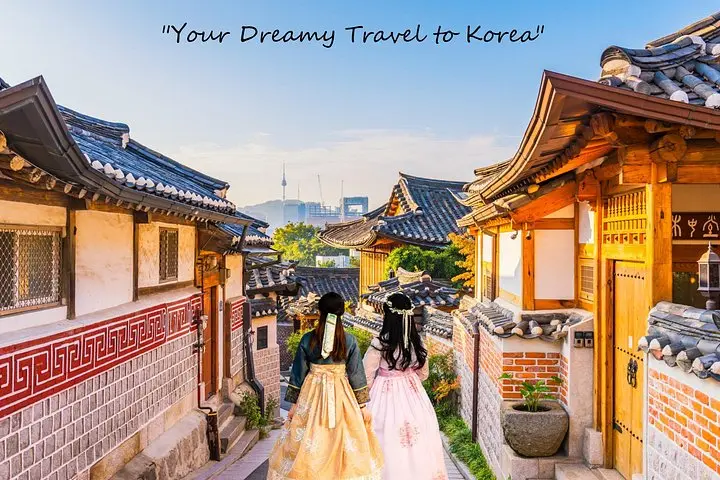
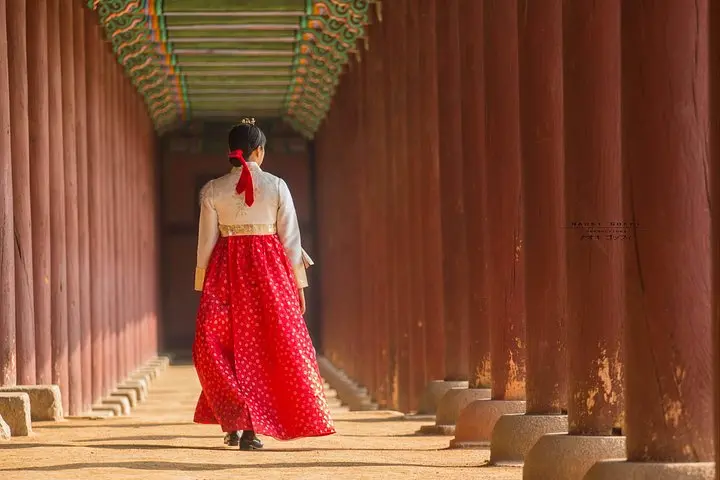
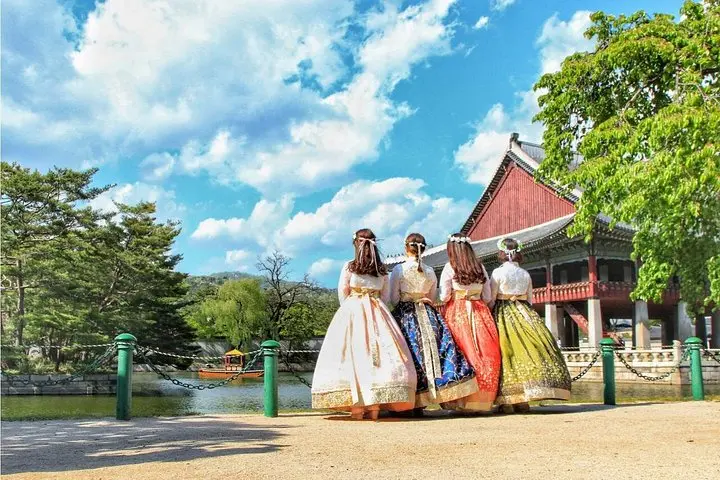
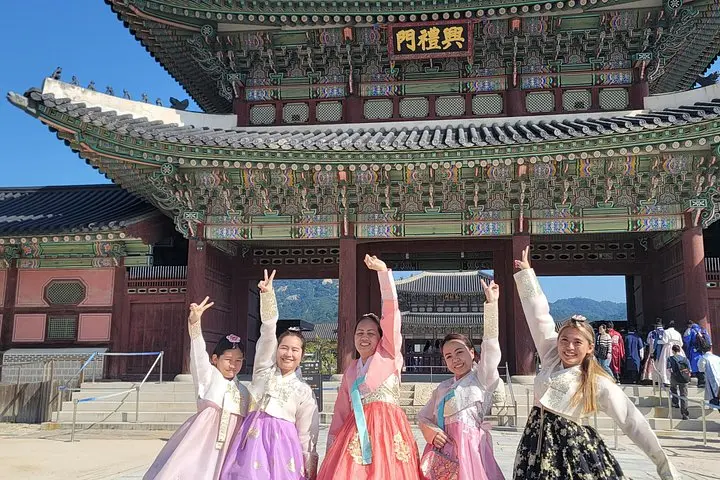
Gyeongbokgung, built in 1395 for the Joseon dynasty, anchors the route; its stone architecture and changing-of-the-guard ritual give context to the hanbok and tea moments that follow. Bukchon preserves traditional wooden homes on sloping streets, while Jogyesa represents the living practice of Korean Buddhism in the city's heart. Namsan park offers an unimpeded civic lookout where winds push you toward views from old Seoul to modern Gangnam.
Practical rhythm: the day runs 8–9 hours with hotel pickup and air-conditioned transport between stops. Expect short guided walks, time for a market lunch in Insadong, and an optional hands-on tea ceremony taught by a tea master. Hanbok rentals are available on-site for palace photos — pay locally. The tour is wheelchair accessible, but weather can cancel outdoor ceremonies; plan for rain.
Useful habits: wear supportive walking shoes, carry a small daypack, and keep cash for street vendors and hanbok options. Hydrate between stops and follow local etiquette at temples — quiet voices, removed shoes where required. This is a cultural-packed day that balances city-scale viewpoints with close, tactile encounters: costume, ritual, flavor.
Hanbok rental is optional and paid on-site; the guide can point you to vendors with a range of prices.
Yes — the itinerary notes wheelchair-accessible transport and surfaces, though some historic areas have uneven stone where assistance may be needed.
The ceremony is scheduled regularly but can be cancelled for weather or palace closures; the tour adapts the route if it’s not held.
Lunch is at Insadong with choices provided by the guide; advise dietary requirements at booking so the guide can suggest appropriate venues.
Here Korea Travel operates guided outdoor trips and adventures with an emphasis on safety, stewardship, and memorable experiences.
Morning light spills across a wide palace courtyard as the guard ceremony's drums mark the start of the day — you stand among a small group, hanbok sleeves whispering with every turn. The itinerary threads Seoul's old center: royal courtyards at Gyeongbokgung, narrow alleys of Bukchon hanok village, the calm of Jogyesa temple, a panoramic sweep from Namsan, and the sensory rush of Insadong and Gwangjang Market.
Morning light spills across a wide palace courtyard as the guard ceremony's drums mark the start of the day — you stand among a small group, hanbok sleeves whispering with every turn. The itinerary threads Seoul's old center: royal courtyards at Gyeongbokgung, narrow alleys of Bukchon hanok village, the calm of Jogyesa temple, a panoramic sweep from Namsan, and the sensory rush of Insadong and Gwangjang Market.
Gyeongbokgung, built in 1395 for the Joseon dynasty, anchors the route; its stone architecture and changing-of-the-guard ritual give context to the hanbok and tea moments that follow. Bukchon preserves traditional wooden homes on sloping streets, while Jogyesa represents the living practice of Korean Buddhism in the city's heart. Namsan park offers an unimpeded civic lookout where winds push you toward views from old Seoul to modern Gangnam.
Practical rhythm: the day runs 8–9 hours with hotel pickup and air-conditioned transport between stops. Expect short guided walks, time for a market lunch in Insadong, and an optional hands-on tea ceremony taught by a tea master. Hanbok rentals are available on-site for palace photos — pay locally. The tour is wheelchair accessible, but weather can cancel outdoor ceremonies; plan for rain.
Useful habits: wear supportive walking shoes, carry a small daypack, and keep cash for street vendors and hanbok options. Hydrate between stops and follow local etiquette at temples — quiet voices, removed shoes where required. This is a cultural-packed day that balances city-scale viewpoints with close, tactile encounters: costume, ritual, flavor.