THE ADVENTURE COLLECTIVE® · Independent discovery and booking for outdoor travel

Walk the historical center of Seoul from palace gates to protest plazas on a 3–4 hour guided route. Learn how Joseon-era planning, Japanese occupation, and modern democracy shaped the city you see today.
Walk the historical center of Seoul from palace gates to protest plazas on a 3–4 hour guided route. Learn how Joseon-era planning, Japanese occupation, and modern democracy shaped the city you see today.
You step off a crowded Seoul sidewalk into a flow of history: stone walls rise, a modern plaza opens, and the distant bell of an ancient temple cuts through tram and scooter noise. The guide—Australian, conversational—pulls the city into a readable line: palace gates, a restored stream, protest sites, and quiet alleys that keep older Seoul alive.
Verified experiences and guided adventures in the surrounding area.
Operated by CompassTour · Seoul, Seoul
You step off a crowded Seoul sidewalk into a flow of history: stone walls rise, a modern plaza opens, and the distant bell of an ancient temple cuts through tram and scooter noise. The guide—Australian, conversational—pulls the city into a readable line: palace gates, a restored stream, protest sites, and quiet alleys that keep older Seoul alive.
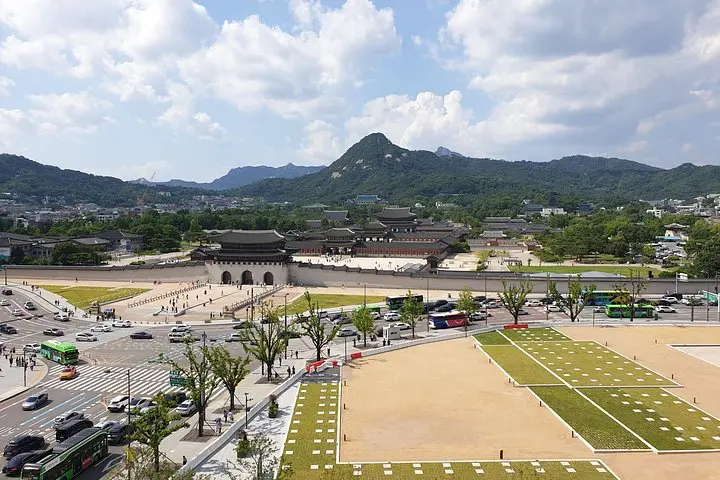
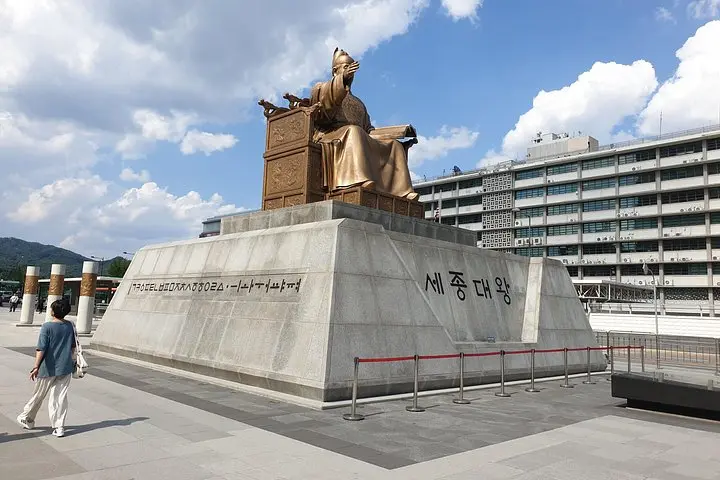
The walk threads through 630 years of Joseon-era planning and 20th-century upheaval. You’ll pass viewpoints that frame Gyeongbokgung and learn why King Sejong’s script mattered as much as his science projects. Maps of occupation and resistance mark plazas where citizens gathered to demand democracy during the late 20th and early 21st centuries. Geology is subtle here—the Han River plain shaped trade routes and settlement, while urban streams like Cheonggyecheon were engineered then rewilded to regulate flow and civic life.
Local culture appears in snacks shared on the route, in alleyway cafés that preserve neighborhood memory, and in monuments that still draw public debate. Expect stops at City Hall, a restored stream, palace walls, and a rooftop overlook that compresses centuries into a single view.
Practical guidance: this is an urban, mostly flat 3–4 hour walk with frequent stops—bring comfortable shoes, a refillable water bottle, and a transit card for if you want to extend your exploration. Morning or late afternoon avoids midday heat and crowds; winter requires a warm layer. The guide provides context and a physical memento; bring questions about language, architecture, and the protests that shaped modern South Korea.
This listing notes an English-speaking (Australian) guide—confirm language at booking and request translation needs in advance.
The tour follows mostly flat urban sidewalks but includes some stone steps and uneven surfaces; contact the operator to confirm accessibility options.
The tour includes traditional Korean snacks and an informative memento, but not full meals—plan for a meal before or after the tour.
You can cancel for a full refund up to 24 hours before the start time; within 24 hours there is no refund.
CompassTour operates guided outdoor trips and adventures with an emphasis on safety, stewardship, and memorable experiences.
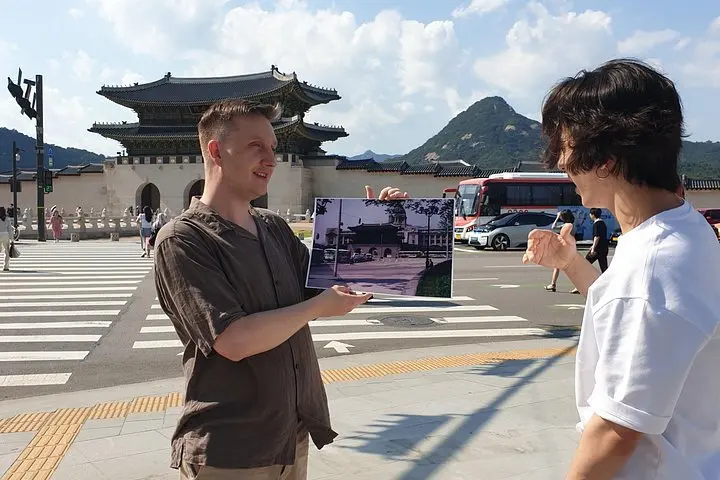
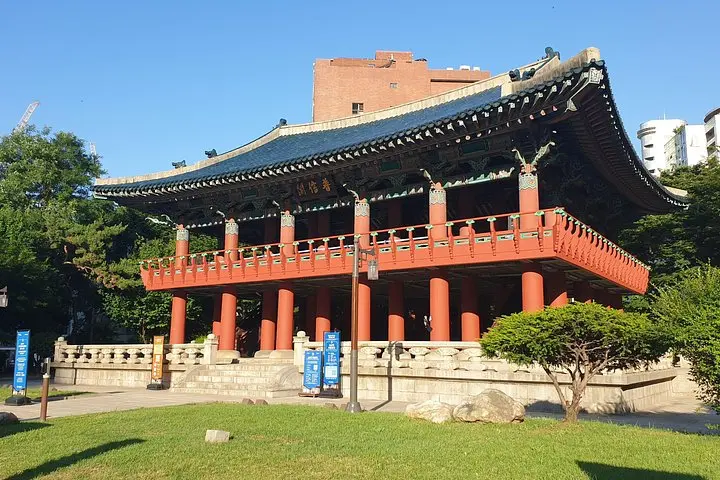
You step off a crowded Seoul sidewalk into a flow of history: stone walls rise, a modern plaza opens, and the distant bell of an ancient temple cuts through tram and scooter noise. The guide—Australian, conversational—pulls the city into a readable line: palace gates, a restored stream, protest sites, and quiet alleys that keep older Seoul alive.
You step off a crowded Seoul sidewalk into a flow of history: stone walls rise, a modern plaza opens, and the distant bell of an ancient temple cuts through tram and scooter noise. The guide—Australian, conversational—pulls the city into a readable line: palace gates, a restored stream, protest sites, and quiet alleys that keep older Seoul alive.
The walk threads through 630 years of Joseon-era planning and 20th-century upheaval. You’ll pass viewpoints that frame Gyeongbokgung and learn why King Sejong’s script mattered as much as his science projects. Maps of occupation and resistance mark plazas where citizens gathered to demand democracy during the late 20th and early 21st centuries. Geology is subtle here—the Han River plain shaped trade routes and settlement, while urban streams like Cheonggyecheon were engineered then rewilded to regulate flow and civic life.
Local culture appears in snacks shared on the route, in alleyway cafés that preserve neighborhood memory, and in monuments that still draw public debate. Expect stops at City Hall, a restored stream, palace walls, and a rooftop overlook that compresses centuries into a single view.
Practical guidance: this is an urban, mostly flat 3–4 hour walk with frequent stops—bring comfortable shoes, a refillable water bottle, and a transit card for if you want to extend your exploration. Morning or late afternoon avoids midday heat and crowds; winter requires a warm layer. The guide provides context and a physical memento; bring questions about language, architecture, and the protests that shaped modern South Korea.