THE ADVENTURE COLLECTIVE® · Independent discovery and booking for outdoor travel

Explore hidden corners of Seoul on a short small-group walk that combines a secluded temple, a 1970s apartment block, a poet’s former home and a fortress wall overlook. This 2.5‑hour tour blends urban history with accessible viewpoints and local stories.
Explore hidden corners of Seoul on a short small-group walk that combines a secluded temple, a 1970s apartment block, a poet’s former home and a fortress wall overlook. This 2.5‑hour tour blends urban history with accessible viewpoints and local stories.
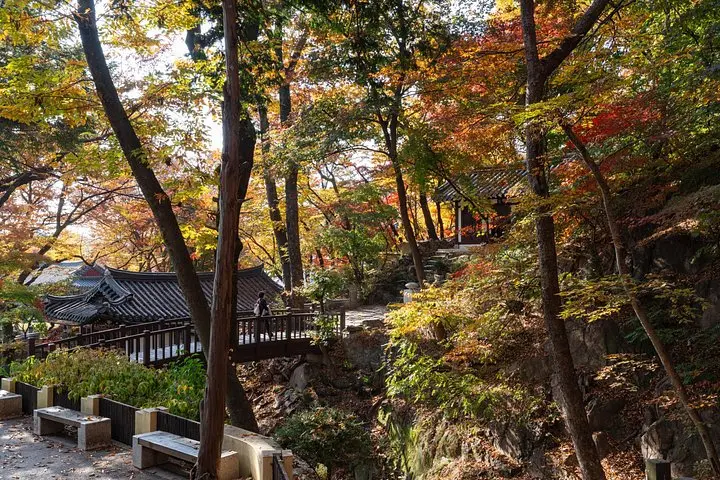
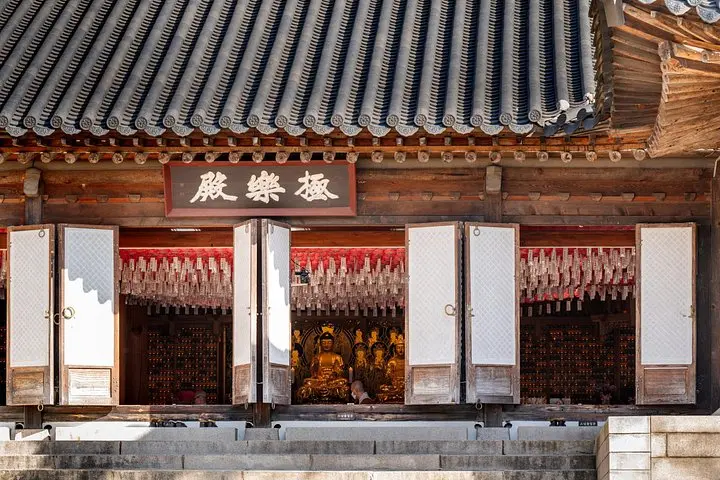
You step off the polished street into a narrow lane where a small temple door stands half-open, incense and quiet spilling into the city noise.
Verified experiences and guided adventures in the surrounding area.
Operated by Seoul Narratives · Seoul, Seoul
You step off the polished street into a narrow lane where a small temple door stands half-open, incense and quiet spilling into the city noise.
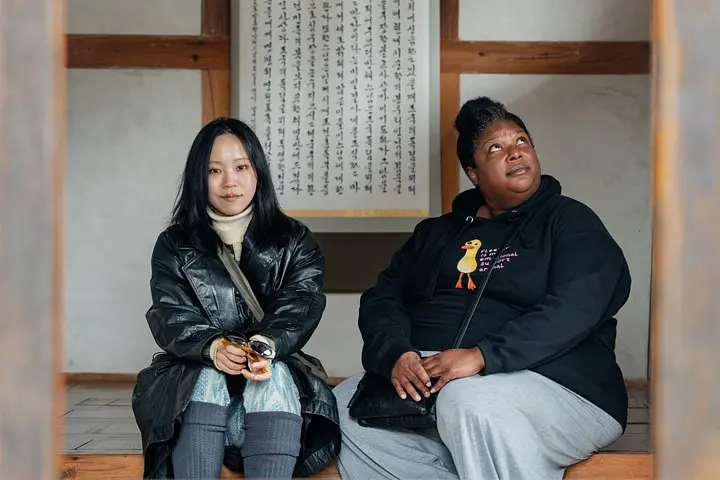
This small-group walking tour threads between private courtyards, a 1970s apartment corner store and the memory-carved rooms of a poet-activist, finishing at the ancient fortress wall that watches over Seoul. The route moves deliberately—less sightseeing sprint, more measured encounter—so buildings feel like people with histories to tell.
Seoul’s stone walls and hillside forts grew from geopolitics and geology: granite ridgelines shaped the city’s defensive lines, and postwar urbanization layered apartments and neon over older alleys. The temple you'll visit was once an elite retreat, repurposed across regimes; the apartment complex is a physical record of rapid economic change in the 1970s, and the poet’s home reflects cultural resistance through architecture and orientation.
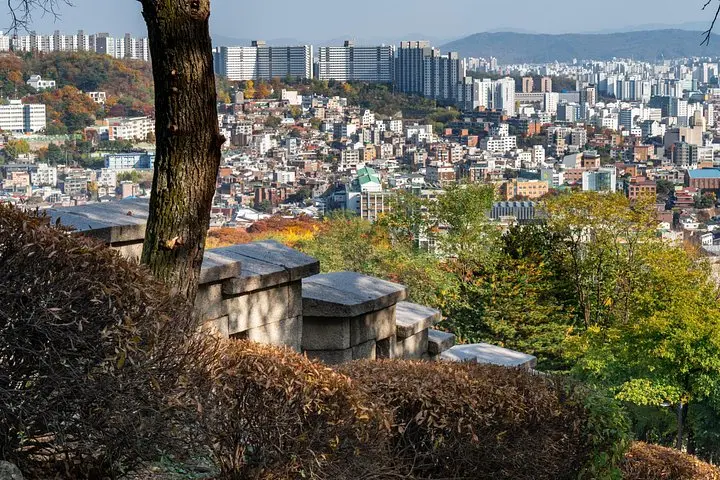
Expect intimate urban textures—wooden shopfronts, narrow stairwells and a lookout where the wall gives way to a panorama of modern towers and green ridges. Guides emphasize social history as much as place: oral stories, archival turns and the everyday rituals that preserved these sites.
Practical guidance: bring comfortable walking shoes and a T‑money card for short transit hops. The route includes uneven stone steps and narrow alleys—moderate fitness helps. Photography is welcomed but respectful behavior at religious sites is required; follow your guide on access and quiet zones.
Timing mid-morning or late afternoon gives the best light for the wall overlook and keeps the group out of peak commuter crush.
The tour is about 150 minutes and covers roughly 2–3 kilometers of walking with several stops and short stair climbs.
Yes for most; participants should be able to manage stairs and uneven surfaces. Notify the operator if mobility assistance is required.
This tour includes guide services and listed fees; individual site admissions are typically not required for these public or low-fee locations.
Tours are usually offered in the language listed at booking—confirm on the reservation page or with the operator for language options.
Seoul Narratives operates guided outdoor trips and adventures with an emphasis on safety, stewardship, and memorable experiences.
You step off the polished street into a narrow lane where a small temple door stands half-open, incense and quiet spilling into the city noise.
You step off the polished street into a narrow lane where a small temple door stands half-open, incense and quiet spilling into the city noise.
This small-group walking tour threads between private courtyards, a 1970s apartment corner store and the memory-carved rooms of a poet-activist, finishing at the ancient fortress wall that watches over Seoul. The route moves deliberately—less sightseeing sprint, more measured encounter—so buildings feel like people with histories to tell.
Seoul’s stone walls and hillside forts grew from geopolitics and geology: granite ridgelines shaped the city’s defensive lines, and postwar urbanization layered apartments and neon over older alleys. The temple you'll visit was once an elite retreat, repurposed across regimes; the apartment complex is a physical record of rapid economic change in the 1970s, and the poet’s home reflects cultural resistance through architecture and orientation.
Expect intimate urban textures—wooden shopfronts, narrow stairwells and a lookout where the wall gives way to a panorama of modern towers and green ridges. Guides emphasize social history as much as place: oral stories, archival turns and the everyday rituals that preserved these sites.
Practical guidance: bring comfortable walking shoes and a T‑money card for short transit hops. The route includes uneven stone steps and narrow alleys—moderate fitness helps. Photography is welcomed but respectful behavior at religious sites is required; follow your guide on access and quiet zones.
Timing mid-morning or late afternoon gives the best light for the wall overlook and keeps the group out of peak commuter crush.