THE ADVENTURE COLLECTIVE® · Independent discovery and booking for outdoor travel

A private day tour from Yerevan that pairs the wind-swept peninsula of Sevanavank with the forested sanctity of Haghartsin near Dilijan. Expect medieval churches, plateau geology, and manageable walking on uneven paths.
A private day tour from Yerevan that pairs the wind-swept peninsula of Sevanavank with the forested sanctity of Haghartsin near Dilijan. Expect medieval churches, plateau geology, and manageable walking on uneven paths.
A wind from the high plateau pushes across the blue of Lake Sevan, and the peninsula that holds Sevanavank appears like a low-shouldered fortress against the bright water. Visitors arrive from Yerevan by road, stepping from an air-conditioned vehicle onto the gravel path that climbs to the compact complex of twin churches founded in 874 AD. The wind and the lake demand attention; even the cypress trees lean toward the water as if listening.
Verified experiences and guided adventures in the surrounding area.
Operated by Land of Noah Travel Agency · Dilijan, Tavush Province
A wind from the high plateau pushes across the blue of Lake Sevan, and the peninsula that holds Sevanavank appears like a low-shouldered fortress against the bright water. Visitors arrive from Yerevan by road, stepping from an air-conditioned vehicle onto the gravel path that climbs to the compact complex of twin churches founded in 874 AD. The wind and the lake demand attention; even the cypress trees lean toward the water as if listening.
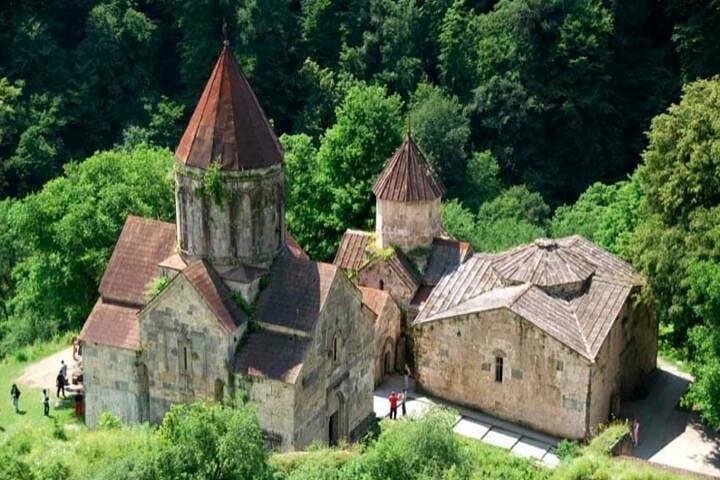
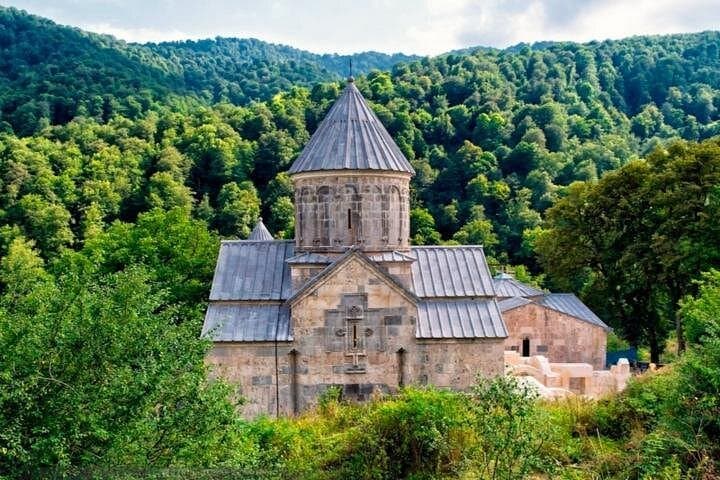
This route links two distinct pages of Armenia’s history: the 9th-century Sevanavank, a site of monastic reform and solitude, and the Haghartsin complex east of Dilijan, built between the 10th and 13th centuries and set within a mixed beech and pine forest. Geologically the trip traces the high Armenian Plateau — volcanic bedrock, basalt ridges and the shallow, glacial-shaped bowl that accommodates Sevan. The region’s culture blends mountain pastoralism, Soviet-era town planning in Dilijan, and long-standing Christian heritage visible in khachkars (stone crosses) carved with geometric precision.
Practically, expect a full-day private excursion (roughly 6–7 hours). Paths at Sevanavank are short but can be uneven; Haghartsin’s courtyards and stairways require steady footing. Bring water, sun protection and a light layer against sudden winds. Photography windows arrive at dawn and late afternoon light; mid-day is best for steady travel. Local guides point out architectural details — cross-stones, blind arcades, and mortar repairs — and can arrange a relaxed pace for all fitness levels. The tour is straightforward for first-time visitors seeking history framed by stark water and dense forest — an accessible introduction to Armenia’s highland character.
This private day tour runs about 6–7 hours and includes Sevanavank on Lake Sevan and Haghartsin Monastery near Dilijan, with road transfers from Yerevan.
Entrance fees are typically not included; driving time from Yerevan to Sevan is about 1.5 hours each way and to Dilijan another 45–60 minutes depending on traffic.
The tour is family-friendly but monastery courtyards have uneven stone steps; guests with mobility limits should notify the operator to adjust the pace or viewpoints.
Smart-casual dress is requested; cover shoulders and knees when entering church interiors and wear footwear suitable for cobbled surfaces.
Land of Noah Travel Agency operates guided outdoor trips and adventures with an emphasis on safety, stewardship, and memorable experiences.
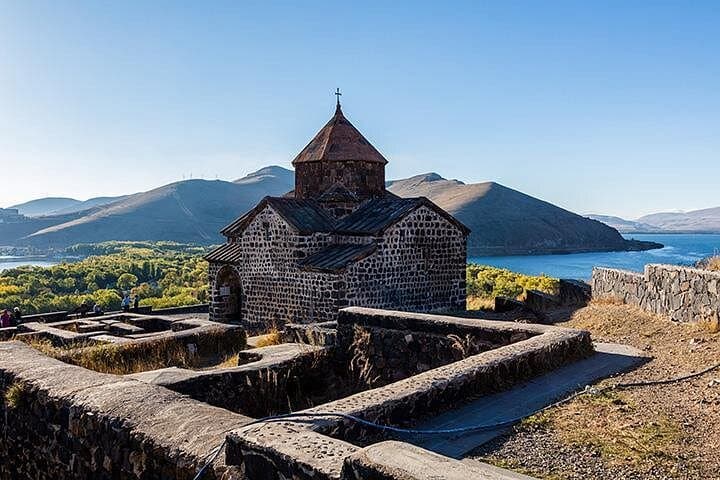
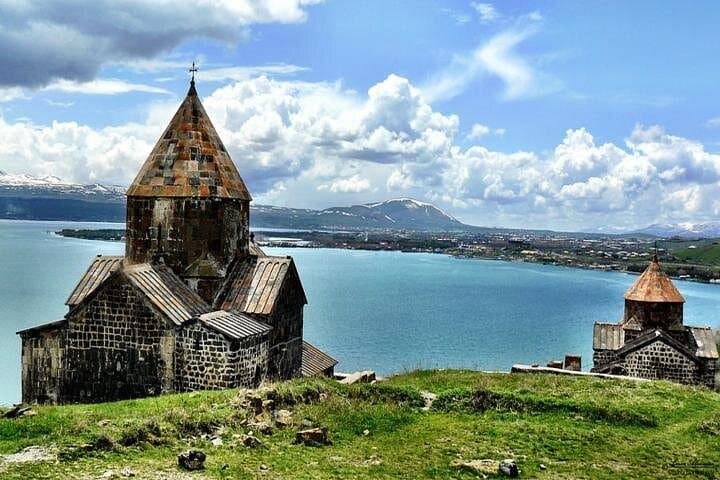
A wind from the high plateau pushes across the blue of Lake Sevan, and the peninsula that holds Sevanavank appears like a low-shouldered fortress against the bright water. Visitors arrive from Yerevan by road, stepping from an air-conditioned vehicle onto the gravel path that climbs to the compact complex of twin churches founded in 874 AD. The wind and the lake demand attention; even the cypress trees lean toward the water as if listening.
A wind from the high plateau pushes across the blue of Lake Sevan, and the peninsula that holds Sevanavank appears like a low-shouldered fortress against the bright water. Visitors arrive from Yerevan by road, stepping from an air-conditioned vehicle onto the gravel path that climbs to the compact complex of twin churches founded in 874 AD. The wind and the lake demand attention; even the cypress trees lean toward the water as if listening.
This route links two distinct pages of Armenia’s history: the 9th-century Sevanavank, a site of monastic reform and solitude, and the Haghartsin complex east of Dilijan, built between the 10th and 13th centuries and set within a mixed beech and pine forest. Geologically the trip traces the high Armenian Plateau — volcanic bedrock, basalt ridges and the shallow, glacial-shaped bowl that accommodates Sevan. The region’s culture blends mountain pastoralism, Soviet-era town planning in Dilijan, and long-standing Christian heritage visible in khachkars (stone crosses) carved with geometric precision.
Practically, expect a full-day private excursion (roughly 6–7 hours). Paths at Sevanavank are short but can be uneven; Haghartsin’s courtyards and stairways require steady footing. Bring water, sun protection and a light layer against sudden winds. Photography windows arrive at dawn and late afternoon light; mid-day is best for steady travel. Local guides point out architectural details — cross-stones, blind arcades, and mortar repairs — and can arrange a relaxed pace for all fitness levels. The tour is straightforward for first-time visitors seeking history framed by stark water and dense forest — an accessible introduction to Armenia’s highland character.