THE ADVENTURE COLLECTIVE® · Independent discovery and booking for outdoor travel

Trace the footsteps of early Christianity on a compact four-day circuit through western Turkey. Visit Pergamon, Sardis, Ephesus and Pamukkale while moving between archaeological high points and active local towns.
Trace the footsteps of early Christianity on a compact four-day circuit through western Turkey. Visit Pergamon, Sardis, Ephesus and Pamukkale while moving between archaeological high points and active local towns.
You step off the early flight into Izmir and the air smells of sea salt and baking bread; the coach pulls away toward limestone ridges and plains where empires once traded silk and ideas. Over four days the road threads through Pergamon’s steep acropolis, the marble lanes of Ephesus, and the steaming travertines of Pamukkale — each site holding a layer of scripture, politics, and geology.
Verified experiences and guided adventures in the surrounding area.
Operated by Guided Istanbul Tours · Kusadasi, Aydın
You step off the early flight into Izmir and the air smells of sea salt and baking bread; the coach pulls away toward limestone ridges and plains where empires once traded silk and ideas. Over four days the road threads through Pergamon’s steep acropolis, the marble lanes of Ephesus, and the steaming travertines of Pamukkale — each site holding a layer of scripture, politics, and geology.
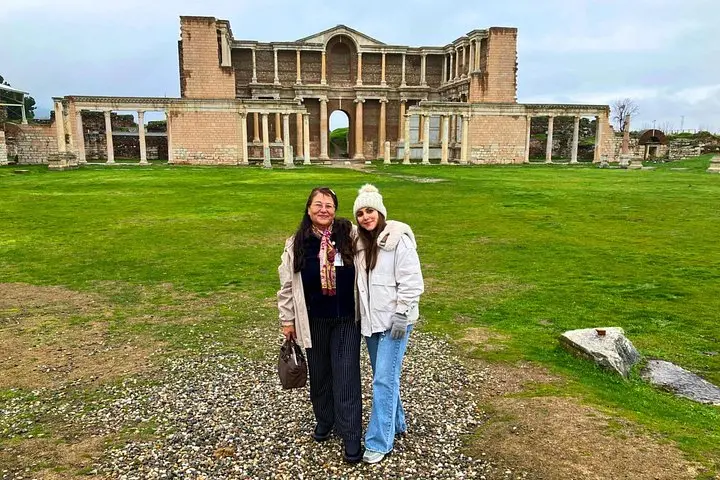
These are the places named in the Revelation letters: powerful city-states of Roman Anatolia that hosted church communities and marketplaces. Pergamon’s theater clings to a 330 m escarpment; Sardis was wealthy and strategic; Laodicea and Colossae speak to inland trade and textile production. Geologically, Pamukkale’s calcium-rich springs have built white terraces for millennia, while the fertile Gediz plain below Mount Tmolus shaped settlement patterns and roads.
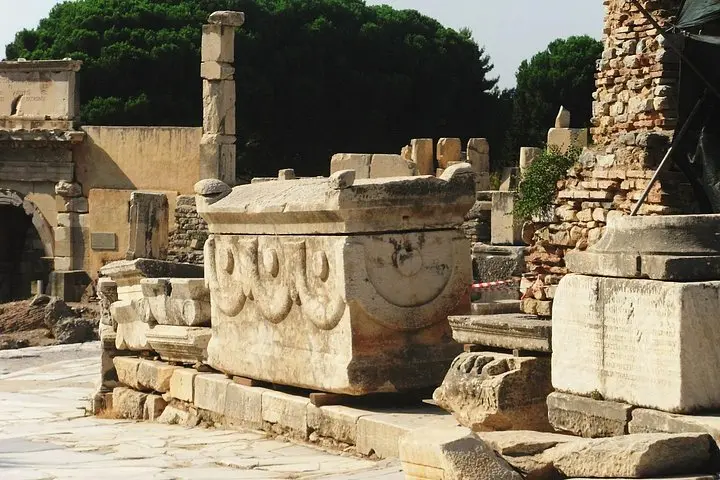
Culturally the route moves between small modern towns, olive groves, and UNESCO-protected ruins — local guides translate inscriptions and point out reused columns and Christian basilicas built atop pagan temples. Expect uneven stone streets, steep staircases, and midday sun that pushes you toward shaded cafés for ayran and simit.
Practical guidance: plan comfortable, closed-toe footwear for archaeological sites; a wide-brim hat, sunscreen, and layered clothing for variable temperatures between ruin sites and hotel lobbies. The itinerary is transport-rich — domestic flights and private coach — so keep passports and a photocopy handy. Allow extra time at Ephesus and Pamukkale if you want quiet photographs; peak season crowds move fast. Modest dress is appreciated at religious sites, and local tipping customs are straightforward: small amounts for drivers and guides are customary.
Expect multiple short to moderate walks across archaeological sites — typically 1–3 km per stop over uneven surfaces; nothing requires technical climbing.
This tour notes admissions and domestic flights are included; confirm details and any optional extras with the operator before travel.
Some sites have limited accessibility due to ancient terrain; the tour lists wheelchair-accessible options but individual site access may vary — check specific needs with the operator in advance.
Spring (April–June) and fall (September–October) offer mild temperatures and fewer crowds; summer is hot but still busy, and winter sees fewer services at some sites.
Guided Istanbul Tours operates guided outdoor trips and adventures with an emphasis on safety, stewardship, and memorable experiences.
You step off the early flight into Izmir and the air smells of sea salt and baking bread; the coach pulls away toward limestone ridges and plains where empires once traded silk and ideas. Over four days the road threads through Pergamon’s steep acropolis, the marble lanes of Ephesus, and the steaming travertines of Pamukkale — each site holding a layer of scripture, politics, and geology.
You step off the early flight into Izmir and the air smells of sea salt and baking bread; the coach pulls away toward limestone ridges and plains where empires once traded silk and ideas. Over four days the road threads through Pergamon’s steep acropolis, the marble lanes of Ephesus, and the steaming travertines of Pamukkale — each site holding a layer of scripture, politics, and geology.
These are the places named in the Revelation letters: powerful city-states of Roman Anatolia that hosted church communities and marketplaces. Pergamon’s theater clings to a 330 m escarpment; Sardis was wealthy and strategic; Laodicea and Colossae speak to inland trade and textile production. Geologically, Pamukkale’s calcium-rich springs have built white terraces for millennia, while the fertile Gediz plain below Mount Tmolus shaped settlement patterns and roads.
Culturally the route moves between small modern towns, olive groves, and UNESCO-protected ruins — local guides translate inscriptions and point out reused columns and Christian basilicas built atop pagan temples. Expect uneven stone streets, steep staircases, and midday sun that pushes you toward shaded cafés for ayran and simit.
Practical guidance: plan comfortable, closed-toe footwear for archaeological sites; a wide-brim hat, sunscreen, and layered clothing for variable temperatures between ruin sites and hotel lobbies. The itinerary is transport-rich — domestic flights and private coach — so keep passports and a photocopy handy. Allow extra time at Ephesus and Pamukkale if you want quiet photographs; peak season crowds move fast. Modest dress is appreciated at religious sites, and local tipping customs are straightforward: small amounts for drivers and guides are customary.