THE ADVENTURE COLLECTIVE® · Independent discovery and booking for outdoor travel

Make the Machame Route your seven-day plan for a high-altitude push to Uhuru Peak. This practical guide explains the daily gains, terrain, cultural context and gear you’ll need to reach Kilimanjaro’s summit with the best chance of success.
Make the Machame Route your seven-day plan for a high-altitude push to Uhuru Peak. This practical guide explains the daily gains, terrain, cultural context and gear you’ll need to reach Kilimanjaro’s summit with the best chance of success.
Dawn arrives on Kilimanjaro like a slow turning of a great gear—first a cool blue that licks the rainforest, then sudden gold on scree and ice. On the Machame Route you leave Moshi’s warm red town and walk up into that machine: a band of forest that gives way to moorland, then alpine desert, and finally a brutal, beautiful march across the Barafu scree to Uhuru Peak (5,895 m). The route earns its whisky-route nickname for the steep, twisting switchbacks and dramatic ridge views that unfold every day.
Verified experiences and guided adventures in the surrounding area.
Operated by Incredible Africa Adventures · Moshi, Kilimanjaro Region
Dawn arrives on Kilimanjaro like a slow turning of a great gear—first a cool blue that licks the rainforest, then sudden gold on scree and ice. On the Machame Route you leave Moshi’s warm red town and walk up into that machine: a band of forest that gives way to moorland, then alpine desert, and finally a brutal, beautiful march across the Barafu scree to Uhuru Peak (5,895 m). The route earns its whisky-route nickname for the steep, twisting switchbacks and dramatic ridge views that unfold every day.
This seven-day itinerary is designed for acclimatization and success: Machame Gate to Machame Camp (18 km/10.7 mi, +1,210 m) through montane rainforest; Shira Plateau and then the semi-desert approach past Lava Tower; the Barranco Wall's dramatic buttress; a short push to Barafu Camp for the pre-dawn summit bid; and a long walked-out descent to Mweka Gate and back to Moshi. Daily climbs vary from short tough gains to long high-altitude pushes—expect a high point gain on summit day of roughly 1,233 m and a descent that can shed nearly 2,800 m.
Geologically Kilimanjaro is an extinct stratovolcano made of three cones—Kibo, Mawenzi and Shira—whose glaciated summit is retreating visibly each decade. Culturally, the mountain is part of the Chagga people’s landscape; villages on the lower slopes garden coffee and bananas and porters and guides carry the mountain’s economy and knowledge. On route you’ll meet a crew—guides, cooks, porters—who make long days livable with hot meals, tent setups and local expertise.
Practical edge: this climb is not a technical mountaineering route but it is high-altitude trekking. Success relies on sensible pacing, hydration (3–4 L daily while trekking), warm layered clothing, and quality sleeping insulation. Acclimatization days on the Machame itinerary are built in: the ridge walk to Shira and the acclimatization profile on days 3–5 reduce acute mountain sickness risk. Summit night begins around midnight; a headlamp, lightweight crampons if there’s firm snow, and a sturdy pair of trekking poles pay dividends.
Logistics are straightforward: pickups in Moshi are standard; the tour includes park fees, camping equipment, 4-season tents, meals and rescue fees. Book with a licensed operator that pays porters fairly and uses regulated campsite protocols.
If you want hard-earned panoramas—sunset from Shira Plateau, the Barranco Wall’s face at mid-day, the collapsing shadow of Mawenzi at dawn—this route delivers. It asks for fitness, respect for altitude, and some humility in the face of glaciers that are slowly receding. Walk steady, sleep well, and the mountain will answer with one of Africa’s most complete high-altitude experiences.
You should be able to walk comfortably for 6–8 hours with a daypack and have recent endurance exercise experience; the route is non-technical but altitude and sustained effort are the main challenges.
Crampons are occasionally useful for firm snow near the summit; your operator will advise based on conditions and may provide or arrange rental.
The clearest weather windows are January–March and July–October when the dry season gives better visibility and more stable summit conditions.
Yes—acute mountain sickness can occur at any altitude above ~2,500 m; acclimatization, hydration, pacing and communicating symptoms to guides are essential; consult a physician before travel.
Typical inclusions are professional guides, cooks, porters, park and camping fees, 4-season tents, three meals daily on the mountain, and transfers to/from Moshi or Kilimanjaro Airport.
Fit beginners can succeed thanks to the seven-day profile, but prior multi-day hiking experience and respect for altitude processes improve your chances.
Incredible Africa Adventures operates guided outdoor trips and adventures with an emphasis on safety, stewardship, and memorable experiences.
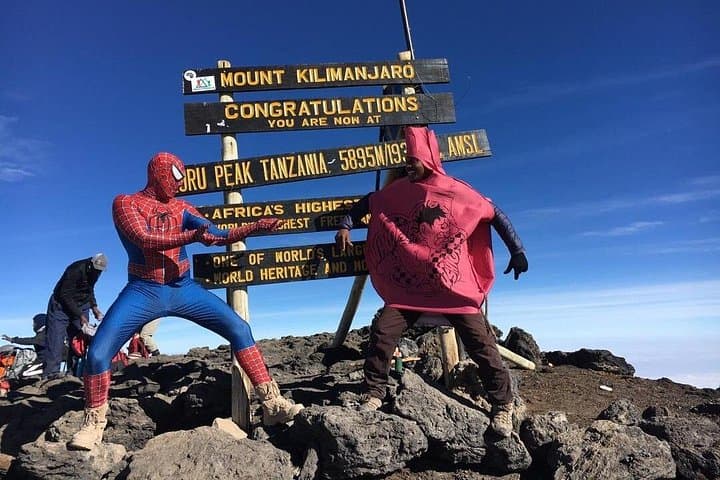
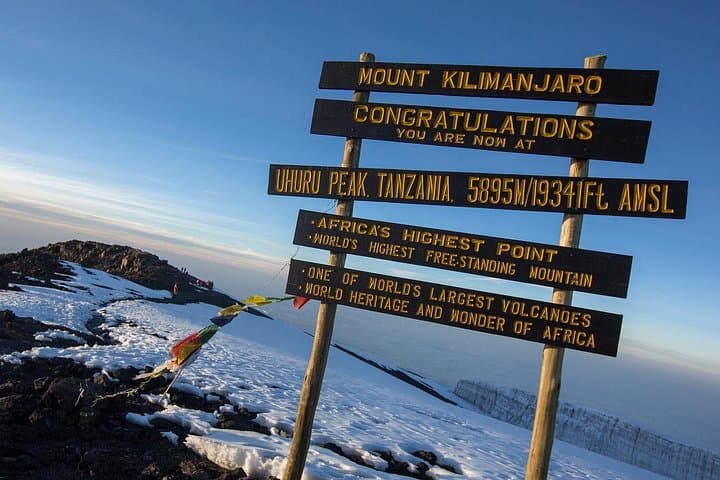
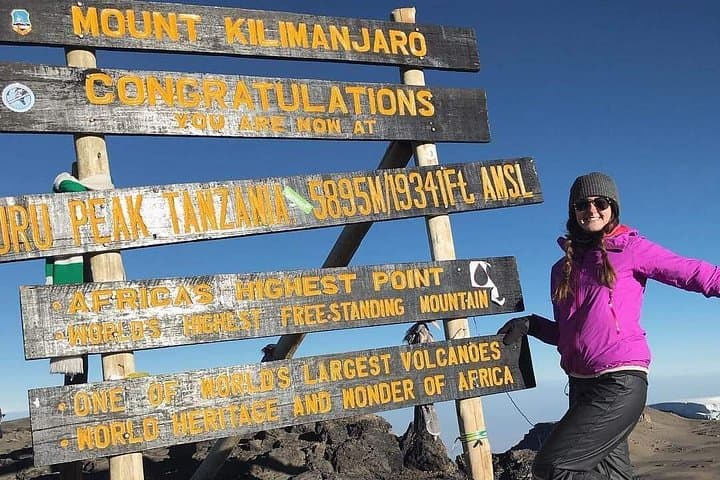
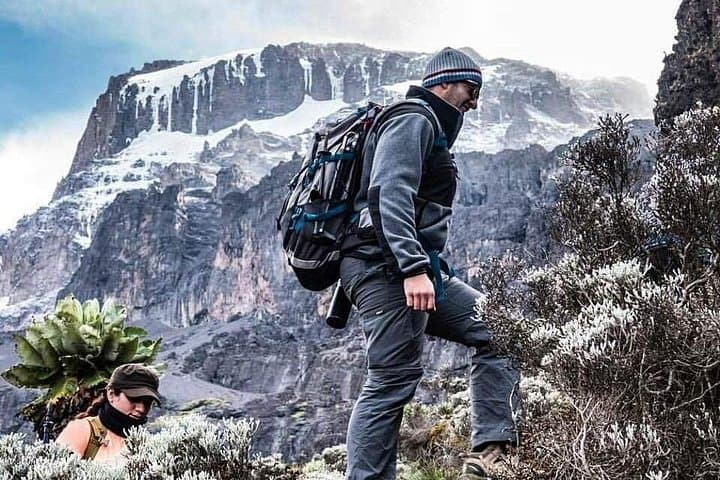
Dawn arrives on Kilimanjaro like a slow turning of a great gear—first a cool blue that licks the rainforest, then sudden gold on scree and ice. On the Machame Route you leave Moshi’s warm red town and walk up into that machine: a band of forest that gives way to moorland, then alpine desert, and finally a brutal, beautiful march across the Barafu scree to Uhuru Peak (5,895 m). The route earns its whisky-route nickname for the steep, twisting switchbacks and dramatic ridge views that unfold every day.
Dawn arrives on Kilimanjaro like a slow turning of a great gear—first a cool blue that licks the rainforest, then sudden gold on scree and ice. On the Machame Route you leave Moshi’s warm red town and walk up into that machine: a band of forest that gives way to moorland, then alpine desert, and finally a brutal, beautiful march across the Barafu scree to Uhuru Peak (5,895 m). The route earns its whisky-route nickname for the steep, twisting switchbacks and dramatic ridge views that unfold every day.
This seven-day itinerary is designed for acclimatization and success: Machame Gate to Machame Camp (18 km/10.7 mi, +1,210 m) through montane rainforest; Shira Plateau and then the semi-desert approach past Lava Tower; the Barranco Wall's dramatic buttress; a short push to Barafu Camp for the pre-dawn summit bid; and a long walked-out descent to Mweka Gate and back to Moshi. Daily climbs vary from short tough gains to long high-altitude pushes—expect a high point gain on summit day of roughly 1,233 m and a descent that can shed nearly 2,800 m.
Geologically Kilimanjaro is an extinct stratovolcano made of three cones—Kibo, Mawenzi and Shira—whose glaciated summit is retreating visibly each decade. Culturally, the mountain is part of the Chagga people’s landscape; villages on the lower slopes garden coffee and bananas and porters and guides carry the mountain’s economy and knowledge. On route you’ll meet a crew—guides, cooks, porters—who make long days livable with hot meals, tent setups and local expertise.
Practical edge: this climb is not a technical mountaineering route but it is high-altitude trekking. Success relies on sensible pacing, hydration (3–4 L daily while trekking), warm layered clothing, and quality sleeping insulation. Acclimatization days on the Machame itinerary are built in: the ridge walk to Shira and the acclimatization profile on days 3–5 reduce acute mountain sickness risk. Summit night begins around midnight; a headlamp, lightweight crampons if there’s firm snow, and a sturdy pair of trekking poles pay dividends.
Logistics are straightforward: pickups in Moshi are standard; the tour includes park fees, camping equipment, 4-season tents, meals and rescue fees. Book with a licensed operator that pays porters fairly and uses regulated campsite protocols.
If you want hard-earned panoramas—sunset from Shira Plateau, the Barranco Wall’s face at mid-day, the collapsing shadow of Mawenzi at dawn—this route delivers. It asks for fitness, respect for altitude, and some humility in the face of glaciers that are slowly receding. Walk steady, sleep well, and the mountain will answer with one of Africa’s most complete high-altitude experiences.