THE ADVENTURE COLLECTIVE® · Independent discovery and booking for outdoor travel

See Rome’s monuments from a nimble electric cart that threads the city’s narrow lanes and hilltop piazzas. This three-hour drive mixes quick stops at the Colosseum and Palatine with intimate looks at the Spanish Steps and hidden Aventine viewpoints.
See Rome’s monuments from a nimble electric cart that threads the city’s narrow lanes and hilltop piazzas. This three-hour drive mixes quick stops at the Colosseum and Palatine with intimate looks at the Spanish Steps and hidden Aventine viewpoints.
The cart slips off Via Condotti and the city opens like a map unfolding under low afternoon light. Cobblestones click, marble fronts lean close, and the driver-guide pilots a slow, intimate route across Rome’s historic spine — Piazza Venezia, the Capitoline rise, the Palatine’s ruins, and finally the whoosh of the Colosseum filling the view.
Verified experiences and guided adventures in the surrounding area.
Operated by Luxurbe · Rome, Lazio
The cart slips off Via Condotti and the city opens like a map unfolding under low afternoon light. Cobblestones click, marble fronts lean close, and the driver-guide pilots a slow, intimate route across Rome’s historic spine — Piazza Venezia, the Capitoline rise, the Palatine’s ruins, and finally the whoosh of the Colosseum filling the view.
Rome’s seven hills are more than a literary frame; they’re volcanic tuff and travertine layered by millennia of building, warfare and ceremony. Imperial forums, baroque facades and hidden convent gardens sit atop ancient foundations. Culture here feels public and continuous: espresso counters mid-ruin, clerics chatting at piazza edges, shopkeepers sweeping the morning dust from 18th-century thresholds.
Expect short stops rather than long walks — the golf cart covers narrow lanes and tight plazas where buses cannot go. The route is best in cooler hours when light flatters stone and traffic softens; midday heat brings louder streets and longer waits at crossings. Guides often double as drivers and provide headsets to keep commentary audible without blocking the flow.
Practical tips: bring comfortable shoes even if you ride most of the time — some attractions require brief stepping off; carry a light layer for coastal breezes or shaded hills; keep water and a small daypack handy for camera, wallet and transit card. Accessibility is generally good; check ahead for specific mobility needs. For first-time visitors this tour is a compact primer — efficient, scenic, and tailored for seeing Roman highlights without extensive walking.
Pick-up is typically near Via Condotti with drop-off options in central Rome; check your booking for the exact meeting point.
The tour description lists the Colosseum visit as included for this itinerary; confirm at booking whether access to inner areas is covered.
Carts and transportation note wheelchair accessibility, but some archaeological sites have uneven surfaces — inform the operator of mobility needs when booking.
Guides are often multilingual or provide headsets with translated commentary; confirm available languages before departure.
Luxurbe operates guided outdoor trips and adventures with an emphasis on safety, stewardship, and memorable experiences.
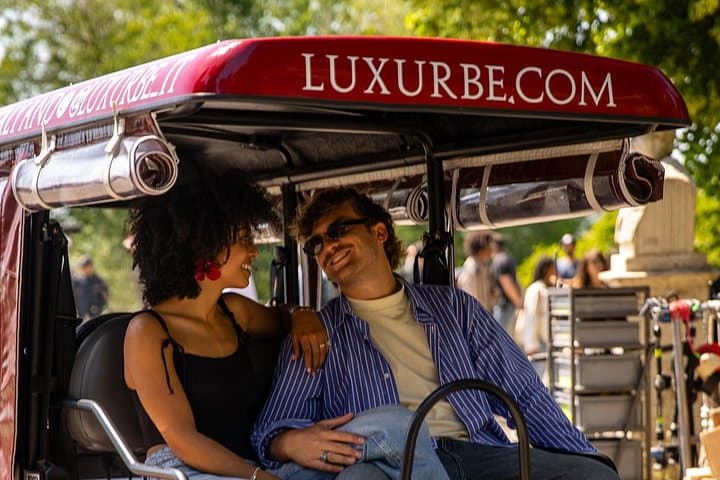
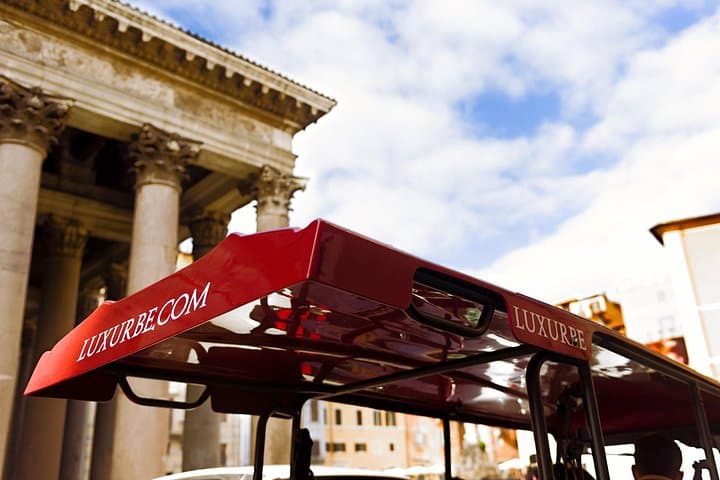
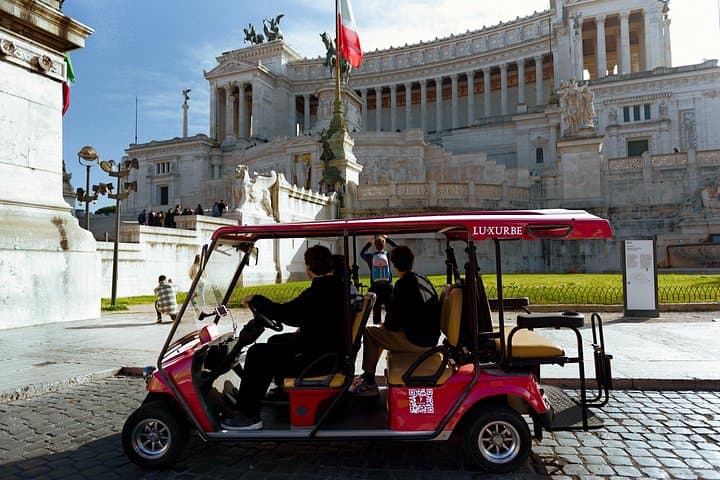
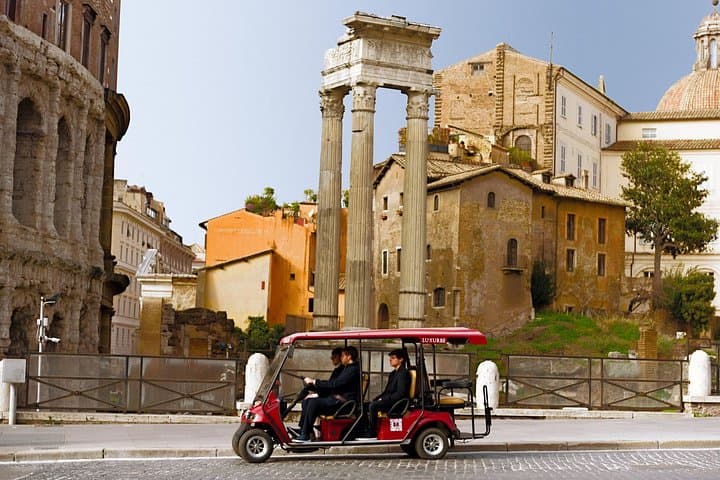
The cart slips off Via Condotti and the city opens like a map unfolding under low afternoon light. Cobblestones click, marble fronts lean close, and the driver-guide pilots a slow, intimate route across Rome’s historic spine — Piazza Venezia, the Capitoline rise, the Palatine’s ruins, and finally the whoosh of the Colosseum filling the view.
The cart slips off Via Condotti and the city opens like a map unfolding under low afternoon light. Cobblestones click, marble fronts lean close, and the driver-guide pilots a slow, intimate route across Rome’s historic spine — Piazza Venezia, the Capitoline rise, the Palatine’s ruins, and finally the whoosh of the Colosseum filling the view.
Rome’s seven hills are more than a literary frame; they’re volcanic tuff and travertine layered by millennia of building, warfare and ceremony. Imperial forums, baroque facades and hidden convent gardens sit atop ancient foundations. Culture here feels public and continuous: espresso counters mid-ruin, clerics chatting at piazza edges, shopkeepers sweeping the morning dust from 18th-century thresholds.
Expect short stops rather than long walks — the golf cart covers narrow lanes and tight plazas where buses cannot go. The route is best in cooler hours when light flatters stone and traffic softens; midday heat brings louder streets and longer waits at crossings. Guides often double as drivers and provide headsets to keep commentary audible without blocking the flow.
Practical tips: bring comfortable shoes even if you ride most of the time — some attractions require brief stepping off; carry a light layer for coastal breezes or shaded hills; keep water and a small daypack handy for camera, wallet and transit card. Accessibility is generally good; check ahead for specific mobility needs. For first-time visitors this tour is a compact primer — efficient, scenic, and tailored for seeing Roman highlights without extensive walking.