THE ADVENTURE COLLECTIVE® · Independent discovery and booking for outdoor travel

A full-day private shuttle from Samarkand takes you across the Uzbek–Tajik border into the Shing Gorge to visit the vivid waters of Haftkul (Seven Lakes). Expect a long day of drives, border formalities, short village visits, and an optional high-altitude hike to Hazorchashma.
A full-day private shuttle from Samarkand takes you across the Uzbek–Tajik border into the Shing Gorge to visit the vivid waters of Haftkul (Seven Lakes). Expect a long day of drives, border formalities, short village visits, and an optional high-altitude hike to Hazorchashma.
You leave Samarkand before dawn, the city’s blue-tiled domes shrinking in the rearview as the road climbs toward the border. After a short on-foot crossing you meet local drivers in Tajikistan and follow the Shing River, a ribbon of cold water that dares you closer to the steep-sided gorge where seven small alpine lakes lie like a chain of colored beads.
Verified experiences and guided adventures in the surrounding area.
Operated by Discoverystan · Penjikent, Sughd Region
You leave Samarkand before dawn, the city’s blue-tiled domes shrinking in the rearview as the road climbs toward the border. After a short on-foot crossing you meet local drivers in Tajikistan and follow the Shing River, a ribbon of cold water that dares you closer to the steep-sided gorge where seven small alpine lakes lie like a chain of colored beads.
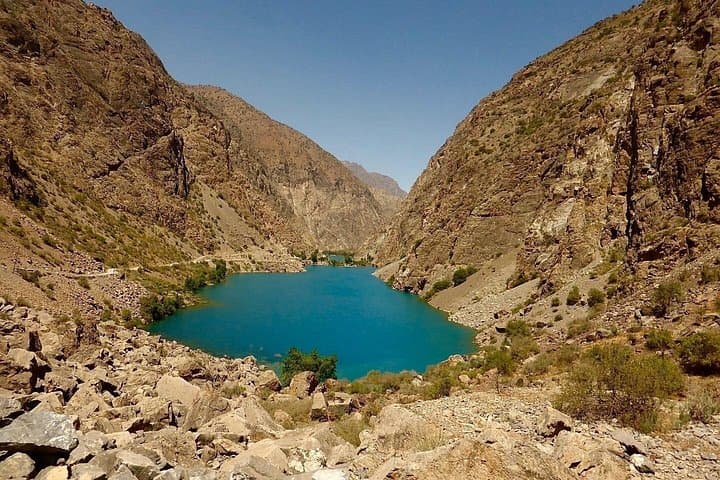
The lakes—known locally as Haftkul or Marguzor Lakes—sit between roughly 1,640 m and 2,400 m. The largest, Marguzor, reflects high ridges still dusted with snow; Nofin stretches about 2.5 km and gives the group its unusual elongated silhouette. Hazorchashma, the highest lake, is fed by countless springs (its name means “a thousand springs”) and often requires a 2.5 km one-way hike with ~340 m gain to reach.
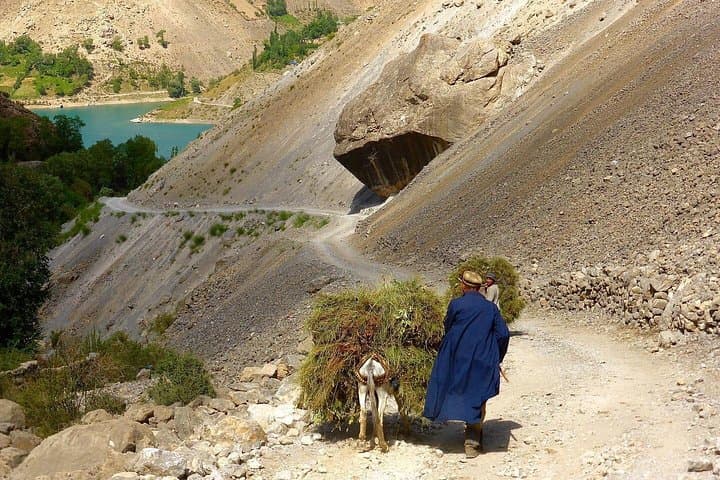
Geologically the gorge is carved from ancient sedimentary beds uplifted by Pamir line tectonics; mineral-rich runoff and depth create the vivid blues and greens. Culturally, villages like Pardut and Khurdak offer a glimpse of contemporary rural Tajik life—mud-brick homes, shepherds, and small orchards that persist here off the main Silk Road.
Practical notes: this is an 8–10 hour private trip from Samarkand with border formalities—carry valid passports and any required visas (you’ll re-enter Uzbekistan later). Wear sturdy shoes for rocky trails, bring layered clothing for rapid temperature swings, and carry at least 2 liters of water. If you plan the optional hike to Hazorchashma, allow time for elevation gain and unstable trail sections. Weather can shift quickly; aim for morning starts for clearer views and calmer water surfaces.
Possibly—visa requirements depend on your nationality; you enter Tajikistan and will re-enter Uzbekistan, so check both countries’ rules and bring a double-entry Uzbekistan visa if required.
The optional trail to Hazorchashma is about 2.5 km one-way with roughly 340 m of elevation gain; allow 1–2 hours each way depending on pace and conditions.
The drive and short lakeside visits are accessible to most, but the optional steep hike is not suitable for those with mobility limitations—inform your guide to tailor stops accordingly.
Trails are basic and sometimes rocky; facilities are minimal—bring water, snacks, and toilet supplies; follow local guidance for safe routes.
Discoverystan operates guided outdoor trips and adventures with an emphasis on safety, stewardship, and memorable experiences.


You leave Samarkand before dawn, the city’s blue-tiled domes shrinking in the rearview as the road climbs toward the border. After a short on-foot crossing you meet local drivers in Tajikistan and follow the Shing River, a ribbon of cold water that dares you closer to the steep-sided gorge where seven small alpine lakes lie like a chain of colored beads.
You leave Samarkand before dawn, the city’s blue-tiled domes shrinking in the rearview as the road climbs toward the border. After a short on-foot crossing you meet local drivers in Tajikistan and follow the Shing River, a ribbon of cold water that dares you closer to the steep-sided gorge where seven small alpine lakes lie like a chain of colored beads.
The lakes—known locally as Haftkul or Marguzor Lakes—sit between roughly 1,640 m and 2,400 m. The largest, Marguzor, reflects high ridges still dusted with snow; Nofin stretches about 2.5 km and gives the group its unusual elongated silhouette. Hazorchashma, the highest lake, is fed by countless springs (its name means “a thousand springs”) and often requires a 2.5 km one-way hike with ~340 m gain to reach.
Geologically the gorge is carved from ancient sedimentary beds uplifted by Pamir line tectonics; mineral-rich runoff and depth create the vivid blues and greens. Culturally, villages like Pardut and Khurdak offer a glimpse of contemporary rural Tajik life—mud-brick homes, shepherds, and small orchards that persist here off the main Silk Road.
Practical notes: this is an 8–10 hour private trip from Samarkand with border formalities—carry valid passports and any required visas (you’ll re-enter Uzbekistan later). Wear sturdy shoes for rocky trails, bring layered clothing for rapid temperature swings, and carry at least 2 liters of water. If you plan the optional hike to Hazorchashma, allow time for elevation gain and unstable trail sections. Weather can shift quickly; aim for morning starts for clearer views and calmer water surfaces.