THE ADVENTURE COLLECTIVE® · Independent discovery and booking for outdoor travel

Spend a day on the lake and walk among seven karst hills at Seven Star Crag. This guided private tour from Guangzhou combines a boat ride, short hill climb, cave visit, bike loop and centuries-old rock inscriptions.
Spend a day on the lake and walk among seven karst hills at Seven Star Crag. This guided private tour from Guangzhou combines a boat ride, short hill climb, cave visit, bike loop and centuries-old rock inscriptions.
A low-angled sun slices across a broad freshwater lake as you push off on a small boat, limestone humps—seven small karst hills—cutting the horizon like a slow-moving skyline. Water nudges the hull; birds wheel and call from reed islands while shaded paths curl up through bamboo and weathered steps.
Verified experiences and guided adventures in the surrounding area.
Operated by Private Guangzhou tour guide-Xaq · Zhaoqing, Guangdong
A low-angled sun slices across a broad freshwater lake as you push off on a small boat, limestone humps—seven small karst hills—cutting the horizon like a slow-moving skyline. Water nudges the hull; birds wheel and call from reed islands while shaded paths curl up through bamboo and weathered steps.
Seven Star Crag (Qixing Yan) and the adjacent Star Lake have drawn travelers for centuries. The karst hills are sculpted from ancient carbonate rock; solution caves hold stalactites that local guides now spotlight with colored lamps. Stone inscriptions from Song- and Tang-era poets scar cliff faces and offer a cultural timeline that runs alongside the natural history. The wetlands around the lake are managed as a reserve, providing habitat for egrets and kingfishers and a seasonal stop for migratory birds.
Practically, this is a full-day, low-impact outing: expect a 7–11 hour window including transport from Guangzhou, time on the lake, a short but sometimes stepped climb to one hill’s viewing platform, cave exploration on paved walkways, and a flat cycling loop around the lake. Trails are mostly compacted or paved; elevation gain for the hill climb is modest though stairs can be steep. Bring sun protection, a refillable water bottle, and modest cash—some boat or attraction fees are often paid on site. Early mornings are best for birding and softer light; late afternoon delivers warmer tones on the stone and fewer tour groups. The route balances photographic viewpoints, gentle exertion, and cultural stops—an accessible day of geology, history, and lakeside scenery.
Most private tours include transport and guide but not park admission or optional boat fees; confirm with your operator before travel.
The climb is short and on paved walkways or stairs; it’s not technically difficult but involves steep sections that may challenge those with mobility limits.
Caves are lit and have walkways, but some areas have steps and low passages; infants and small children can be carried but strollers may not fit everywhere.
Yes—simple local snacks and specialties such as sticky rice parcels are available at nearby stalls or small restaurants; bring cash for purchases.
Private Guangzhou tour guide-Xaq operates guided outdoor trips and adventures with an emphasis on safety, stewardship, and memorable experiences.
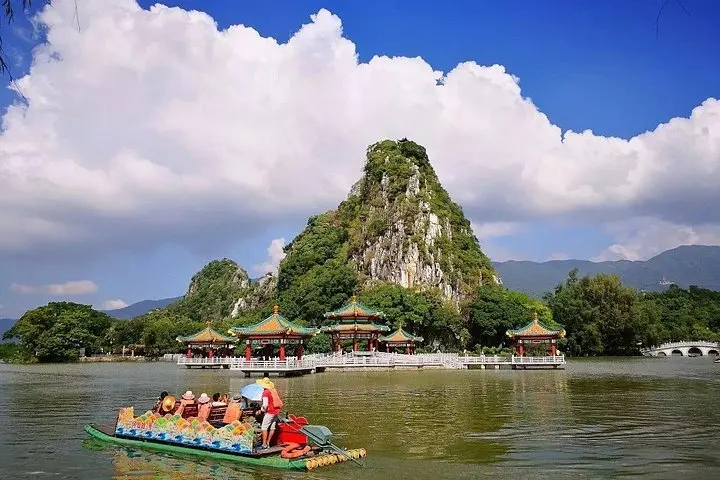
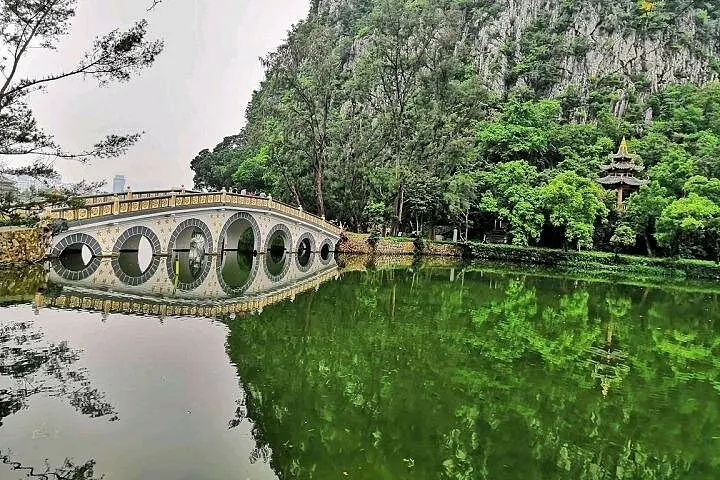
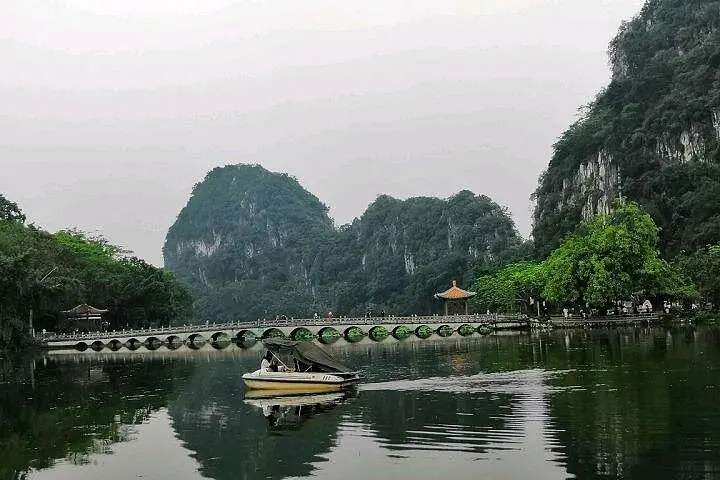
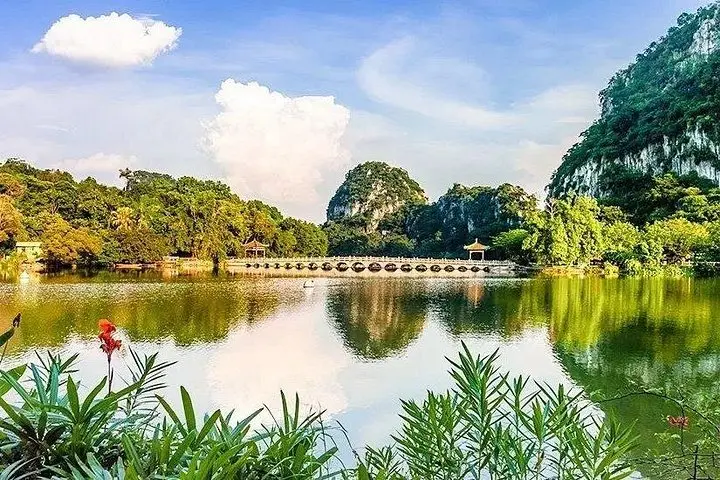
A low-angled sun slices across a broad freshwater lake as you push off on a small boat, limestone humps—seven small karst hills—cutting the horizon like a slow-moving skyline. Water nudges the hull; birds wheel and call from reed islands while shaded paths curl up through bamboo and weathered steps.
A low-angled sun slices across a broad freshwater lake as you push off on a small boat, limestone humps—seven small karst hills—cutting the horizon like a slow-moving skyline. Water nudges the hull; birds wheel and call from reed islands while shaded paths curl up through bamboo and weathered steps.
Seven Star Crag (Qixing Yan) and the adjacent Star Lake have drawn travelers for centuries. The karst hills are sculpted from ancient carbonate rock; solution caves hold stalactites that local guides now spotlight with colored lamps. Stone inscriptions from Song- and Tang-era poets scar cliff faces and offer a cultural timeline that runs alongside the natural history. The wetlands around the lake are managed as a reserve, providing habitat for egrets and kingfishers and a seasonal stop for migratory birds.
Practically, this is a full-day, low-impact outing: expect a 7–11 hour window including transport from Guangzhou, time on the lake, a short but sometimes stepped climb to one hill’s viewing platform, cave exploration on paved walkways, and a flat cycling loop around the lake. Trails are mostly compacted or paved; elevation gain for the hill climb is modest though stairs can be steep. Bring sun protection, a refillable water bottle, and modest cash—some boat or attraction fees are often paid on site. Early mornings are best for birding and softer light; late afternoon delivers warmer tones on the stone and fewer tour groups. The route balances photographic viewpoints, gentle exertion, and cultural stops—an accessible day of geology, history, and lakeside scenery.