THE ADVENTURE COLLECTIVE® · Independent discovery and booking for outdoor travel

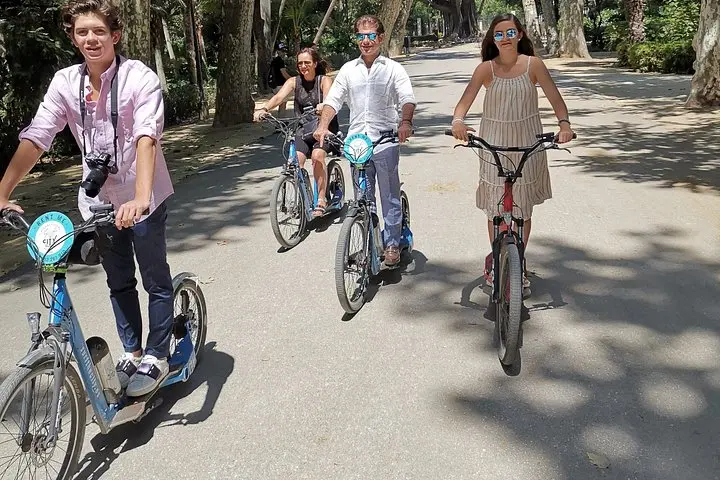
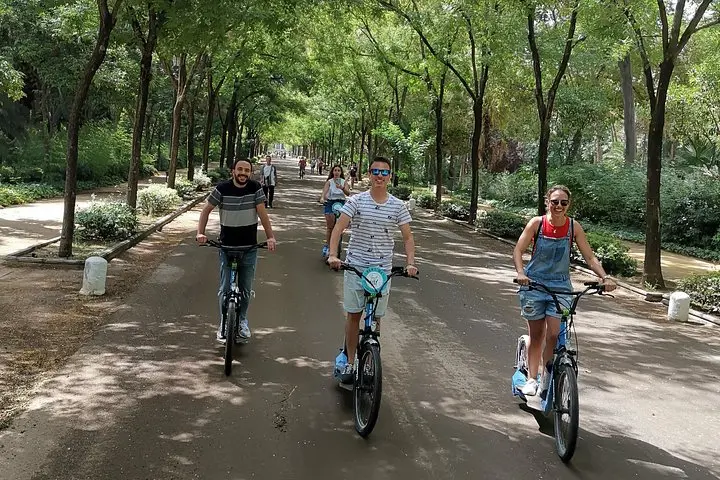
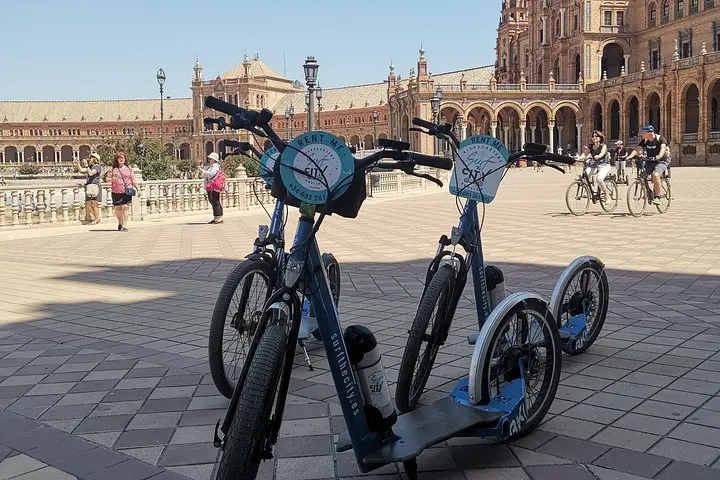
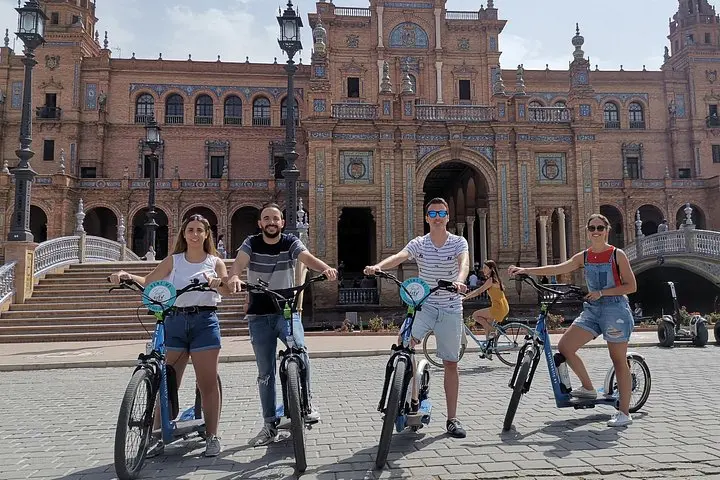
Cover Seville’s plazas, riverbanks, and ceramic-lined streets in a two-hour electric kickscooter rental. With fat tires, suspension, and GPS, it’s an accessible way to see the city quickly and comfortably.
Cover Seville’s plazas, riverbanks, and ceramic-lined streets in a two-hour electric kickscooter rental. With fat tires, suspension, and GPS, it’s an accessible way to see the city quickly and comfortably.
The river pushes a steady breath through Seville as you roll past azulejo-finished facades and wide plazas on a low-slung electric kickscooter. Two hours on one of these fat‑tire machines is enough to move from the shaded lanes of Triana to the open sweep of Plaza de España, feeling suspension soften the old cobbles beneath you.
Verified experiences and guided adventures in the surrounding area.
Operated by Surf The City · Seville, Andalusia
The river pushes a steady breath through Seville as you roll past azulejo-finished facades and wide plazas on a low-slung electric kickscooter. Two hours on one of these fat‑tire machines is enough to move from the shaded lanes of Triana to the open sweep of Plaza de España, feeling suspension soften the old cobbles beneath you.
Seville wears layers of history: Roman foundations, a strong Moorish legacy visible in winding alleys and ornate tilework, and a Renaissance-era river port that shaped its commerce and culture. Geologically the city sits on the Guadalquivir floodplain—flat, with occasional raised embankments—so rides are mostly level but can be interrupted by uneven pavements and tram tracks.
Culture here is kinetic. Street musicians, tapas bars, and ceramic workshops in Triana keep the route lively; the Metropol Parasol offers a modern counterpoint if you want skyline views. Local insights: follow bike lanes where possible, avoid large pedestrianized squares during siesta and weekend rushes, and time your ride for golden hour when terraces come alive.
Practical guidance: these scooters offer ~30 km autonomy, hydraulic-style suspension, and GPS support—ample for a 2‑hour loop. Bring a charged phone, wear closed-toe shoes, and set a conservative pace on cobbles. Guides can point out must-sees, but the rental is unstructured—plan a rough route before you depart. Helmets and respect for pedestrian right-of-way are non-negotiable; park only in designated spots to avoid fines. Two hours is a compact, efficient way to sample Seville’s streets at city pace—fast enough to cover ground, slow enough to notice details.
No—these rentals are designed for all fitness levels; basic balance and an understanding of urban traffic rules are sufficient.
With a ~30 km battery range, a conservative 2‑hour urban loop covering 10–20 km is typical depending on stops and speed.
Many rentals include or offer helmets—confirm at booking and insist on one regardless of local laws.
Local rules vary; prioritize bike lanes and roadways where scooters are permitted, and always yield to pedestrians on sidewalks.
Surf The City operates guided outdoor trips and adventures with an emphasis on safety, stewardship, and memorable experiences.
The river pushes a steady breath through Seville as you roll past azulejo-finished facades and wide plazas on a low-slung electric kickscooter. Two hours on one of these fat‑tire machines is enough to move from the shaded lanes of Triana to the open sweep of Plaza de España, feeling suspension soften the old cobbles beneath you.
The river pushes a steady breath through Seville as you roll past azulejo-finished facades and wide plazas on a low-slung electric kickscooter. Two hours on one of these fat‑tire machines is enough to move from the shaded lanes of Triana to the open sweep of Plaza de España, feeling suspension soften the old cobbles beneath you.
Seville wears layers of history: Roman foundations, a strong Moorish legacy visible in winding alleys and ornate tilework, and a Renaissance-era river port that shaped its commerce and culture. Geologically the city sits on the Guadalquivir floodplain—flat, with occasional raised embankments—so rides are mostly level but can be interrupted by uneven pavements and tram tracks.
Culture here is kinetic. Street musicians, tapas bars, and ceramic workshops in Triana keep the route lively; the Metropol Parasol offers a modern counterpoint if you want skyline views. Local insights: follow bike lanes where possible, avoid large pedestrianized squares during siesta and weekend rushes, and time your ride for golden hour when terraces come alive.
Practical guidance: these scooters offer ~30 km autonomy, hydraulic-style suspension, and GPS support—ample for a 2‑hour loop. Bring a charged phone, wear closed-toe shoes, and set a conservative pace on cobbles. Guides can point out must-sees, but the rental is unstructured—plan a rough route before you depart. Helmets and respect for pedestrian right-of-way are non-negotiable; park only in designated spots to avoid fines. Two hours is a compact, efficient way to sample Seville’s streets at city pace—fast enough to cover ground, slow enough to notice details.