THE ADVENTURE COLLECTIVE® · Independent discovery and booking for outdoor travel

A day trip from Accra into Shai Hills brings short rock climbs, ancestral caves, and savannah wildlife in one compact reserve. Expect steep scrambles, panoramic ridgelines, and a guide’s cultural stories to accompany every ascent.
A day trip from Accra into Shai Hills brings short rock climbs, ancestral caves, and savannah wildlife in one compact reserve. Expect steep scrambles, panoramic ridgelines, and a guide’s cultural stories to accompany every ascent.
Wind off the Gulf of Guinea drops away as you drive north from Accra; the city’s heat loosens and the road narrows, until a stand of low, weathered granitic hills rises from the dry grass like old sentries. By the time you step out of the air‑conditioned van, the rocks already wear the sun as a patina. Guides point to faint trails that wind between acacia and elephant grass, and you can hear birds arguing over perches while the earth underfoot crunches with quartz grit.
Verified experiences and guided adventures in the surrounding area.
Operated by Classic Holidays · Accra, Greater Accra Region
Wind off the Gulf of Guinea drops away as you drive north from Accra; the city’s heat loosens and the road narrows, until a stand of low, weathered granitic hills rises from the dry grass like old sentries. By the time you step out of the air‑conditioned van, the rocks already wear the sun as a patina. Guides point to faint trails that wind between acacia and elephant grass, and you can hear birds arguing over perches while the earth underfoot crunches with quartz grit.
The tour centers on Shai Hills Resource Reserve, a compact patch of savannah and inselbergs with four principal hills that have held meaning for the Shai people for centuries. Caves carved into the lower flanks served as ancestral shelters and ceremonial sites; the same ledges that hosted rites now double as natural belay points for short climbs. Geologically the area is a cluster of exposed Precambrian granite, fractured and exfoliated into faces that are friendly to hands and boots but require attention to loose stone.
Culturally, a guide’s narrative threads through the hike: stories of the Shai kingdom, colonial-era encounters, and how the land provided refuge and ritual space. Wildlife edges close enough to be convincing—small antelope and troops of baboons move through the grasses with a casual indifference to human presence—and birdlife crowns the ridgelines.
Practical guidance sits alongside the story. Expect a full‑day outing: most itineraries run six to eight hours including transport from Accra. The route is a mix of steep, short scrambles up granite outcrops and softer, savannah trails between hills; total elevation gain is modest but repeated climbs feel harder in the heat. Trails are unpaved and can be slippery after rain, so footwear with grippy soles matters more than trek length.
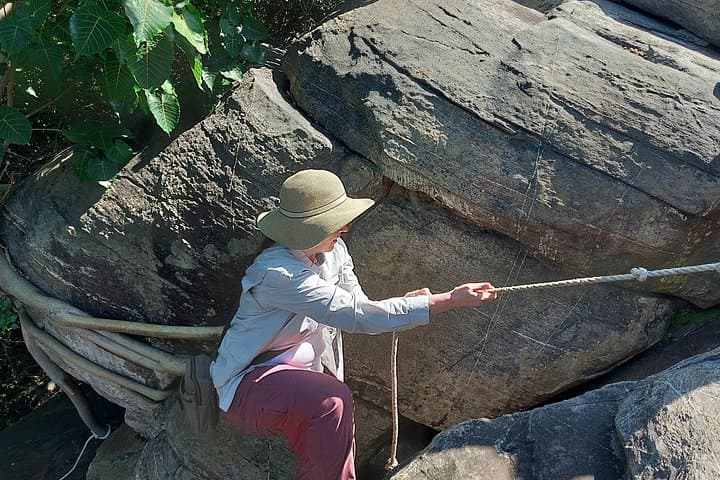
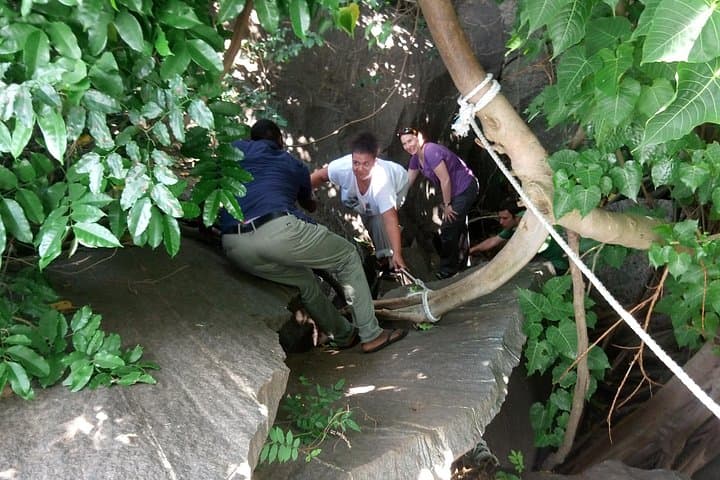
Hydration and timing are the simplest multipliers of comfort here—start early to avoid midday sun, carry at least two liters of water, and use sun protection. If you opt for the climbing sections, basic rope skills and a steady head for exposure help, though guides often set short protection lines for novices. Bring a camera with a polarized filter for contrast on pale rock and to capture the rare, expansive views from the western summit where Accra’s sprawl meets the Atlantic horizon.
Logistics: most operators include hotel pickup in Accra and bottled water; expect an air‑conditioned transfer. Respect the reserve’s rules—no litter, keep to paths, and observe wildlife at a distance. For an accessible day that mixes culture, geology, and hands‑on climbing, Shai Hills is a concentrated experience of Ghana’s near‑urban wilds that rewards curiosity and common sense in equal measure.
Most tours run 6–8 hours total and include hotel pickup and return transfer from Accra.
No formal experience is required; guides set protection for novices, but comfort with scrambling and exposure is helpful.
Expect to see baboons, small antelope and a variety of savannah and rock‑dwelling birds and reptiles.
Some ancestral caves are accessible with a guide, but certain sites are treated as cultural spaces—follow your guide’s direction.
Dry months (roughly November–March) are ideal for stable trails and lower insect activity, though mornings are recommended year‑round.
Families with older, active children who can handle steep sections are fine, but very young kids may struggle with the climbs and heat.
Classic Holidays operates guided outdoor trips and adventures with an emphasis on safety, stewardship, and memorable experiences.


Wind off the Gulf of Guinea drops away as you drive north from Accra; the city’s heat loosens and the road narrows, until a stand of low, weathered granitic hills rises from the dry grass like old sentries. By the time you step out of the air‑conditioned van, the rocks already wear the sun as a patina. Guides point to faint trails that wind between acacia and elephant grass, and you can hear birds arguing over perches while the earth underfoot crunches with quartz grit.
Wind off the Gulf of Guinea drops away as you drive north from Accra; the city’s heat loosens and the road narrows, until a stand of low, weathered granitic hills rises from the dry grass like old sentries. By the time you step out of the air‑conditioned van, the rocks already wear the sun as a patina. Guides point to faint trails that wind between acacia and elephant grass, and you can hear birds arguing over perches while the earth underfoot crunches with quartz grit.
The tour centers on Shai Hills Resource Reserve, a compact patch of savannah and inselbergs with four principal hills that have held meaning for the Shai people for centuries. Caves carved into the lower flanks served as ancestral shelters and ceremonial sites; the same ledges that hosted rites now double as natural belay points for short climbs. Geologically the area is a cluster of exposed Precambrian granite, fractured and exfoliated into faces that are friendly to hands and boots but require attention to loose stone.
Culturally, a guide’s narrative threads through the hike: stories of the Shai kingdom, colonial-era encounters, and how the land provided refuge and ritual space. Wildlife edges close enough to be convincing—small antelope and troops of baboons move through the grasses with a casual indifference to human presence—and birdlife crowns the ridgelines.
Practical guidance sits alongside the story. Expect a full‑day outing: most itineraries run six to eight hours including transport from Accra. The route is a mix of steep, short scrambles up granite outcrops and softer, savannah trails between hills; total elevation gain is modest but repeated climbs feel harder in the heat. Trails are unpaved and can be slippery after rain, so footwear with grippy soles matters more than trek length.
Hydration and timing are the simplest multipliers of comfort here—start early to avoid midday sun, carry at least two liters of water, and use sun protection. If you opt for the climbing sections, basic rope skills and a steady head for exposure help, though guides often set short protection lines for novices. Bring a camera with a polarized filter for contrast on pale rock and to capture the rare, expansive views from the western summit where Accra’s sprawl meets the Atlantic horizon.
Logistics: most operators include hotel pickup in Accra and bottled water; expect an air‑conditioned transfer. Respect the reserve’s rules—no litter, keep to paths, and observe wildlife at a distance. For an accessible day that mixes culture, geology, and hands‑on climbing, Shai Hills is a concentrated experience of Ghana’s near‑urban wilds that rewards curiosity and common sense in equal measure.