THE ADVENTURE COLLECTIVE® · Independent discovery and booking for outdoor travel

Spend a day where desert meets sea: explore Bir Shalatin’s camel market, walk among menhir-like rock formations and meet nomadic traditions on a coastal 4x4 tour through Wadi El Gemal.
Spend a day where desert meets sea: explore Bir Shalatin’s camel market, walk among menhir-like rock formations and meet nomadic traditions on a coastal 4x4 tour through Wadi El Gemal.
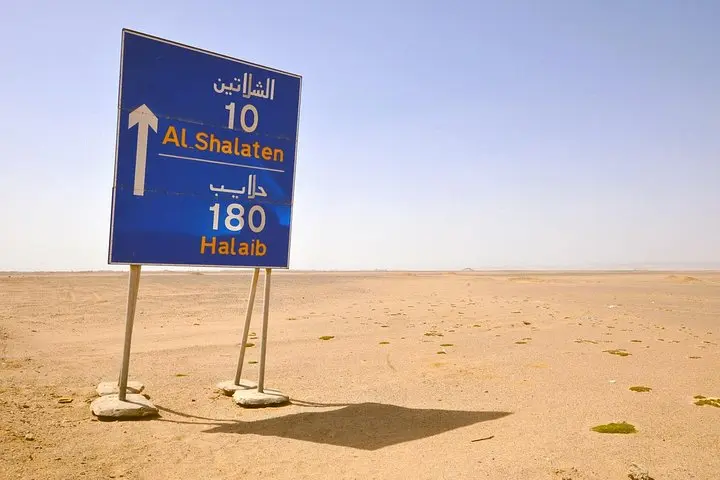
The morning light pours across a low-lying Red Sea horizon as your 4x4 rumbles out of town toward Bir Shalatin’s camel market. The animals arrive in a dust-colored tide, voices and bargaining rising like wind across scrub; later the vehicle threads a sandy track where strange, blocky rocks—menhir-like—jut from the desert as if frozen mid-gesture. The landscape here pushes and resists you: the sea’s cool line to one side, the desert’s heat on the other.
Verified experiences and guided adventures in the surrounding area.
Operated by Dabuka · Shalatin, Red Sea Governorate
The morning light pours across a low-lying Red Sea horizon as your 4x4 rumbles out of town toward Bir Shalatin’s camel market. The animals arrive in a dust-colored tide, voices and bargaining rising like wind across scrub; later the vehicle threads a sandy track where strange, blocky rocks—menhir-like—jut from the desert as if frozen mid-gesture. The landscape here pushes and resists you: the sea’s cool line to one side, the desert’s heat on the other.
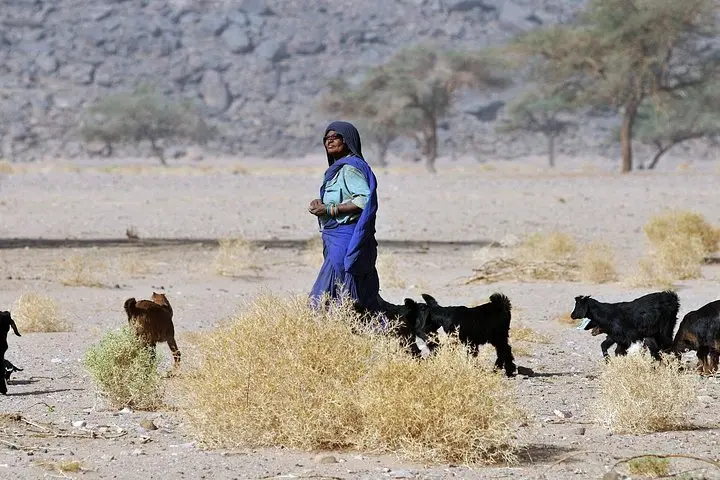
This stretch of the Red Sea coast reflects centuries of trade: camels and people moved goods between Sudan and Egypt, and the souks still carry Sudanese influences in dress, spices and crafts. Geologically, the “Obelix” rocks are weathered granite and sandstone sculpted by wind and salt into towering, rounded forms that make short, rewarding hikes feel like walking through a natural gallery. Local nomadic traditions persist—expect to see shepherds and their flocks following age-old routes.
Practical guidance: the tour is a full-day outing (about nine hours) with short, easy hikes from vehicle trails—moderate fitness and sun protection are mandatory. Bring at least 2–3 liters of water, sturdy shoes for sand and rock, and layered clothing for coastal breeze and desert heat. Respect livestock and local vendors—ask before photographing people. The trip uses a well-maintained Toyota Land Cruiser and includes lunch and park fees; toilets are limited outside town, so plan accordingly. Timing a visit for early morning or late afternoon offers softer light, cooler temperature and better wildlife activity.
Pickup is normally arranged from hotels in the Marsa Alam or nearby coastal towns; confirm your exact pickup point at booking.
Lunch is included at a local restaurant; public restrooms are available in town but limited on trail—plan accordingly.
Children are welcome, but the tour involves vehicle transfers on sandy tracks and short hikes; not recommended for those with serious mobility, spinal, cardiac, or pregnancy restrictions.
Yes—photography is allowed, but always ask individuals for permission and consider offering a small tip if you take close portraits.
Dabuka operates guided outdoor trips and adventures with an emphasis on safety, stewardship, and memorable experiences.
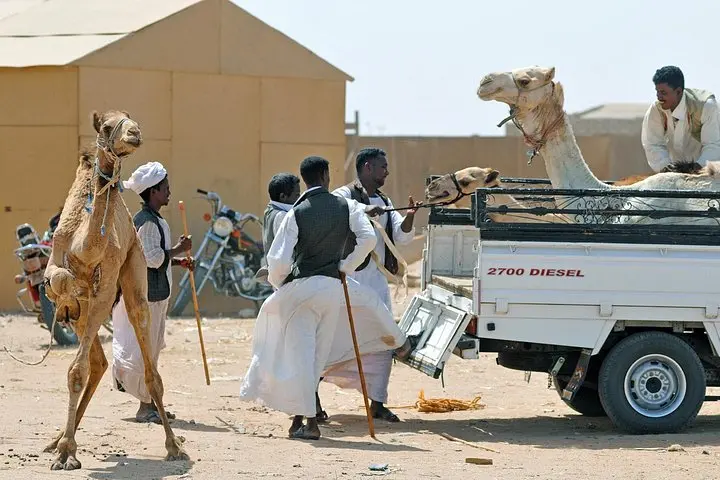
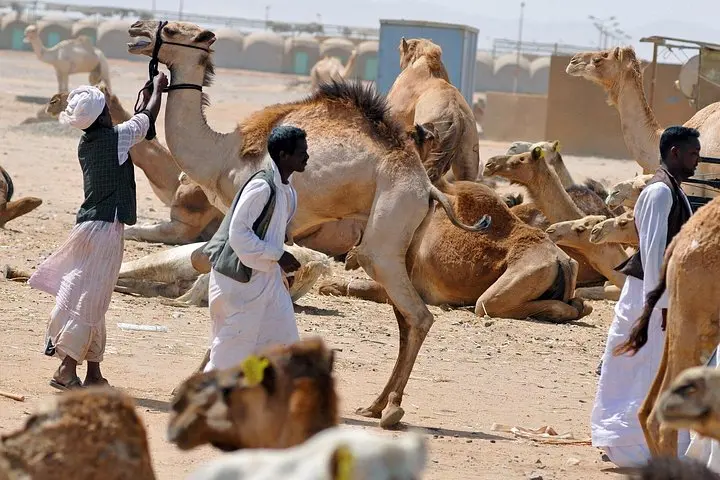
The morning light pours across a low-lying Red Sea horizon as your 4x4 rumbles out of town toward Bir Shalatin’s camel market. The animals arrive in a dust-colored tide, voices and bargaining rising like wind across scrub; later the vehicle threads a sandy track where strange, blocky rocks—menhir-like—jut from the desert as if frozen mid-gesture. The landscape here pushes and resists you: the sea’s cool line to one side, the desert’s heat on the other.
The morning light pours across a low-lying Red Sea horizon as your 4x4 rumbles out of town toward Bir Shalatin’s camel market. The animals arrive in a dust-colored tide, voices and bargaining rising like wind across scrub; later the vehicle threads a sandy track where strange, blocky rocks—menhir-like—jut from the desert as if frozen mid-gesture. The landscape here pushes and resists you: the sea’s cool line to one side, the desert’s heat on the other.
This stretch of the Red Sea coast reflects centuries of trade: camels and people moved goods between Sudan and Egypt, and the souks still carry Sudanese influences in dress, spices and crafts. Geologically, the “Obelix” rocks are weathered granite and sandstone sculpted by wind and salt into towering, rounded forms that make short, rewarding hikes feel like walking through a natural gallery. Local nomadic traditions persist—expect to see shepherds and their flocks following age-old routes.
Practical guidance: the tour is a full-day outing (about nine hours) with short, easy hikes from vehicle trails—moderate fitness and sun protection are mandatory. Bring at least 2–3 liters of water, sturdy shoes for sand and rock, and layered clothing for coastal breeze and desert heat. Respect livestock and local vendors—ask before photographing people. The trip uses a well-maintained Toyota Land Cruiser and includes lunch and park fees; toilets are limited outside town, so plan accordingly. Timing a visit for early morning or late afternoon offers softer light, cooler temperature and better wildlife activity.