THE ADVENTURE COLLECTIVE® · Independent discovery and booking for outdoor travel

A point-to-point shared shuttle connecting the South and North rims of the Grand Canyon with AC vehicles, bottled water and phone charging—designed to streamline rim-to-rim hikes. Ideal for fit hikers and backpackers planning one-way crossings or overnight treks.
A point-to-point shared shuttle connecting the South and North rims of the Grand Canyon with AC vehicles, bottled water and phone charging—designed to streamline rim-to-rim hikes. Ideal for fit hikers and backpackers planning one-way crossings or overnight treks.
A morning on the canyon rim begins with a low cloud of dust and the metallic click of hiking boots—drivers arrive in an air-conditioned van, engines idling, cool water waiting. The road between the South and North rims winds through Pinyon and ponderosa stands, and the vehicle becomes a brief, comfortable doorway between two very different canyon worlds.
Verified experiences and guided adventures in the surrounding area.
Operated by Kenovah Creates Tours · Grand Canyon Village, Arizona
A morning on the canyon rim begins with a low cloud of dust and the metallic click of hiking boots—drivers arrive in an air-conditioned van, engines idling, cool water waiting. The road between the South and North rims winds through Pinyon and ponderosa stands, and the vehicle becomes a brief, comfortable doorway between two very different canyon worlds.
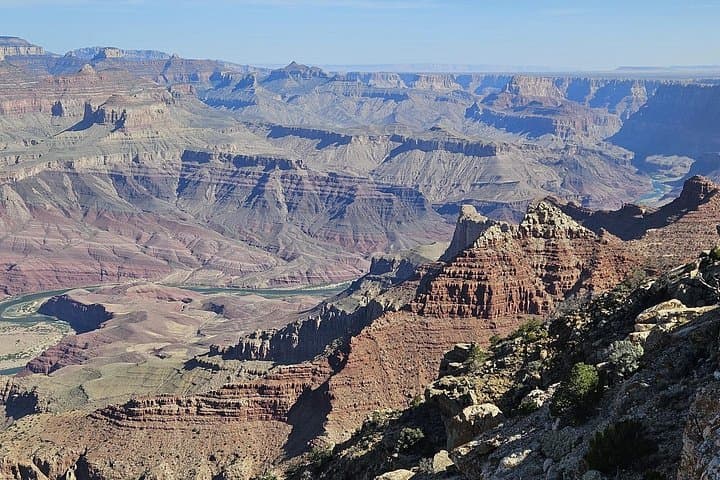
Rim-to-rim crossings trace routes carved over millions of years: the Colorado River at the bottom, ancient layered rock revealing the park’s deep geologic history. Travelers cross from the South Rim’s exposed desert ledges to the North Rim’s higher, forested plateau—each rim carrying its own 20th-century development story tied to railroads, tourism, and park conservation.
This shared transport service is purpose-built for hikers and backpackers: point-to-point pickup and drop-off at customer-specified park permit locations, bottled water, phone charging ports, and a driver who will wait up to an hour to allow hikers to reach the pickup point. Expect a 5–6 hour vehicle window between rims depending on route and park traffic.
Practical edge: Rim-to-rim hiking is typically 21–24 miles with roughly 4,000–5,000 feet of elevation change; hikers should plan pacing, carry permit documentation for overnight trips, and factor in extreme temperature swings. The operator notes the trip is not recommended for pregnant travelers or those with serious spinal or cardiovascular conditions.
Timing matters—spring and fall are the most forgiving; summer brings extreme heat below the rim; winter can deposit snow on the North Rim. Book pickups with clear coordinates, pack a robust hydration system, and communicate any schedule constraints—this service removes the logistics barrier so hikers can focus on the trail ahead.
If you plan to camp overnight below the rim you need a Backcountry Permit from Grand Canyon National Park; day hikers typically do not need a permit but should check current park regulations.
Drivers will pick up and drop off at the exact locations you specify on your booking, consistent with Grand Canyon National Park permit and access rules.
The driver will wait up to one hour past your scheduled pickup time; communicate delays to the operator as soon as possible to coordinate timing.
This operator lists all sales as final—confirm details and passenger information carefully before completing your booking.
Kenovah Creates Tours operates guided outdoor trips and adventures with an emphasis on safety, stewardship, and memorable experiences.



A morning on the canyon rim begins with a low cloud of dust and the metallic click of hiking boots—drivers arrive in an air-conditioned van, engines idling, cool water waiting. The road between the South and North rims winds through Pinyon and ponderosa stands, and the vehicle becomes a brief, comfortable doorway between two very different canyon worlds.
A morning on the canyon rim begins with a low cloud of dust and the metallic click of hiking boots—drivers arrive in an air-conditioned van, engines idling, cool water waiting. The road between the South and North rims winds through Pinyon and ponderosa stands, and the vehicle becomes a brief, comfortable doorway between two very different canyon worlds.
Rim-to-rim crossings trace routes carved over millions of years: the Colorado River at the bottom, ancient layered rock revealing the park’s deep geologic history. Travelers cross from the South Rim’s exposed desert ledges to the North Rim’s higher, forested plateau—each rim carrying its own 20th-century development story tied to railroads, tourism, and park conservation.
This shared transport service is purpose-built for hikers and backpackers: point-to-point pickup and drop-off at customer-specified park permit locations, bottled water, phone charging ports, and a driver who will wait up to an hour to allow hikers to reach the pickup point. Expect a 5–6 hour vehicle window between rims depending on route and park traffic.
Practical edge: Rim-to-rim hiking is typically 21–24 miles with roughly 4,000–5,000 feet of elevation change; hikers should plan pacing, carry permit documentation for overnight trips, and factor in extreme temperature swings. The operator notes the trip is not recommended for pregnant travelers or those with serious spinal or cardiovascular conditions.
Timing matters—spring and fall are the most forgiving; summer brings extreme heat below the rim; winter can deposit snow on the North Rim. Book pickups with clear coordinates, pack a robust hydration system, and communicate any schedule constraints—this service removes the logistics barrier so hikers can focus on the trail ahead.