THE ADVENTURE COLLECTIVE® · Independent discovery and booking for outdoor travel

A reliable, economical shared transfer linking Manuel Antonio/Quepos with San José. Enjoy air-conditioned comfort, onboard Wi‑Fi, and a single rest stop on a roughly four-hour drive that crosses coastal lowlands into the Central Valley.
A reliable, economical shared transfer linking Manuel Antonio/Quepos with San José. Enjoy air-conditioned comfort, onboard Wi‑Fi, and a single rest stop on a roughly four-hour drive that crosses coastal lowlands into the Central Valley.
You step into an air-conditioned minibus in a quiet Quepos morning, the Pacific heat contained behind the glass as the driver checks the manifest and plugs in the GPS. Windows frame palm-fringed coastlines giving way to low foothills; fields of banana and plantain drift past, and the occasional river mouth flashes dark where crocodiles sun themselves beneath bridges.
Verified experiences and guided adventures in the surrounding area.
Operated by Faro Travel Costa Rica · Quepos, Puntarenas
You step into an air-conditioned minibus in a quiet Quepos morning, the Pacific heat contained behind the glass as the driver checks the manifest and plugs in the GPS. Windows frame palm-fringed coastlines giving way to low foothills; fields of banana and plantain drift past, and the occasional river mouth flashes dark where crocodiles sun themselves beneath bridges.
The route links Costa Rica’s Central Pacific beaches to the Central Valley and San José, a corridor shaped by volcanic soils and coastal estuaries. Quepos began as a fishing and banana-export town; San José rose on the coffee boom and now serves as the country’s cultural and transportation hub. Along the drive you’ll see roadside sodas (local eateries), mangrove estuaries, and the Tárcoles River—where crocodile sightings are common—before climbing toward the Central Valley and the city’s grid.
Practically, this is a point-to-point shared transfer: expect roughly four hours on the road, one short rest stop for bathrooms and snacks, and bilingual drivers who handle luggage and routing. Vehicles are well-maintained minibuses with onboard Wi‑Fi and options for infant seats. Be ready at your pickup 15 minutes early; drivers will wait up to 10 minutes for shared-booking passengers. Bring a light layer for cooler valley temperatures and a dry bag for wet-season showers.
This shuttle is a straightforward, economical way to move between coast and city while catching a cross-section of Costa Rica’s landscapes—coastal plains, riparian wildlife hotspots, and the coffee-fed hills that ring San José.
Travel time is approximately four hours, though traffic and extra pick-ups can extend the trip.
Yes—most hotel pickups and drop-offs inside the main Quepos/Manuel Antonio and San José hotel zones are door-to-door; remote properties may require a short taxi transfer.
Most vehicles offer onboard Wi‑Fi and specialized infant seats can be requested in advance.
Drivers will wait up to 10 minutes; if you miss the pickup you may be considered a no‑show and the service could be charged in full—contact the operator as soon as possible.
Faro Travel Costa Rica operates guided outdoor trips and adventures with an emphasis on safety, stewardship, and memorable experiences.
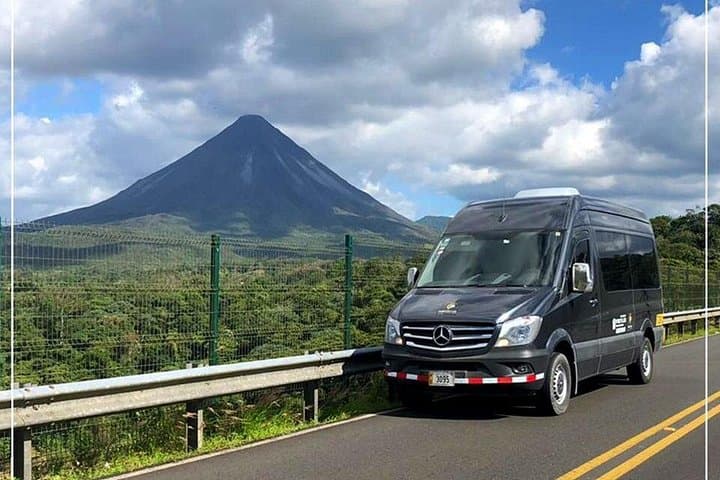



You step into an air-conditioned minibus in a quiet Quepos morning, the Pacific heat contained behind the glass as the driver checks the manifest and plugs in the GPS. Windows frame palm-fringed coastlines giving way to low foothills; fields of banana and plantain drift past, and the occasional river mouth flashes dark where crocodiles sun themselves beneath bridges.
You step into an air-conditioned minibus in a quiet Quepos morning, the Pacific heat contained behind the glass as the driver checks the manifest and plugs in the GPS. Windows frame palm-fringed coastlines giving way to low foothills; fields of banana and plantain drift past, and the occasional river mouth flashes dark where crocodiles sun themselves beneath bridges.
The route links Costa Rica’s Central Pacific beaches to the Central Valley and San José, a corridor shaped by volcanic soils and coastal estuaries. Quepos began as a fishing and banana-export town; San José rose on the coffee boom and now serves as the country’s cultural and transportation hub. Along the drive you’ll see roadside sodas (local eateries), mangrove estuaries, and the Tárcoles River—where crocodile sightings are common—before climbing toward the Central Valley and the city’s grid.
Practically, this is a point-to-point shared transfer: expect roughly four hours on the road, one short rest stop for bathrooms and snacks, and bilingual drivers who handle luggage and routing. Vehicles are well-maintained minibuses with onboard Wi‑Fi and options for infant seats. Be ready at your pickup 15 minutes early; drivers will wait up to 10 minutes for shared-booking passengers. Bring a light layer for cooler valley temperatures and a dry bag for wet-season showers.
This shuttle is a straightforward, economical way to move between coast and city while catching a cross-section of Costa Rica’s landscapes—coastal plains, riparian wildlife hotspots, and the coffee-fed hills that ring San José.