THE ADVENTURE COLLECTIVE® · Independent discovery and booking for outdoor travel

Board an overnight coach from Sharm El Sheikh and arrive at the Giza Plateau to explore the Pyramids, Sphinx, and Cairo’s Egyptian Museum in a single long day. This guided tour includes lunch and entry fees—ideal for travelers who want concentrated access to Egypt’s top antiquities in one trip.
Board an overnight coach from Sharm El Sheikh and arrive at the Giza Plateau to explore the Pyramids, Sphinx, and Cairo’s Egyptian Museum in a single long day. This guided tour includes lunch and entry fees—ideal for travelers who want concentrated access to Egypt’s top antiquities in one trip.
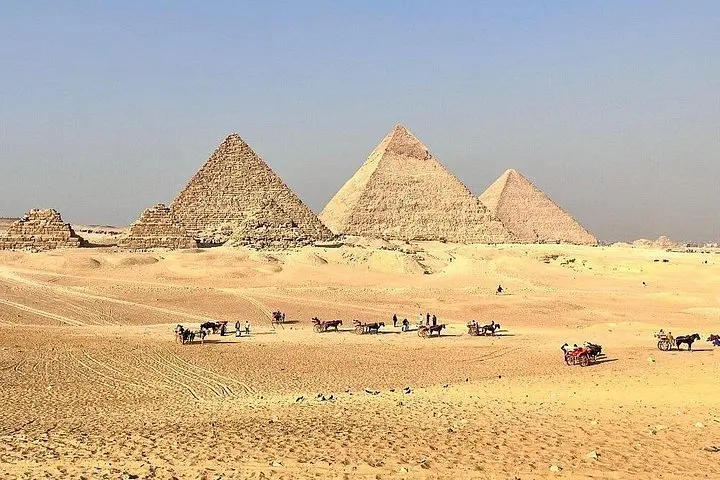
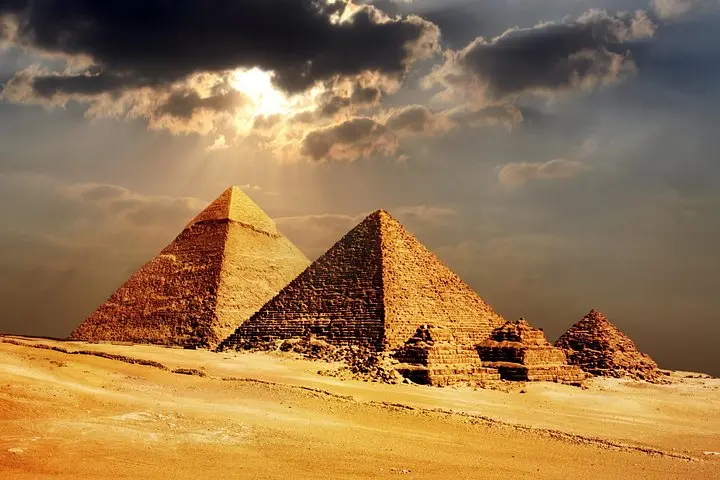
You climb aboard an air‑conditioned coach just before midnight in Sharm El Sheikh, the town’s lights shrinking behind you as the bus hums north across Sinai. Overnight, the desert loosens its heat and, by first light, the Giza plateau appears as a low, honey‑colored horizon—three pyramids rising like deliberate gestures against the sky.
Verified experiences and guided adventures in the surrounding area.
Operated by BTG Holidays · Giza, Giza Governorate
You climb aboard an air‑conditioned coach just before midnight in Sharm El Sheikh, the town’s lights shrinking behind you as the bus hums north across Sinai. Overnight, the desert loosens its heat and, by first light, the Giza plateau appears as a low, honey‑colored horizon—three pyramids rising like deliberate gestures against the sky.
The day pairs two of Egypt’s big draws: the Museum of Egyptian Antiquities in Cairo, where Tutankhamun’s funerary gold and embalming tables speak to millennia of burial practice, and the Giza Plateau, where the Great Pyramid, Khafre and Menkaure offer a lesson in funerary engineering built from local limestone and mortar. The Sphinx keeps watch, its eroded face pointing toward the Nile valley and a long record of human reverence.
Culturally, the route links Sinai’s Bedouin trade routes with the imperial corridors of ancient Memphis; the artifacts and monuments are evidence of centralized labor, astronomical alignment, and ritual life. Geologically, the plateau is a band of Eocene limestone that quarrying and time have shaped into angles and shadows.
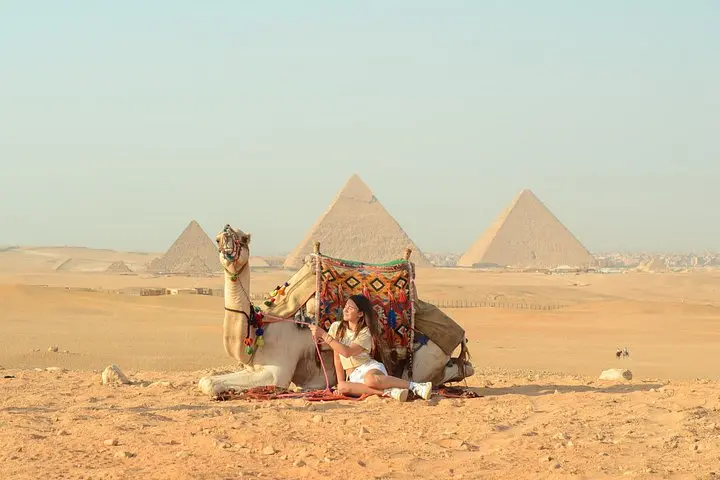
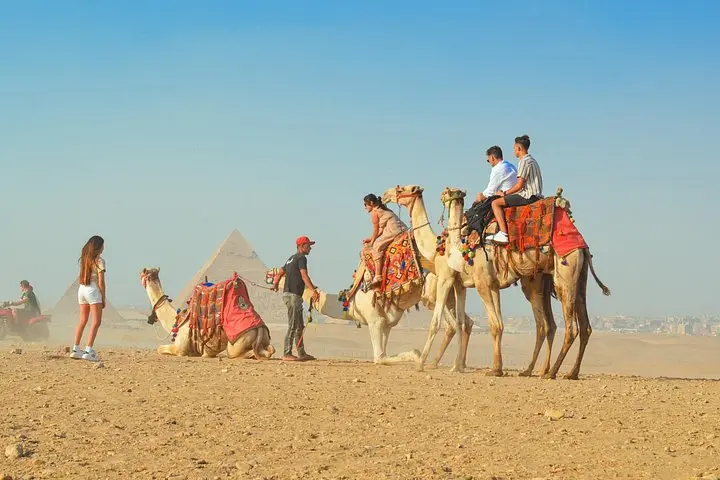
Practicalities govern this trip: expect a long day with roughly 9‑hour drives each way depending on traffic, and several hours touring on foot over uneven stone and loose sand. Bring your passport and visa, sun protection, comfortable walking shoes, and a small backpack with water and snacks. Lunch and site admissions are included, but optional extras—camel rides, photographs—are typically paid on site. If you have limited mobility or cardiovascular issues, plan accordingly: walking and standing dominate the visit. With preparation, this is a high‑value day that trades travel time for concentrated access to two of Egypt’s indispensable experiences.
Yes—each guest must hold the appropriate Egyptian visa before boarding; check entry requirements well before travel.
Typical travel time is around 9 hours each way depending on traffic and border procedures, making this a very long day.
Yes—the tour includes admission to the Egyptian Museum and the Giza Plateau; optional extras like camel rides are paid locally.
Infants must sit on laps; the operator notes it is not recommended for travelers with serious heart or mobility problems due to long drives and extended walking.
BTG Holidays operates guided outdoor trips and adventures with an emphasis on safety, stewardship, and memorable experiences.
You climb aboard an air‑conditioned coach just before midnight in Sharm El Sheikh, the town’s lights shrinking behind you as the bus hums north across Sinai. Overnight, the desert loosens its heat and, by first light, the Giza plateau appears as a low, honey‑colored horizon—three pyramids rising like deliberate gestures against the sky.
You climb aboard an air‑conditioned coach just before midnight in Sharm El Sheikh, the town’s lights shrinking behind you as the bus hums north across Sinai. Overnight, the desert loosens its heat and, by first light, the Giza plateau appears as a low, honey‑colored horizon—three pyramids rising like deliberate gestures against the sky.
The day pairs two of Egypt’s big draws: the Museum of Egyptian Antiquities in Cairo, where Tutankhamun’s funerary gold and embalming tables speak to millennia of burial practice, and the Giza Plateau, where the Great Pyramid, Khafre and Menkaure offer a lesson in funerary engineering built from local limestone and mortar. The Sphinx keeps watch, its eroded face pointing toward the Nile valley and a long record of human reverence.
Culturally, the route links Sinai’s Bedouin trade routes with the imperial corridors of ancient Memphis; the artifacts and monuments are evidence of centralized labor, astronomical alignment, and ritual life. Geologically, the plateau is a band of Eocene limestone that quarrying and time have shaped into angles and shadows.
Practicalities govern this trip: expect a long day with roughly 9‑hour drives each way depending on traffic, and several hours touring on foot over uneven stone and loose sand. Bring your passport and visa, sun protection, comfortable walking shoes, and a small backpack with water and snacks. Lunch and site admissions are included, but optional extras—camel rides, photographs—are typically paid on site. If you have limited mobility or cardiovascular issues, plan accordingly: walking and standing dominate the visit. With preparation, this is a high‑value day that trades travel time for concentrated access to two of Egypt’s indispensable experiences.