THE ADVENTURE COLLECTIVE® · Independent discovery and booking for outdoor travel

Leave Shinjuku behind for a full day of mountains, steaming vents, and a serene cruise on Lake Ashi. This guided trip strings together the Hakone Tozan Railway, cable car, ropeway and a lakeside boat—perfect for a nature-focused escape from Tokyo.
Leave Shinjuku behind for a full day of mountains, steaming vents, and a serene cruise on Lake Ashi. This guided trip strings together the Hakone Tozan Railway, cable car, ropeway and a lakeside boat—perfect for a nature-focused escape from Tokyo.
You step out of Shinjuku’s organized chaos and into a different Japan within an hour: rails humming beneath you, the city’s high-rises dissolving into green ridges. The limited express train to Hakone-Yumoto moves with the careful confidence of a commuter and the patience of a traveler, opening a route that climbs from Tokyo’s flat plain into the volcanic spine of the western Kanto.
Verified experiences and guided adventures in the surrounding area.
Operated by DeepExperience · Hakone, Kanagawa
You step out of Shinjuku’s organized chaos and into a different Japan within an hour: rails humming beneath you, the city’s high-rises dissolving into green ridges. The limited express train to Hakone-Yumoto moves with the careful confidence of a commuter and the patience of a traveler, opening a route that climbs from Tokyo’s flat plain into the volcanic spine of the western Kanto.
The real ascent begins on the Hakone Tozan Railway, a mountain line that snakes up narrow valleys, churning through tight switchbacks and maple-thick woods. Trees lean close enough to read the moss on their trunks; the air cools and smells faintly of cedar. From the cable car and later the Hakone Ropeway, the landscape reveals itself in layered scenes—steep slopes blanketed in forest, plumes of steam rising from Owakudani’s fumaroles, and, on clear days, the wedge of Mt. Fuji punctuating the horizon.
Geology here is literal history: Hakone is the rim of an ancient caldera. Owakudani’s sulphurous vents and thermal pools are reminders that this landscape is still adjusting—hot rock, steam and mineral-rich water produce the black onsen eggs and the sharp odors that define the area.
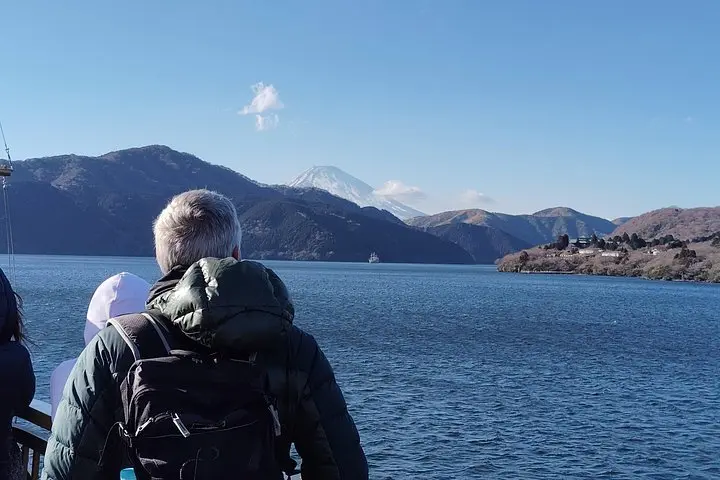
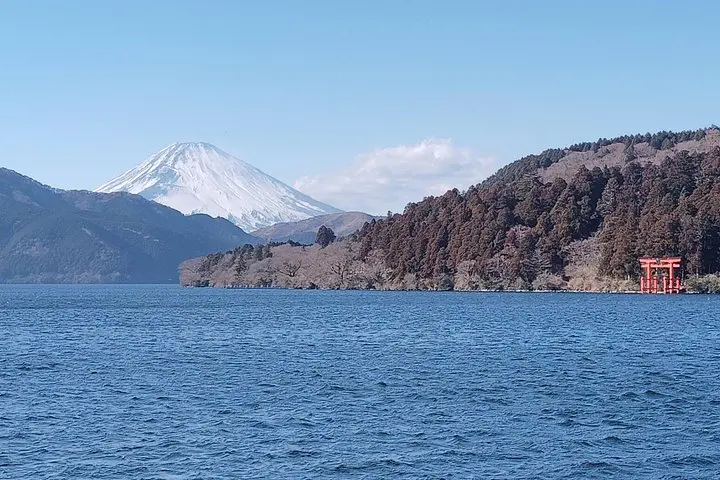
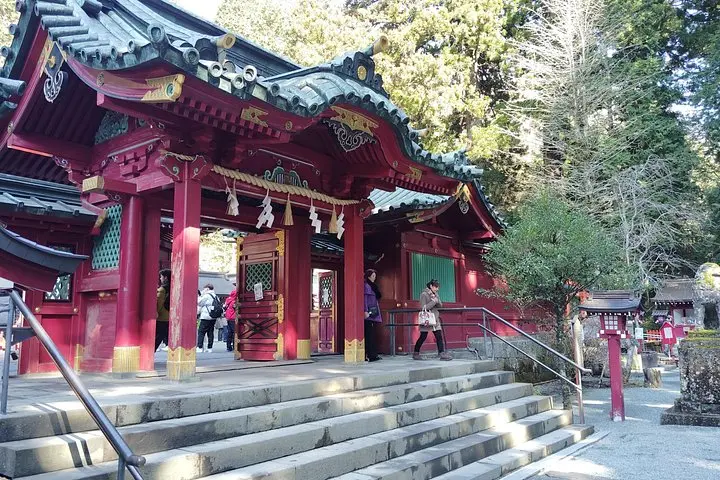
Culture sits readily alongside the geological. Lake Ashi’s torii gate and the lakeside shrines reflect centuries of pilgrim routes; onsen towns such as Hakone-Yumoto grew where hot springs met roadways and travelers sought rest. The sightseeing boat that crosses Ashinoko has a decorative hull, but aboard it the focus is practical—scenery, wind, and the ever-possible view of Fuji across open water.
Practical guidance: this private, guided day runs roughly 9–10 hours and involves multiple transfers—train, mountain railway, cable car, ropeway, boat and bus—so wear supportive shoes and carry a daypack. Book the limited express (Odakyu Romancecar) when possible to save time and snag seats. Mt. Fuji is a seasonal visitor to your camera; morning clarity after a cool night gives the best odds. Expect light walking at stations and viewpoints rather than long hikes, and allow time for queues at Owakudani when vents are active.
Timing matters: start early from Shinjuku to beat crowds and maximize visibility from the ropeway. Bring cash for small food stalls and the black eggs; pack a compact rain layer—weather changes fast in the mountains. Above all, treat the steam vents with respect: viewing points are safe but the landscape is active. Return to Shinjuku after a day that moves between engineered comfort and the raw, reminding you how close Tokyo sits to a living volcano.
Expect a full day—about 9–10 hours—with a relaxed pace focused on scenic transfers and short walks rather than strenuous hiking.
Yes on clear days—the best chance is early morning after a cool night; clouds often obscure Fuji later in the day.
Yes; transfers are accessible and walking is light, though there are stairs at some stations and viewpoints.
The guided itinerary includes the sequence of transport modes used, but confirm details at booking; small fees for foods or optional extras are usually separate.
Bring a face covering if sensitive to sulphur odor, water, and cash for the boiled eggs; stay on designated paths and viewing platforms.
Full refund available if you cancel at least 24 hours before departure; last-minute cancellations are non-refundable.
DeepExperience operates guided outdoor trips and adventures with an emphasis on safety, stewardship, and memorable experiences.
You step out of Shinjuku’s organized chaos and into a different Japan within an hour: rails humming beneath you, the city’s high-rises dissolving into green ridges. The limited express train to Hakone-Yumoto moves with the careful confidence of a commuter and the patience of a traveler, opening a route that climbs from Tokyo’s flat plain into the volcanic spine of the western Kanto.
You step out of Shinjuku’s organized chaos and into a different Japan within an hour: rails humming beneath you, the city’s high-rises dissolving into green ridges. The limited express train to Hakone-Yumoto moves with the careful confidence of a commuter and the patience of a traveler, opening a route that climbs from Tokyo’s flat plain into the volcanic spine of the western Kanto.
The real ascent begins on the Hakone Tozan Railway, a mountain line that snakes up narrow valleys, churning through tight switchbacks and maple-thick woods. Trees lean close enough to read the moss on their trunks; the air cools and smells faintly of cedar. From the cable car and later the Hakone Ropeway, the landscape reveals itself in layered scenes—steep slopes blanketed in forest, plumes of steam rising from Owakudani’s fumaroles, and, on clear days, the wedge of Mt. Fuji punctuating the horizon.
Geology here is literal history: Hakone is the rim of an ancient caldera. Owakudani’s sulphurous vents and thermal pools are reminders that this landscape is still adjusting—hot rock, steam and mineral-rich water produce the black onsen eggs and the sharp odors that define the area.
Culture sits readily alongside the geological. Lake Ashi’s torii gate and the lakeside shrines reflect centuries of pilgrim routes; onsen towns such as Hakone-Yumoto grew where hot springs met roadways and travelers sought rest. The sightseeing boat that crosses Ashinoko has a decorative hull, but aboard it the focus is practical—scenery, wind, and the ever-possible view of Fuji across open water.
Practical guidance: this private, guided day runs roughly 9–10 hours and involves multiple transfers—train, mountain railway, cable car, ropeway, boat and bus—so wear supportive shoes and carry a daypack. Book the limited express (Odakyu Romancecar) when possible to save time and snag seats. Mt. Fuji is a seasonal visitor to your camera; morning clarity after a cool night gives the best odds. Expect light walking at stations and viewpoints rather than long hikes, and allow time for queues at Owakudani when vents are active.
Timing matters: start early from Shinjuku to beat crowds and maximize visibility from the ropeway. Bring cash for small food stalls and the black eggs; pack a compact rain layer—weather changes fast in the mountains. Above all, treat the steam vents with respect: viewing points are safe but the landscape is active. Return to Shinjuku after a day that moves between engineered comfort and the raw, reminding you how close Tokyo sits to a living volcano.