THE ADVENTURE COLLECTIVE® · Independent discovery and booking for outdoor travel

Spend three hours practicing Shinrin Yoku in one of Schleswig‑Holstein’s primeval woodlands. This guided, private session combines sensory exercises, light meditation, and local forest lore to leave you grounded and refreshed.
Spend three hours practicing Shinrin Yoku in one of Schleswig‑Holstein’s primeval woodlands. This guided, private session combines sensory exercises, light meditation, and local forest lore to leave you grounded and refreshed.
The trail begins in soft light: trunks shoulder-to-shoulder, the forest floor responding underfoot with a muffled hush. The guide slows the pace and asks you to listen — the canopy leans in, leaves whispering like old friends. You move deliberately, senses widening as the salt air from the nearby Baltic slips through pine and beech, daring you to breathe deeper.
Verified experiences and guided adventures in the surrounding area.
Operated by Tabrika Feldberg · Lübeck, Schleswig-Holstein
The trail begins in soft light: trunks shoulder-to-shoulder, the forest floor responding underfoot with a muffled hush. The guide slows the pace and asks you to listen — the canopy leans in, leaves whispering like old friends. You move deliberately, senses widening as the salt air from the nearby Baltic slips through pine and beech, daring you to breathe deeper.
This is Shinrin Yoku, the Japanese practice of forest bathing, translated here to one of Schleswig‑Holstein’s rare remnants of ancient woodland. Geologically the region is a low-lying glacial plain, with soils shaped by ice-age outwash and a high water table that favors peat pockets and mixed stands of beech and spruce. Culturally, local communities have long harvested wood and foraged these edges; today guides pair that knowledge with mindfulness exercises and gentle breathwork.
Expect a three-hour, largely flat walk with guided sensory exercises, light meditation and short pauses for tea and snacks. The experience is private and suitable for anyone comfortable on foot; it’s designed more for restoration than distance. Terrain is soft earth, occasional roots and boardwalks over damp sections — good traction is recommended.
Practical tips: arrive with layered clothing, a filled water bottle and shoes that grip wet leaves. Morning sessions bring bird song and cooler, clearer air; afternoons are calmer and better for scent-focused exercises. The forest has delicate undergrowth — keep to the route, pack out any waste, and let the wood work its quiet magic.
It’s designed to be low impact—mainly slow walking and standing meditation. Participants should be comfortable walking on uneven ground for up to three hours.
Yes, participants must be at least 16 years old, per the operator’s policy.
Sessions can be canceled if weather makes the site unsafe; check the 24‑hour cancellation policy for refunds and rescheduling.
Light snacks and tea or coffee are included as part of the three‑hour session.
Tabrika Feldberg operates guided outdoor trips and adventures with an emphasis on safety, stewardship, and memorable experiences.
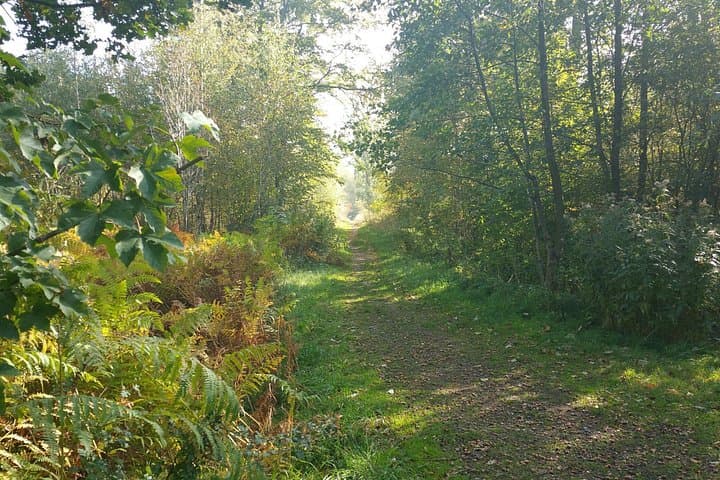


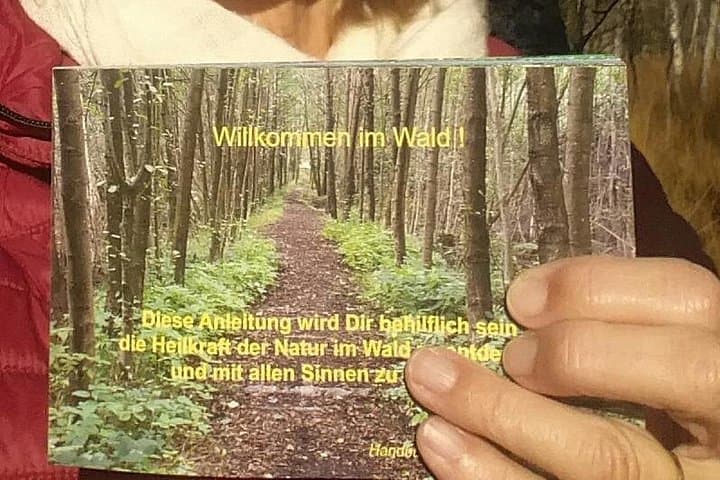
The trail begins in soft light: trunks shoulder-to-shoulder, the forest floor responding underfoot with a muffled hush. The guide slows the pace and asks you to listen — the canopy leans in, leaves whispering like old friends. You move deliberately, senses widening as the salt air from the nearby Baltic slips through pine and beech, daring you to breathe deeper.
The trail begins in soft light: trunks shoulder-to-shoulder, the forest floor responding underfoot with a muffled hush. The guide slows the pace and asks you to listen — the canopy leans in, leaves whispering like old friends. You move deliberately, senses widening as the salt air from the nearby Baltic slips through pine and beech, daring you to breathe deeper.
This is Shinrin Yoku, the Japanese practice of forest bathing, translated here to one of Schleswig‑Holstein’s rare remnants of ancient woodland. Geologically the region is a low-lying glacial plain, with soils shaped by ice-age outwash and a high water table that favors peat pockets and mixed stands of beech and spruce. Culturally, local communities have long harvested wood and foraged these edges; today guides pair that knowledge with mindfulness exercises and gentle breathwork.
Expect a three-hour, largely flat walk with guided sensory exercises, light meditation and short pauses for tea and snacks. The experience is private and suitable for anyone comfortable on foot; it’s designed more for restoration than distance. Terrain is soft earth, occasional roots and boardwalks over damp sections — good traction is recommended.
Practical tips: arrive with layered clothing, a filled water bottle and shoes that grip wet leaves. Morning sessions bring bird song and cooler, clearer air; afternoons are calmer and better for scent-focused exercises. The forest has delicate undergrowth — keep to the route, pack out any waste, and let the wood work its quiet magic.