THE ADVENTURE COLLECTIVE® · Independent discovery and booking for outdoor travel
Experience Kilimanjaro’s high-country without summiting: a guided full-day hike to the Shira Plateau combines volcanic geology, broad views of the Kibo massif, and a solid altitude experience in a single day. Practical, scenic, and accessible from Moshi, it’s ideal for hikers who want the mountain’s drama without the summit push.
Experience Kilimanjaro’s high-country without summiting: a guided full-day hike to the Shira Plateau combines volcanic geology, broad views of the Kibo massif, and a solid altitude experience in a single day. Practical, scenic, and accessible from Moshi, it’s ideal for hikers who want the mountain’s drama without the summit push.
You step out of the Toyota onto a high, cold plain where the air tastes thin and honest. Wind coaxes the grass into ripples, and across the flat the Kibo massif rises like a raw, basalt sculpture—its glaciers a bright punctuation against a blue that cuts clean at altitude. The Shira Plateau unfolds to the west of Kibo for kilometers, an exposed expanse of weathered lava, eroded valleys and oval basins that the mountain once hollowed out.
Verified experiences and guided adventures in the surrounding area.
Operated by Sabilom Kenya Tours & Safaris · Moshi, Kilimanjaro Region
You step out of the Toyota onto a high, cold plain where the air tastes thin and honest. Wind coaxes the grass into ripples, and across the flat the Kibo massif rises like a raw, basalt sculpture—its glaciers a bright punctuation against a blue that cuts clean at altitude. The Shira Plateau unfolds to the west of Kibo for kilometers, an exposed expanse of weathered lava, eroded valleys and oval basins that the mountain once hollowed out.
The plateau is the remnant of an ancient caldera that collapsed roughly half a million years ago. Layers of basalt and scoria, broken by fissures and lava flows, map the volcano’s past violence. Early explorers and local Chagga communities have long known the mountain as a place of practical and spiritual significance: a watershed for lowland farms and a marker in oral histories. Today it’s protected within Mount Kilimanjaro National Park, a UNESCO World Heritage Site where moorland gives way to alpine desert as the summit climbs skyward.
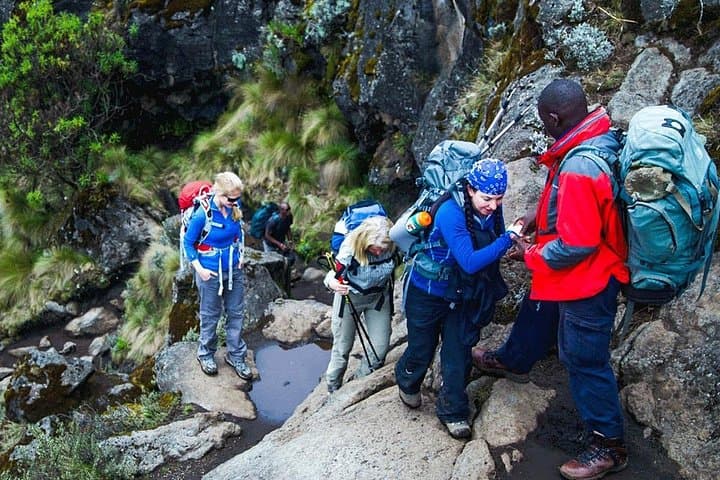
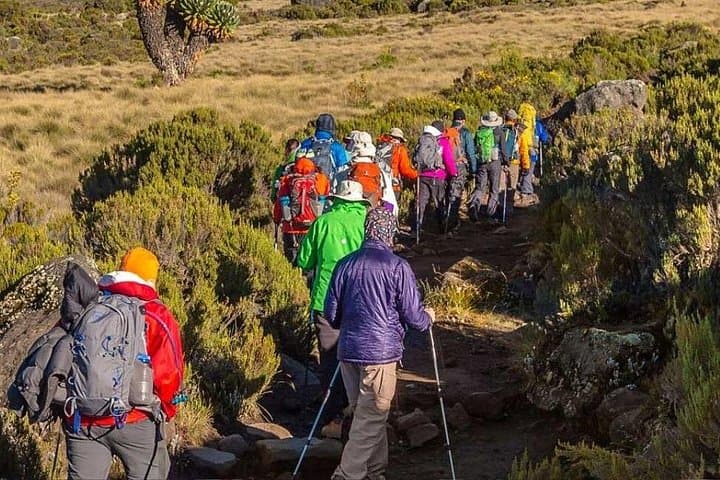
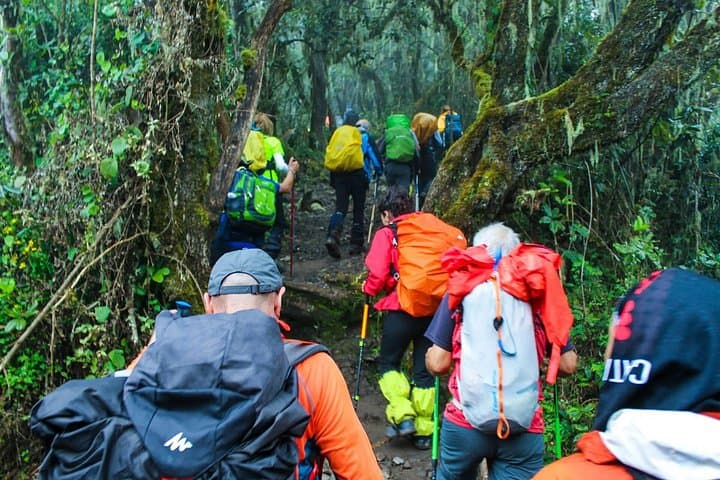
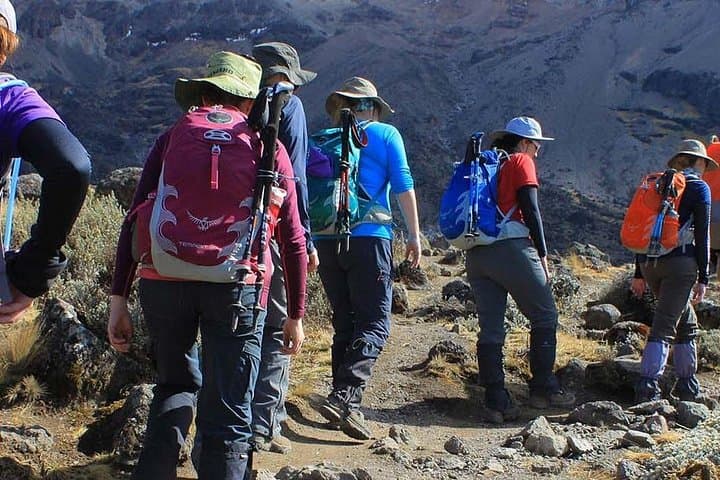
On a full-day guided hike from Moshi, the trip begins with a 2–3 hour drive to Londorossi Gate and then onward to Moram, the road shrinking to track and then to footpath. The hike itself is moderately challenging—roughly three hours of steady ascent across uneven terrain to reach elevations approaching 3,900–4,000 meters. Expect tussock grasses, lobelia that appear like oversized bottlebrushes, and the occasional wind-scoured rock that seems arranged by some brutal architect.
This is not a summit attempt; it’s an altitude experience. The plateau’s open views make it a fine place to practice pacing, rest discipline and hydration before committing to longer routes. Guides point out geological features—the hardened dikes, the long, flat ledges that were once caldera floors—and will talk through route choices and high-altitude safety.
Practical matters matter here: temperatures swing from mild in the sun to near-freezing in the shade and whenever wind takes hold. Bring layered clothing, sturdy waterproof boots, and at least 2–3 liters of water. Your guide will carry a basic first aid kit and a radio; shelter is minimal on the plateau, so weather windows dictate the best photos and the safest returns.
For photographers and curious hikers, the Shira Plateau is a concentrated lesson in Kilimanjaro’s geology and ecology—where volcanic history and alpine life press up against one another.
If you want the mountain’s drama without the multi-day commitment, this day hike delivers altitude, geology and wide, uncompromising views—all within reach of Moshi.
No technical climbing skills are needed—this is a guided high-elevation hike suitable for experienced day hikers and fit beginners.
Yes; you’ll reach nearly 4,000 m. Acclimatize in Moshi, hydrate, and inform guides about any symptoms so they can adjust pace or descend if needed.
Moderate fitness: able to hike 3+ hours with elevation gain at a steady pace and carry a small daypack.
Entry to Mount Kilimanjaro National Park and guide fees are typically handled by the operator—confirm on booking and carry ID.
A packed lunch is provided; bring 2–3 liters of water and snacks for energy—electrolyte options help at altitude.
Expect 2–3 hours to Londorossi Gate and Moram depending on road and traffic before the 2–3 hour hike onto the plateau.
Sabilom Kenya Tours & Safaris operates guided outdoor trips and adventures with an emphasis on safety, stewardship, and memorable experiences.
You step out of the Toyota onto a high, cold plain where the air tastes thin and honest. Wind coaxes the grass into ripples, and across the flat the Kibo massif rises like a raw, basalt sculpture—its glaciers a bright punctuation against a blue that cuts clean at altitude. The Shira Plateau unfolds to the west of Kibo for kilometers, an exposed expanse of weathered lava, eroded valleys and oval basins that the mountain once hollowed out.
You step out of the Toyota onto a high, cold plain where the air tastes thin and honest. Wind coaxes the grass into ripples, and across the flat the Kibo massif rises like a raw, basalt sculpture—its glaciers a bright punctuation against a blue that cuts clean at altitude. The Shira Plateau unfolds to the west of Kibo for kilometers, an exposed expanse of weathered lava, eroded valleys and oval basins that the mountain once hollowed out.
The plateau is the remnant of an ancient caldera that collapsed roughly half a million years ago. Layers of basalt and scoria, broken by fissures and lava flows, map the volcano’s past violence. Early explorers and local Chagga communities have long known the mountain as a place of practical and spiritual significance: a watershed for lowland farms and a marker in oral histories. Today it’s protected within Mount Kilimanjaro National Park, a UNESCO World Heritage Site where moorland gives way to alpine desert as the summit climbs skyward.
On a full-day guided hike from Moshi, the trip begins with a 2–3 hour drive to Londorossi Gate and then onward to Moram, the road shrinking to track and then to footpath. The hike itself is moderately challenging—roughly three hours of steady ascent across uneven terrain to reach elevations approaching 3,900–4,000 meters. Expect tussock grasses, lobelia that appear like oversized bottlebrushes, and the occasional wind-scoured rock that seems arranged by some brutal architect.
This is not a summit attempt; it’s an altitude experience. The plateau’s open views make it a fine place to practice pacing, rest discipline and hydration before committing to longer routes. Guides point out geological features—the hardened dikes, the long, flat ledges that were once caldera floors—and will talk through route choices and high-altitude safety.
Practical matters matter here: temperatures swing from mild in the sun to near-freezing in the shade and whenever wind takes hold. Bring layered clothing, sturdy waterproof boots, and at least 2–3 liters of water. Your guide will carry a basic first aid kit and a radio; shelter is minimal on the plateau, so weather windows dictate the best photos and the safest returns.
For photographers and curious hikers, the Shira Plateau is a concentrated lesson in Kilimanjaro’s geology and ecology—where volcanic history and alpine life press up against one another.
If you want the mountain’s drama without the multi-day commitment, this day hike delivers altitude, geology and wide, uncompromising views—all within reach of Moshi.
