THE ADVENTURE COLLECTIVE® · Independent discovery and booking for outdoor travel

An eight-day climb that favors acclimatization over haste, the Shira Route takes you across the broad Shira Plateau and up through moorland, the Barranco Valley, and Barafu for a predawn push to Uhuru Peak. Expect varied terrain, long summit hours, and high-altitude wildlife and views.
An eight-day climb that favors acclimatization over haste, the Shira Route takes you across the broad Shira Plateau and up through moorland, the Barranco Valley, and Barafu for a predawn push to Uhuru Peak. Expect varied terrain, long summit hours, and high-altitude wildlife and views.
Night on the lower slopes of Mount Meru smells of wood smoke and strong tea. At Arusha Safari Lodge guides check packs by lamplight, sketching the route ahead — Londorossi Gate, the flat expanse of Shira Plateau, the lava-strewn Lent Hills, and the slow, patient pull of altitude toward Stella Point and Uhuru Peak. By morning the bus slips out into rural Tanzania and dirt tracks climb toward the mountain; the climb is as much a procession through changing climates as it is a test of stamina.
Verified experiences and guided adventures in the surrounding area.
Operated by Africa Joy Tours - Day Tours / Mult Day Tours · Arusha, Arusha Region
Night on the lower slopes of Mount Meru smells of wood smoke and strong tea. At Arusha Safari Lodge guides check packs by lamplight, sketching the route ahead — Londorossi Gate, the flat expanse of Shira Plateau, the lava-strewn Lent Hills, and the slow, patient pull of altitude toward Stella Point and Uhuru Peak. By morning the bus slips out into rural Tanzania and dirt tracks climb toward the mountain; the climb is as much a procession through changing climates as it is a test of stamina.
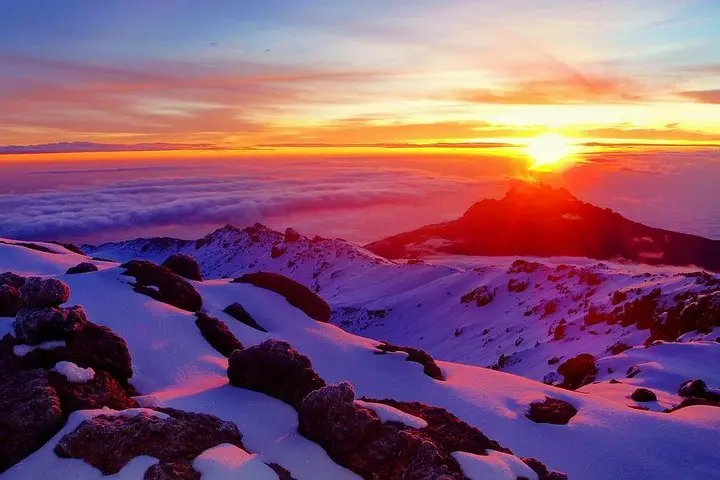
The Shira Route begins on the western flank where ancient lava flows gave birth to the broad Shira Plateau. The geology reads like a field guide to volcanoes: Kibo’s icefield, the eroded remnants of calderas, and fields of volcanic scree that will challenge your footing on the summit push. Culturally this mountain sits in Maasai and Chagga country — tribes whose lives have long been aligned with the slopes and the seasonal patterns of the forest and moorland below.
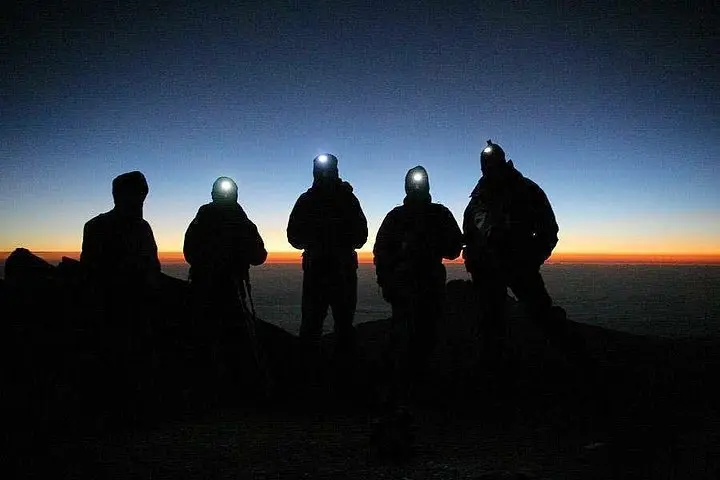
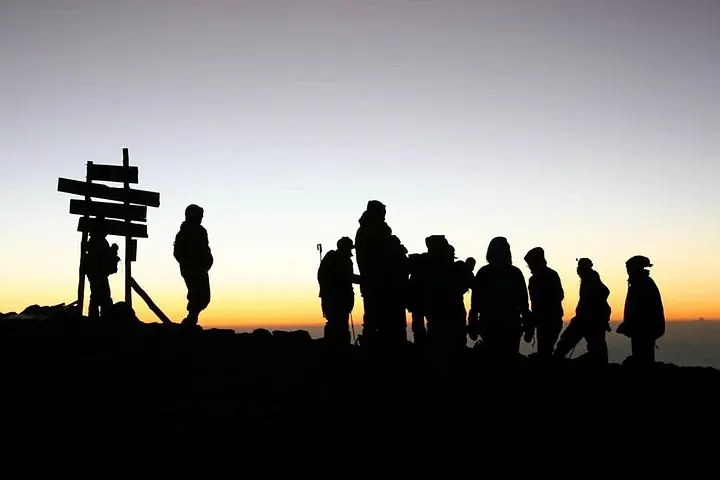
Over eight days this itinerary trades rapid ascent for careful acclimatization. Early days wind through montane forest and heather moor, gaining Shira One (3,550 m) and Shira Hut (3,840 m) in 4–5 hour walks that keep your legs fresh and your breathing measured. Mid-route you cross moorland to Moir Hut (4,200 m) and take an optional acclimatization climb to the Lent Hills (4,700 m), a crucial buffer against altitude illness. The traverse below Lava Tower and the descent to Barranco Valley (3,900 m) is scenic and deceptive — the profile dips and swells, and exposed sections can be cold and windy. Karanga and Barafu camps set you up for the summit push: a bitter, predawn climb over loose scree to Stella Point (5,735 m) and the final two-hour rim walk to Uhuru Peak (5,895 m).
Practically: expect single-file trails, varied terrain (forest, moor, rock, scree), and a summit day of 13–15 hours with large elevation swings. Guides carry permits, route knowledge, and a calm cadence that makes summit bids possible.
Pack layers for temperatures from a warm Arusha morning to well-below-freezing winds above 4,500 m; bring a lightweight sleep system to stay comfortable at cold camps. Hydrate constantly — the combination of dryness and altitude demands more water than you think. Plan for boots with firm ankle support, a slow, steady pace on summit night, and contingency days in case weather delays the schedule.
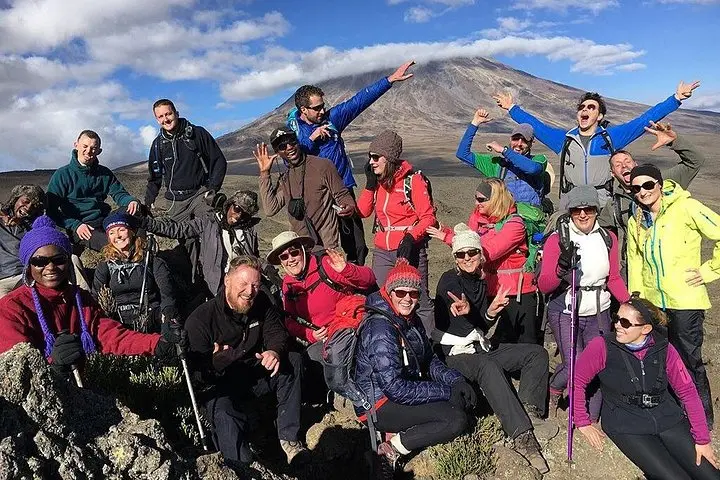
The Shira Route is quieter than the classic Marangu trail and offers broad plateau views, dramatic icefield close-ups, and a summit that rewards slow planning as much as grit. For climbers who want space to acclimatize and scenery that shifts dramatically with each campsite, this eight-day itinerary is a practical, scenic path to Africa’s rooftop.
January–February and August–September offer the most stable weather and clearer summit views; avoid long rains in March–May.
No; the route is non-technical trekking, but the summit is high altitude and demands good fitness and acclimatization.
Plan for 13–15 hours total including ascent and descent; expect steep, loose scree, very cold temperatures, and strong winds near the crater rim.
Permits are managed by the operator and included in most packaged climbs—confirm with your provider for fees and paperwork included in your booking.
Acute mountain sickness is possible above 3,000 m; this itinerary staggers ascents and includes acclimatization walks, but monitors and descent are the primary responses—notify guides early if symptoms appear.
Yes; tipping is customary and supports local livelihoods—budget for shared porter and guide gratuities and ask your operator for suggested amounts.
Africa Joy Tours - Day Tours / Mult Day Tours operates guided outdoor trips and adventures with an emphasis on safety, stewardship, and memorable experiences.
Night on the lower slopes of Mount Meru smells of wood smoke and strong tea. At Arusha Safari Lodge guides check packs by lamplight, sketching the route ahead — Londorossi Gate, the flat expanse of Shira Plateau, the lava-strewn Lent Hills, and the slow, patient pull of altitude toward Stella Point and Uhuru Peak. By morning the bus slips out into rural Tanzania and dirt tracks climb toward the mountain; the climb is as much a procession through changing climates as it is a test of stamina.
Night on the lower slopes of Mount Meru smells of wood smoke and strong tea. At Arusha Safari Lodge guides check packs by lamplight, sketching the route ahead — Londorossi Gate, the flat expanse of Shira Plateau, the lava-strewn Lent Hills, and the slow, patient pull of altitude toward Stella Point and Uhuru Peak. By morning the bus slips out into rural Tanzania and dirt tracks climb toward the mountain; the climb is as much a procession through changing climates as it is a test of stamina.
The Shira Route begins on the western flank where ancient lava flows gave birth to the broad Shira Plateau. The geology reads like a field guide to volcanoes: Kibo’s icefield, the eroded remnants of calderas, and fields of volcanic scree that will challenge your footing on the summit push. Culturally this mountain sits in Maasai and Chagga country — tribes whose lives have long been aligned with the slopes and the seasonal patterns of the forest and moorland below.
Over eight days this itinerary trades rapid ascent for careful acclimatization. Early days wind through montane forest and heather moor, gaining Shira One (3,550 m) and Shira Hut (3,840 m) in 4–5 hour walks that keep your legs fresh and your breathing measured. Mid-route you cross moorland to Moir Hut (4,200 m) and take an optional acclimatization climb to the Lent Hills (4,700 m), a crucial buffer against altitude illness. The traverse below Lava Tower and the descent to Barranco Valley (3,900 m) is scenic and deceptive — the profile dips and swells, and exposed sections can be cold and windy. Karanga and Barafu camps set you up for the summit push: a bitter, predawn climb over loose scree to Stella Point (5,735 m) and the final two-hour rim walk to Uhuru Peak (5,895 m).
Practically: expect single-file trails, varied terrain (forest, moor, rock, scree), and a summit day of 13–15 hours with large elevation swings. Guides carry permits, route knowledge, and a calm cadence that makes summit bids possible.
Pack layers for temperatures from a warm Arusha morning to well-below-freezing winds above 4,500 m; bring a lightweight sleep system to stay comfortable at cold camps. Hydrate constantly — the combination of dryness and altitude demands more water than you think. Plan for boots with firm ankle support, a slow, steady pace on summit night, and contingency days in case weather delays the schedule.
The Shira Route is quieter than the classic Marangu trail and offers broad plateau views, dramatic icefield close-ups, and a summit that rewards slow planning as much as grit. For climbers who want space to acclimatize and scenery that shifts dramatically with each campsite, this eight-day itinerary is a practical, scenic path to Africa’s rooftop.