THE ADVENTURE COLLECTIVE® · Independent discovery and booking for outdoor travel

Three days of hands-on instruction across Manhattan’s iconic sites — golden-hour rooftops, neon nights, and park-lit mornings. This workshop pairs technical coaching with location scouting to help you capture the city’s layered light and architecture.
Three days of hands-on instruction across Manhattan’s iconic sites — golden-hour rooftops, neon nights, and park-lit mornings. This workshop pairs technical coaching with location scouting to help you capture the city’s layered light and architecture.
You start before dawn with the city still rubbing sleep from its face — headlights threading the avenues, steam rising from a subway grate, and the first pale light striking the limestone and glass of the skyline. Over three days, Manhattan becomes your classroom: Times Square’s neon hum at night, Central Park’s shifting pockets of foliage by day, and the roofline of the Empire State Building framed against the sunset from Top of the Rock.
Verified experiences and guided adventures in the surrounding area.
You start before dawn with the city still rubbing sleep from its face — headlights threading the avenues, steam rising from a subway grate, and the first pale light striking the limestone and glass of the skyline. Over three days, Manhattan becomes your classroom: Times Square’s neon hum at night, Central Park’s shifting pockets of foliage by day, and the roofline of the Empire State Building framed against the sunset from Top of the Rock.
Manhattan’s built environment is a story of geology and industry: Manhattan schist underpins towering skyscrapers and the orthogonal grid laid down in the 19th century shapes sightlines and light. The neighborhoods you’ll move through carry cultural layers — Radio City’s Art Deco lobby, the intimate stoops of Greenwich Village — each offering different textures and compositional opportunities.
The workshop balances compositional critique with practical technique: manual exposure, white balance in mixed light, and long exposures for nocturnal cityscapes. Sessions alternate between guided shoots and review clinics, so you leave not just with images but with repeatable approaches for different lighting.
Plan on extensive walking and frequent stops to change lenses. Use the included 7-day subway pass to hop between scenes and time sessions for golden and blue hours — that’s when the city’s contrasts simplify and shadows become a subject. Bring comfortable shoes, a lightweight tripod for night work, and spare batteries; chargers are rarely convenient on the move.
Expect small-group instruction focused on creative problem-solving and practical city-savvy advice — where to position for a skyline, when to wait for the light, and how to manage crowds without losing the shot.
No — beginners with a willingness to learn will benefit, but you should be comfortable handling basic camera functions.
The workshop includes a 7-day subway pass to move between shooting locations; additional transport is your responsibility.
Meals and lodging are not included; sessions typically run morning through evening with breaks for food.
You can participate with a smartphone, but instruction focuses on manual exposure and lens choices most applicable to interchangeable-lens cameras.
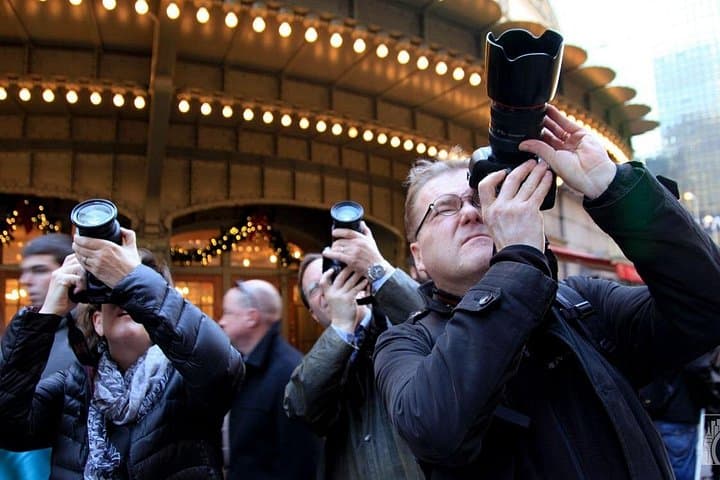
You start before dawn with the city still rubbing sleep from its face — headlights threading the avenues, steam rising from a subway grate, and the first pale light striking the limestone and glass of the skyline. Over three days, Manhattan becomes your classroom: Times Square’s neon hum at night, Central Park’s shifting pockets of foliage by day, and the roofline of the Empire State Building framed against the sunset from Top of the Rock.
You start before dawn with the city still rubbing sleep from its face — headlights threading the avenues, steam rising from a subway grate, and the first pale light striking the limestone and glass of the skyline. Over three days, Manhattan becomes your classroom: Times Square’s neon hum at night, Central Park’s shifting pockets of foliage by day, and the roofline of the Empire State Building framed against the sunset from Top of the Rock.
Manhattan’s built environment is a story of geology and industry: Manhattan schist underpins towering skyscrapers and the orthogonal grid laid down in the 19th century shapes sightlines and light. The neighborhoods you’ll move through carry cultural layers — Radio City’s Art Deco lobby, the intimate stoops of Greenwich Village — each offering different textures and compositional opportunities.
The workshop balances compositional critique with practical technique: manual exposure, white balance in mixed light, and long exposures for nocturnal cityscapes. Sessions alternate between guided shoots and review clinics, so you leave not just with images but with repeatable approaches for different lighting.
Plan on extensive walking and frequent stops to change lenses. Use the included 7-day subway pass to hop between scenes and time sessions for golden and blue hours — that’s when the city’s contrasts simplify and shadows become a subject. Bring comfortable shoes, a lightweight tripod for night work, and spare batteries; chargers are rarely convenient on the move.
Expect small-group instruction focused on creative problem-solving and practical city-savvy advice — where to position for a skyline, when to wait for the light, and how to manage crowds without losing the shot.