THE ADVENTURE COLLECTIVE® · Independent discovery and booking for outdoor travel

Walk a preserved segment of the Inca Trail from km104 to Wiñay Wayna and arrive at Machu Picchu with sunrise access on day two. This two-day itinerary blends archaeology, cloud-forest scenery and guided exploration of the citadel.
Walk a preserved segment of the Inca Trail from km104 to Wiñay Wayna and arrive at Machu Picchu with sunrise access on day two. This two-day itinerary blends archaeology, cloud-forest scenery and guided exploration of the citadel.
Dawn breaks over a cloud-scraped gorge as the train slows at km 104 and the trail pulls you into a corridor of stone steps and cloud forest. The Short Inca Trail threads ancient stairways, terraces and stone niches, moving from highland scrub into humid forest where orchids and ferns crowd the path. By afternoon the terraces of Wiñay Wayna appear — stone houses clinging to a ridge, the river below daring you with its roar.
Verified experiences and guided adventures in the surrounding area.
Operated by CuscoPeru.com · Aguas Calientes, Cusco
Dawn breaks over a cloud-scraped gorge as the train slows at km 104 and the trail pulls you into a corridor of stone steps and cloud forest. The Short Inca Trail threads ancient stairways, terraces and stone niches, moving from highland scrub into humid forest where orchids and ferns crowd the path. By afternoon the terraces of Wiñay Wayna appear — stone houses clinging to a ridge, the river below daring you with its roar.
The route follows sections of the original Inca camino that connected highland communities to the citadel of Machu Picchu. The stonework and agricultural terraces date to the late 15th century; geology here is fractured volcanic rock sculpted by the Urubamba River. Local Quechua culture still colors the villages you pass, with traditional weaving and crops grown on stepped farmland.
Practical guidance: the itinerary is two days with an overnight in Aguas Calientes, light to moderate hiking on uneven stone steps and singletrack, and a morning guided tour of Machu Picchu on day two. Expect steep sections and wet conditions during the rainy season—good traction and waterproof layers matter. Altitude is a factor: many travelers spend 1–2 days in Cusco beforehand to acclimate.
Timing matters—early morning at the citadel gives softer light and fewer crowds. Carry water, sunscreen, and hand straps for cameras; move at a steady pace and respect permit limits that keep this corridor protected. The trail rewards steady effort with sweeping views and intimate encounters with cloud-forest life.
Yes—access to the Inca Trail corridor is limited and permits are required; this tour includes the trail entrance ticket.
The route is moderate—uneven stone steps and occasional steep sections; prior acclimatization in Cusco is strongly recommended.
The itinerary includes one night at a 3-star hotel in Aguas Calientes (Machu Picchu Pueblo), not camping.
Basic facilities are available at certain archaeological sites and Aguas Calientes; meals listed (lunch, dinner, breakfast) are provided by the operator.
CuscoPeru.com operates guided outdoor trips and adventures with an emphasis on safety, stewardship, and memorable experiences.
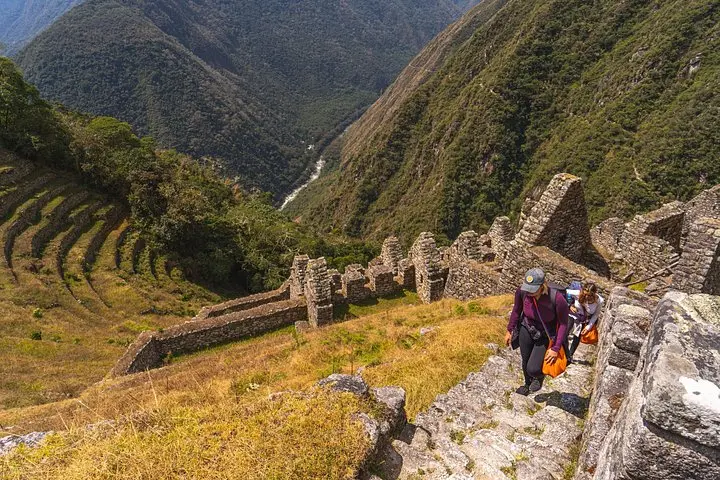
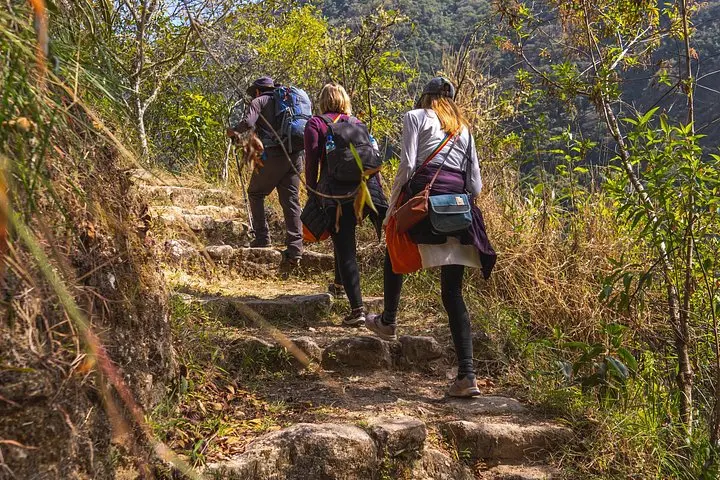
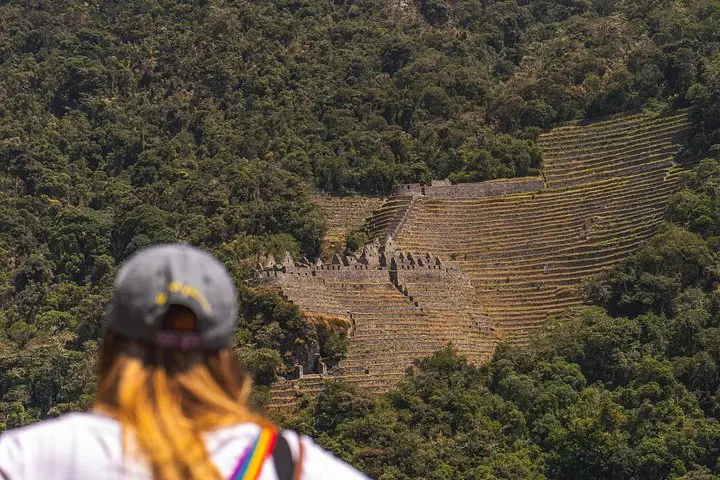
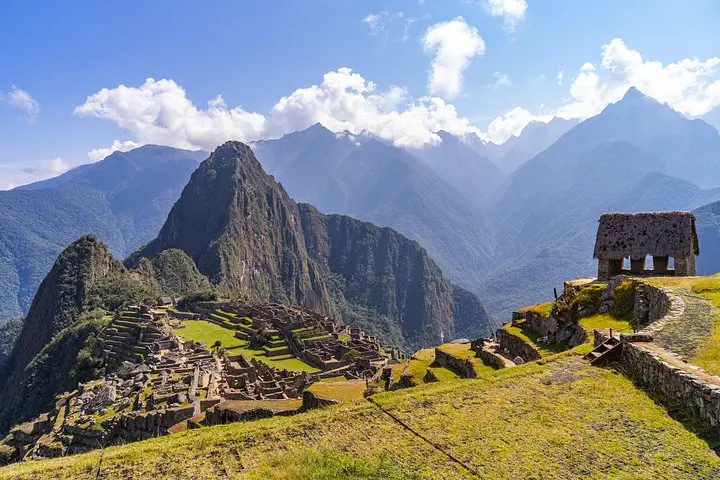
Dawn breaks over a cloud-scraped gorge as the train slows at km 104 and the trail pulls you into a corridor of stone steps and cloud forest. The Short Inca Trail threads ancient stairways, terraces and stone niches, moving from highland scrub into humid forest where orchids and ferns crowd the path. By afternoon the terraces of Wiñay Wayna appear — stone houses clinging to a ridge, the river below daring you with its roar.
Dawn breaks over a cloud-scraped gorge as the train slows at km 104 and the trail pulls you into a corridor of stone steps and cloud forest. The Short Inca Trail threads ancient stairways, terraces and stone niches, moving from highland scrub into humid forest where orchids and ferns crowd the path. By afternoon the terraces of Wiñay Wayna appear — stone houses clinging to a ridge, the river below daring you with its roar.
The route follows sections of the original Inca camino that connected highland communities to the citadel of Machu Picchu. The stonework and agricultural terraces date to the late 15th century; geology here is fractured volcanic rock sculpted by the Urubamba River. Local Quechua culture still colors the villages you pass, with traditional weaving and crops grown on stepped farmland.
Practical guidance: the itinerary is two days with an overnight in Aguas Calientes, light to moderate hiking on uneven stone steps and singletrack, and a morning guided tour of Machu Picchu on day two. Expect steep sections and wet conditions during the rainy season—good traction and waterproof layers matter. Altitude is a factor: many travelers spend 1–2 days in Cusco beforehand to acclimate.
Timing matters—early morning at the citadel gives softer light and fewer crowds. Carry water, sunscreen, and hand straps for cameras; move at a steady pace and respect permit limits that keep this corridor protected. The trail rewards steady effort with sweeping views and intimate encounters with cloud-forest life.