THE ADVENTURE COLLECTIVE® · Independent discovery and booking for outdoor travel

Walk a concentrated section of the Qhapaq Ñan on the 2-day Short Inca Trail, passing Wiñaywayna and arriving at Machu Picchu through Intipunku for a sunrise reveal. This compact trek pairs rich archeology with cloud-forest scenery and practical logistics.
Walk a concentrated section of the Qhapaq Ñan on the 2-day Short Inca Trail, passing Wiñaywayna and arriving at Machu Picchu through Intipunku for a sunrise reveal. This compact trek pairs rich archeology with cloud-forest scenery and practical logistics.
Dawn arrives cool and damp as the train eases into Km 104 and you step into a subtropical collar of cloud forest. The trail underfoot is an old stone causeway—some stones worn smooth by centuries of feet—leading past orchids, moss-draped walls and the occasional screech of a passing bird. The path climbs, flattens and climbs again, teasing you with glimpses of terraces and the first silhouette of Machu Picchu at Intipunku, the Gate of the Sun.
Verified experiences and guided adventures in the surrounding area.
Operated by Peru Grand Travel · Aguas Calientes, Cusco Region
Dawn arrives cool and damp as the train eases into Km 104 and you step into a subtropical collar of cloud forest. The trail underfoot is an old stone causeway—some stones worn smooth by centuries of feet—leading past orchids, moss-draped walls and the occasional screech of a passing bird. The path climbs, flattens and climbs again, teasing you with glimpses of terraces and the first silhouette of Machu Picchu at Intipunku, the Gate of the Sun.
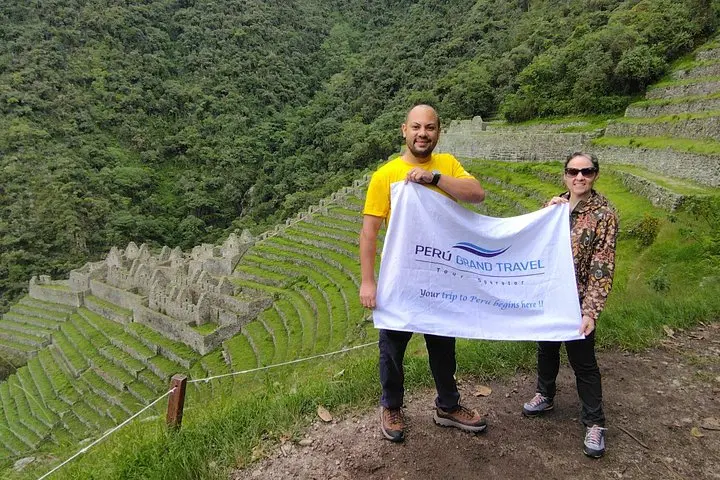
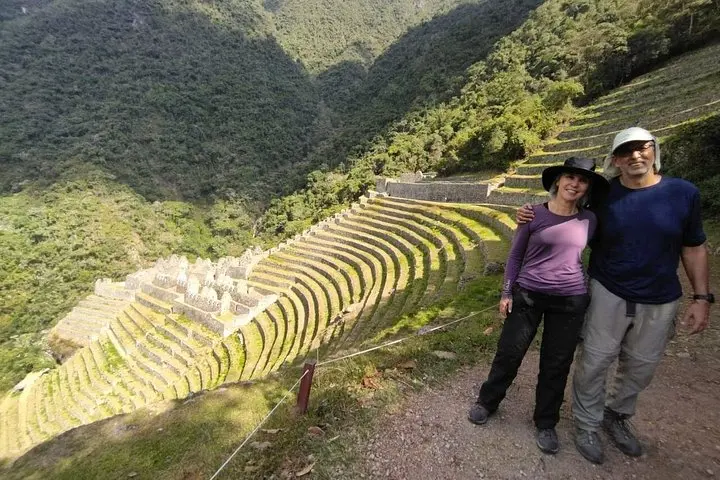
This short Inca Trail follows a fragment of the vast Qhapaq Ñan network, the imperial highway that linked Andean communities. Geologically the route threads the eastern slopes of the Andes where granite and volcanic outcrops meet cloud forest soils; culturally it passes small Inca and pre-Inca archaeological sites like Chachabamba and Wiñaywayna, an agricultural complex stacked into the mountain.
Practicalities are straightforward: the group hikes roughly 11–14 km over the day with sustained stone staircases and about 300–600 m total ascent depending on your starting point. Camping and many logistics are handled for you; entrance and train tickets are normally included. Expect muddy sections during the wet season, cool mornings at altitude, and tight limits on permits—book early.
Bring layered clothing, a waterproof shell, sturdy boots and a sense of patience for steep, stone steps. Acclimatize in Cusco for a day or two, carry water and sun protection, and time your arrival at Intipunku for sunrise to see the citadel unveil itself—an earned reward after a compact, historically rich walk through the cloud forest.
Yes—permits to enter the Inca Trail are limited and managed by the Peruvian authorities; reputable operators include the entrance ticket in the package.
The trail reaches roughly 2,400–2,700 m on the route and Machu Picchu sits near 2,430 m; acclimatize in Cusco (3,400 m) to lower risk of altitude sickness.
Most short Inca Trail packages include camping equipment, a night in Aguas Calientes, and meals as listed—confirm specifics with the operator before travel.
Yes; the typical schedule reaches Machu Picchu at sunrise on day two via Intipunku, followed by a guided tour; some travelers opt for additional site time later the same day.
Peru Grand Travel operates guided outdoor trips and adventures with an emphasis on safety, stewardship, and memorable experiences.
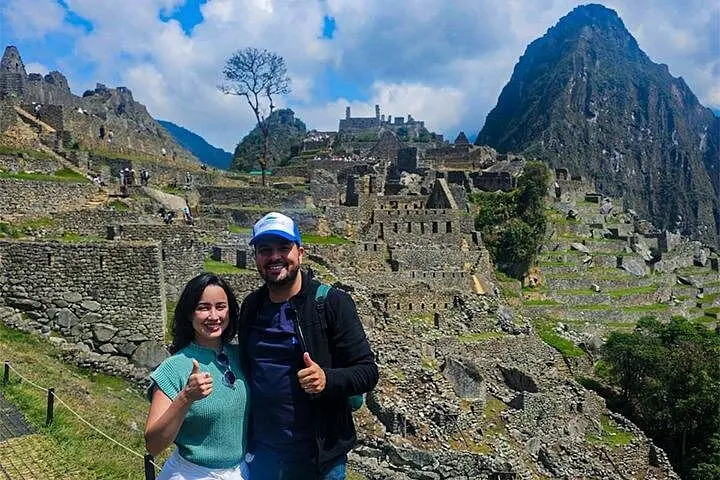
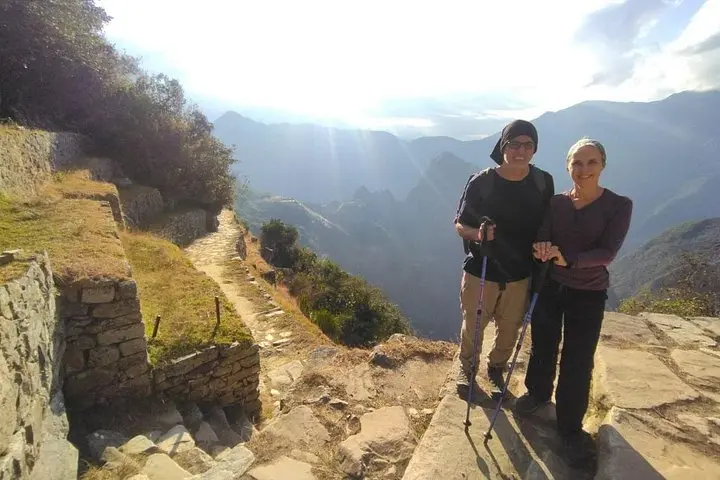
Dawn arrives cool and damp as the train eases into Km 104 and you step into a subtropical collar of cloud forest. The trail underfoot is an old stone causeway—some stones worn smooth by centuries of feet—leading past orchids, moss-draped walls and the occasional screech of a passing bird. The path climbs, flattens and climbs again, teasing you with glimpses of terraces and the first silhouette of Machu Picchu at Intipunku, the Gate of the Sun.
Dawn arrives cool and damp as the train eases into Km 104 and you step into a subtropical collar of cloud forest. The trail underfoot is an old stone causeway—some stones worn smooth by centuries of feet—leading past orchids, moss-draped walls and the occasional screech of a passing bird. The path climbs, flattens and climbs again, teasing you with glimpses of terraces and the first silhouette of Machu Picchu at Intipunku, the Gate of the Sun.
This short Inca Trail follows a fragment of the vast Qhapaq Ñan network, the imperial highway that linked Andean communities. Geologically the route threads the eastern slopes of the Andes where granite and volcanic outcrops meet cloud forest soils; culturally it passes small Inca and pre-Inca archaeological sites like Chachabamba and Wiñaywayna, an agricultural complex stacked into the mountain.
Practicalities are straightforward: the group hikes roughly 11–14 km over the day with sustained stone staircases and about 300–600 m total ascent depending on your starting point. Camping and many logistics are handled for you; entrance and train tickets are normally included. Expect muddy sections during the wet season, cool mornings at altitude, and tight limits on permits—book early.
Bring layered clothing, a waterproof shell, sturdy boots and a sense of patience for steep, stone steps. Acclimatize in Cusco for a day or two, carry water and sun protection, and time your arrival at Intipunku for sunrise to see the citadel unveil itself—an earned reward after a compact, historically rich walk through the cloud forest.