THE ADVENTURE COLLECTIVE® · Independent discovery and booking for outdoor travel

Covering about 12 km over two days, the Short Inca Trail condenses key highlights of the classic route — Chachabamba, Wiñay Wayna and the Sun Gate — into an achievable, high-impact trek. Ideal for travelers short on time, it pairs steep stone staircases with cloud-forest scenery and an early arrival at Machu Picchu.
Covering about 12 km over two days, the Short Inca Trail condenses key highlights of the classic route — Chachabamba, Wiñay Wayna and the Sun Gate — into an achievable, high-impact trek. Ideal for travelers short on time, it pairs steep stone staircases with cloud-forest scenery and an early arrival at Machu Picchu.
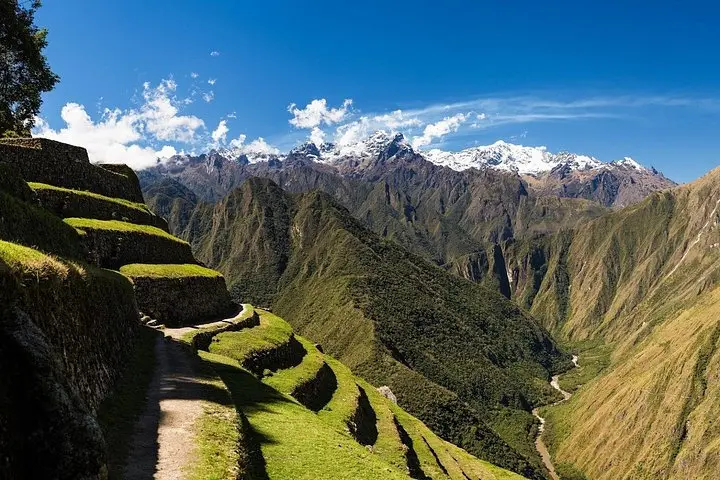
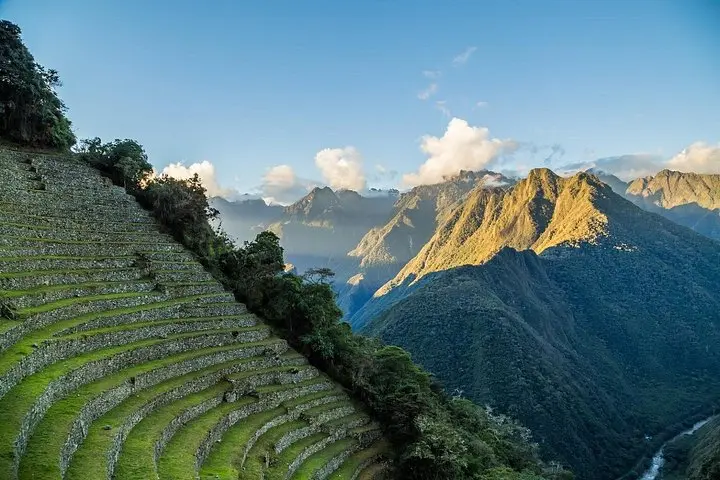
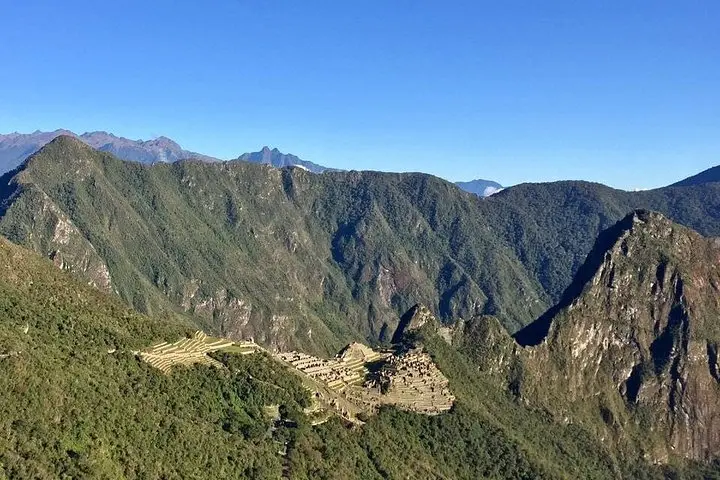
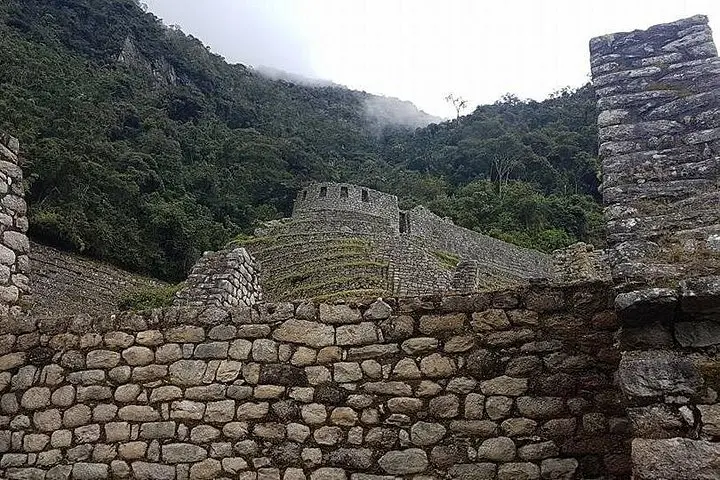
A pre-dawn whistle from the train and the Andes open like a weathered map. At km 104 you step off into mossy stonework, the trail threading through cloud forest where orchids brush your shoulders and stone staircases test your calves. The first day walks you past Chachabamba’s compact ruins and on to Wiñay Wayna, an impressive terrace complex perched at roughly 2,650 m, before finishing above Machu Picchu at Inti Punku — the Sun Gate — where the citadel reveals itself like a withheld secret.
Verified experiences and guided adventures in the surrounding area.
Operated by Huaynas Expeditions · Aguas Calientes (Machupicchu Pueblo), Cusco
A pre-dawn whistle from the train and the Andes open like a weathered map. At km 104 you step off into mossy stonework, the trail threading through cloud forest where orchids brush your shoulders and stone staircases test your calves. The first day walks you past Chachabamba’s compact ruins and on to Wiñay Wayna, an impressive terrace complex perched at roughly 2,650 m, before finishing above Machu Picchu at Inti Punku — the Sun Gate — where the citadel reveals itself like a withheld secret.
This short route follows segments of the classical Inca Trail constructed from fitted stones and drainage channels, passing sites used historically as administrative and ceremonial waypoints linking the Vilcanota valley to the imperial center. Geologically the path rides the eastern slopes of the Andes, dropping into cloud forest and skirting steep sandstone and granite slopes carved by the Urubamba River below. Locally, Quechua-speaking communities and guides keep oral histories alive; expect explanations of agricultural terraces, water control systems, and Inca cosmology.
Practical side: the trek covers about 12 km across two days with sustained stone steps and short steep pitches. Elevations range roughly 2,270–2,650 m, so acclimatize in Cusco (3,400 m) for 24–48 hours if possible. Start early, pack a lightweight waterproof, sturdy boots, 2–3 liters of water, snacks, and a headlamp for early sections. Permits are limited — the operator handles entrance and train logistics, and the second day begins with a 5:30 a.m. bus to Machu Picchu to avoid crowds. Overnight is in Aguas Calientes; consider the hot springs and reserve Huayna Picchu in advance if you want the summit view.
Total hiking is about 12 km spread over two days—expect several hours of hiking the first day to reach the Sun Gate and a shorter exploration day at Machu Picchu the second morning.
Yes—permits for the Inca Trail are limited and the operator includes the necessary permits and Machu Picchu entrance in the tour package.
It’s suitable for travelers with moderate fitness who are acclimatized; the route has many stone steps and some steep sections, so prior stair or hill training helps.
Yes, but Huayna Picchu requires an additional, separately timed permit (extra cost) and should be booked well in advance.
Huaynas Expeditions operates guided outdoor trips and adventures with an emphasis on safety, stewardship, and memorable experiences.
A pre-dawn whistle from the train and the Andes open like a weathered map. At km 104 you step off into mossy stonework, the trail threading through cloud forest where orchids brush your shoulders and stone staircases test your calves. The first day walks you past Chachabamba’s compact ruins and on to Wiñay Wayna, an impressive terrace complex perched at roughly 2,650 m, before finishing above Machu Picchu at Inti Punku — the Sun Gate — where the citadel reveals itself like a withheld secret.
A pre-dawn whistle from the train and the Andes open like a weathered map. At km 104 you step off into mossy stonework, the trail threading through cloud forest where orchids brush your shoulders and stone staircases test your calves. The first day walks you past Chachabamba’s compact ruins and on to Wiñay Wayna, an impressive terrace complex perched at roughly 2,650 m, before finishing above Machu Picchu at Inti Punku — the Sun Gate — where the citadel reveals itself like a withheld secret.
This short route follows segments of the classical Inca Trail constructed from fitted stones and drainage channels, passing sites used historically as administrative and ceremonial waypoints linking the Vilcanota valley to the imperial center. Geologically the path rides the eastern slopes of the Andes, dropping into cloud forest and skirting steep sandstone and granite slopes carved by the Urubamba River below. Locally, Quechua-speaking communities and guides keep oral histories alive; expect explanations of agricultural terraces, water control systems, and Inca cosmology.
Practical side: the trek covers about 12 km across two days with sustained stone steps and short steep pitches. Elevations range roughly 2,270–2,650 m, so acclimatize in Cusco (3,400 m) for 24–48 hours if possible. Start early, pack a lightweight waterproof, sturdy boots, 2–3 liters of water, snacks, and a headlamp for early sections. Permits are limited — the operator handles entrance and train logistics, and the second day begins with a 5:30 a.m. bus to Machu Picchu to avoid crowds. Overnight is in Aguas Calientes; consider the hot springs and reserve Huayna Picchu in advance if you want the summit view.