THE ADVENTURE COLLECTIVE® · Independent discovery and booking for outdoor travel

Explore Sidemen on a one-hour trek through rice terraces, Subak irrigation channels and village life with Mount Agung in the distance. This short guided walk gives a close-up look at traditional farming, local temples and the living systems that shape Bali’s eastern valleys.
Explore Sidemen on a one-hour trek through rice terraces, Subak irrigation channels and village life with Mount Agung in the distance. This short guided walk gives a close-up look at traditional farming, local temples and the living systems that shape Bali’s eastern valleys.
A low ridge trail opens onto green terraces that step down like deliberate stairs, and the air smells of wet earth and coconut smoke. You set off from the village market, passing a wooden bridge that locals and the occasional motorbike share; the irrigation channels murmur and seem to tug you along as much as you choose to go.
Verified experiences and guided adventures in the surrounding area.
Operated by Sidemen Guide Trekking and Scooter Tour · Sidemen, Bali
A low ridge trail opens onto green terraces that step down like deliberate stairs, and the air smells of wet earth and coconut smoke. You set off from the village market, passing a wooden bridge that locals and the occasional motorbike share; the irrigation channels murmur and seem to tug you along as much as you choose to go.
Sidemen sits on the eastern flank of Bali beneath the shadow of Mount Agung. The landscape is shaped by volcanic soils and human hands—centuries-old Subak irrigation patterns route water with geometric precision, producing the vivid rice terraces that define the valley. Temples and small family compounds crop up between paddies; you’ll see farmers planting, scything and tending fish in shallow channels, a living agricultural system rooted in Balinese Hindu practice and cooperative water management.
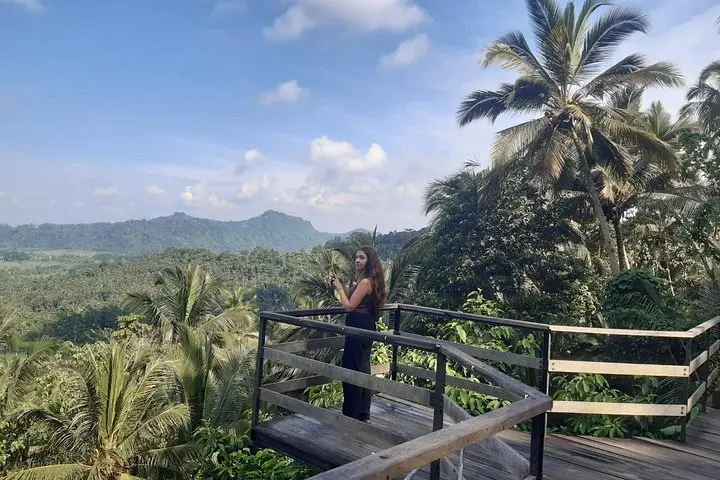
Geologically, the area is volcanic alluvium, giving the terraces their fertility and the hills their wraparound views of Mount Agung on clear mornings. Culturally, Sidemen is quieter than Ubud—markets, weaving workshops and temple shrines punctuate daily life rather than staged performances.
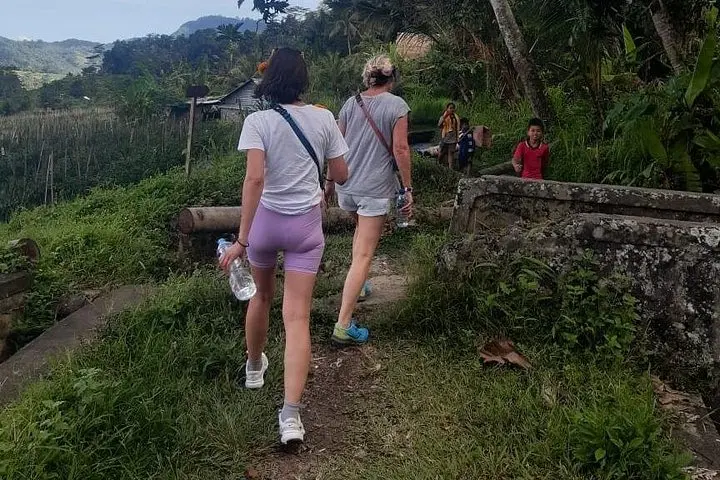
Practical guidance: go in the morning for softer light and cooler temperatures, wear sturdy shoes for muddy paths and uneven steps, and carry at least 1 liter of water for a short hike. Be aware of narrow paths and shared bridges with scooters; slow down and let locals pass. Carry small bills if you plan to buy snacks or visit a local home, and ask before photographing people at close range. Leave the terraces as you found them—this is working farmland, not a playground.
The guided walk is approximately 1 hour and rated easy—mostly gentle grades with some uneven sections and steps.
On clear days you’ll have views of Mount Agung from several vantage points; visibility depends on cloud and haze conditions.
Yes—it's suitable for families and older walkers who can manage uneven ground; supervise children near irrigation channels and bridges.
Yes—bring small bills for local purchases, tips, or entrance donations; most village vendors don’t accept cards.
Sidemen Guide Trekking and Scooter Tour operates guided outdoor trips and adventures with an emphasis on safety, stewardship, and memorable experiences.
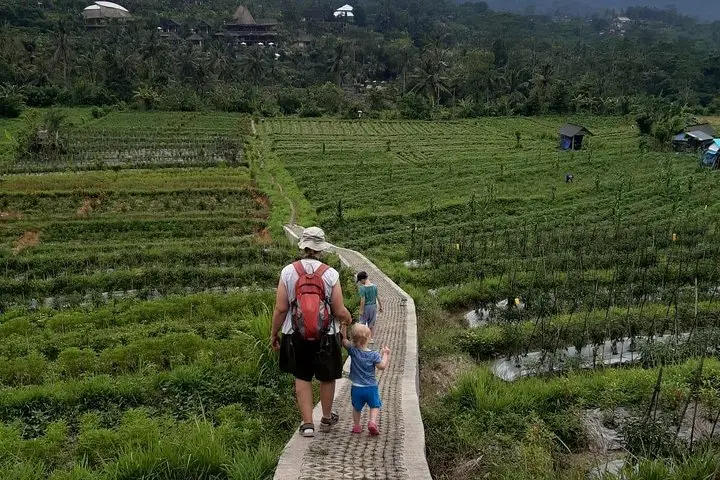

A low ridge trail opens onto green terraces that step down like deliberate stairs, and the air smells of wet earth and coconut smoke. You set off from the village market, passing a wooden bridge that locals and the occasional motorbike share; the irrigation channels murmur and seem to tug you along as much as you choose to go.
A low ridge trail opens onto green terraces that step down like deliberate stairs, and the air smells of wet earth and coconut smoke. You set off from the village market, passing a wooden bridge that locals and the occasional motorbike share; the irrigation channels murmur and seem to tug you along as much as you choose to go.
Sidemen sits on the eastern flank of Bali beneath the shadow of Mount Agung. The landscape is shaped by volcanic soils and human hands—centuries-old Subak irrigation patterns route water with geometric precision, producing the vivid rice terraces that define the valley. Temples and small family compounds crop up between paddies; you’ll see farmers planting, scything and tending fish in shallow channels, a living agricultural system rooted in Balinese Hindu practice and cooperative water management.
Geologically, the area is volcanic alluvium, giving the terraces their fertility and the hills their wraparound views of Mount Agung on clear mornings. Culturally, Sidemen is quieter than Ubud—markets, weaving workshops and temple shrines punctuate daily life rather than staged performances.
Practical guidance: go in the morning for softer light and cooler temperatures, wear sturdy shoes for muddy paths and uneven steps, and carry at least 1 liter of water for a short hike. Be aware of narrow paths and shared bridges with scooters; slow down and let locals pass. Carry small bills if you plan to buy snacks or visit a local home, and ask before photographing people at close range. Leave the terraces as you found them—this is working farmland, not a playground.