THE ADVENTURE COLLECTIVE® · Independent discovery and booking for outdoor travel

Three days of temples, markets and Tonle Sap’s floating villages — this guided private transfer from Phnom Penh stitches together Angkor’s major sites with offbeat local stops like Skun’s insect market. Expect sunrise crowds, humid heat and deep cultural context.
Three days of temples, markets and Tonle Sap’s floating villages — this guided private transfer from Phnom Penh stitches together Angkor’s major sites with offbeat local stops like Skun’s insect market. Expect sunrise crowds, humid heat and deep cultural context.
You step out of the air-conditioned van into a humid ribbon of countryside where rice paddies sway and the road smells faintly of dust and diesel. The journey from Phnom Penh to Siem Reap moves like a slow unveiling — villages, roadside markets and the occasional temple spire peeking above the palms — until the first stone faces of Angkor begin to appear.
Verified experiences and guided adventures in the surrounding area.
Operated by Simon Cambodia - Daily Tour · Siem Reap, Siem Reap Province
You step out of the air-conditioned van into a humid ribbon of countryside where rice paddies sway and the road smells faintly of dust and diesel. The journey from Phnom Penh to Siem Reap moves like a slow unveiling — villages, roadside markets and the occasional temple spire peeking above the palms — until the first stone faces of Angkor begin to appear.
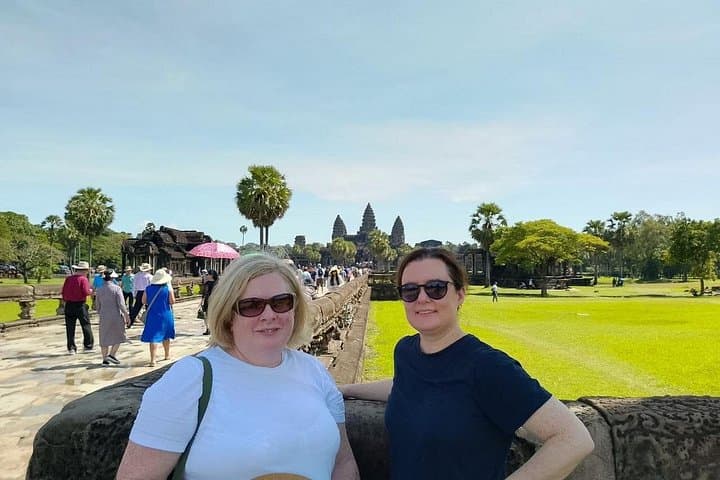
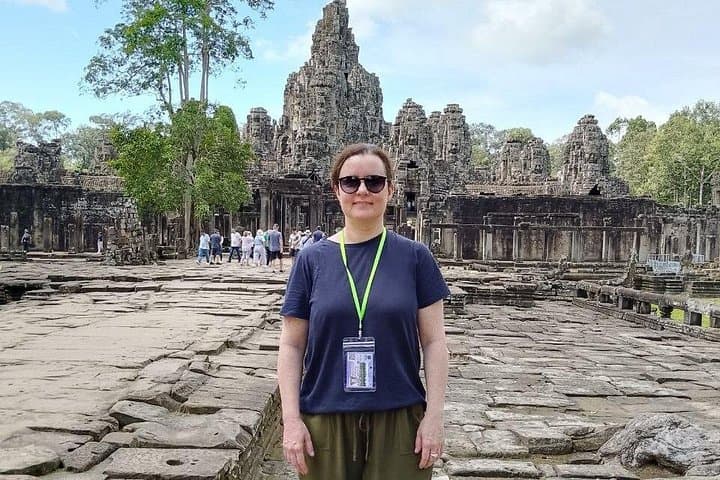
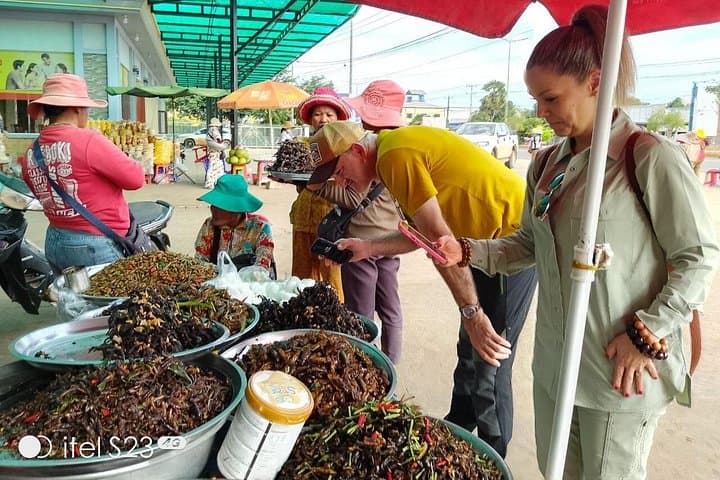
This three-day loop threads together Cambodia’s layered history: the Khmer Empire’s 9th–15th century engineering at Angkor Wat and Angkor Thom, the temple-forest romance of Ta Prohm where roots have taken on a life of their own, and the simpler, contemporary livelihoods at Skun’s insect market and Tonle Sap’s floating villages. Geologically, the temples sit on sandstone foundations with laterite cores, their bas-reliefs worn by tropical weather and human touch.
Culturally the trip is an immersion — local vendors, craft communities and fishermen whose calendars follow the lake’s seasonal pulse. Expect the tones of creaking boats and the calls of water birds; the lake itself swells and recedes each year, dictating how people live with the water.
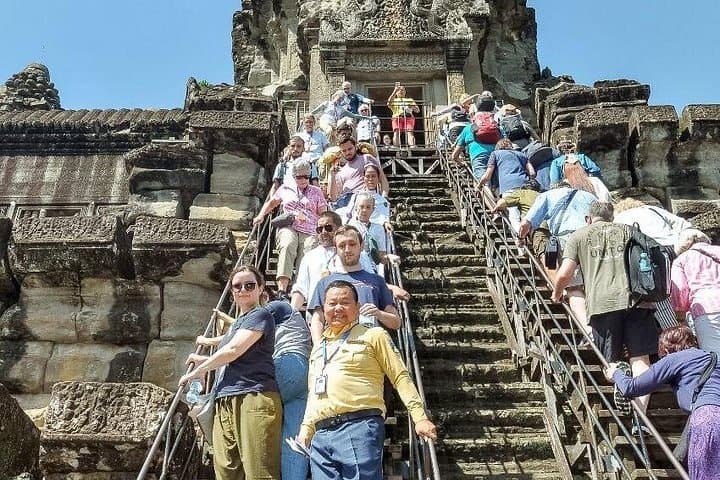
Practical guidance: buy your Angkor pass at the official center or arrange through your operator, start temple days before mid-morning heat, and bring breathable clothing that covers shoulders and knees for temple entry. Hydrate constantly, carry cash for small purchases and tip modestly for boat drivers and guides. For a smoother visit, arrive at Bakheng Hill early for sunset and use an English-speaking guide to navigate history, shortcuts and crowd patterns.
Yes — an Angkor pass is required for entry to the Angkor Archaeological Park; passes are sold at the official ticket center and come in 1-, 3- and 7-day options.
By road the transfer is typically 5–7 hours depending on traffic and stops; this tour includes an English-speaking driver and scheduled stops en route.
Yes, but the village’s appearance and boat access change with the lake’s seasonal levels — boats and boardwalks are more extensive during high-water months.
This itinerary usually includes 2 breakfasts and 2 nights at a 3-star hotel; check the operator’s inclusions for any additional meals or upgrades.
Simon Cambodia - Daily Tour operates guided outdoor trips and adventures with an emphasis on safety, stewardship, and memorable experiences.
You step out of the air-conditioned van into a humid ribbon of countryside where rice paddies sway and the road smells faintly of dust and diesel. The journey from Phnom Penh to Siem Reap moves like a slow unveiling — villages, roadside markets and the occasional temple spire peeking above the palms — until the first stone faces of Angkor begin to appear.
You step out of the air-conditioned van into a humid ribbon of countryside where rice paddies sway and the road smells faintly of dust and diesel. The journey from Phnom Penh to Siem Reap moves like a slow unveiling — villages, roadside markets and the occasional temple spire peeking above the palms — until the first stone faces of Angkor begin to appear.
This three-day loop threads together Cambodia’s layered history: the Khmer Empire’s 9th–15th century engineering at Angkor Wat and Angkor Thom, the temple-forest romance of Ta Prohm where roots have taken on a life of their own, and the simpler, contemporary livelihoods at Skun’s insect market and Tonle Sap’s floating villages. Geologically, the temples sit on sandstone foundations with laterite cores, their bas-reliefs worn by tropical weather and human touch.
Culturally the trip is an immersion — local vendors, craft communities and fishermen whose calendars follow the lake’s seasonal pulse. Expect the tones of creaking boats and the calls of water birds; the lake itself swells and recedes each year, dictating how people live with the water.
Practical guidance: buy your Angkor pass at the official center or arrange through your operator, start temple days before mid-morning heat, and bring breathable clothing that covers shoulders and knees for temple entry. Hydrate constantly, carry cash for small purchases and tip modestly for boat drivers and guides. For a smoother visit, arrive at Bakheng Hill early for sunset and use an English-speaking guide to navigate history, shortcuts and crowd patterns.