THE ADVENTURE COLLECTIVE® · Independent discovery and booking for outdoor travel

Cycle through shaded trails to reach Angkor Wat and the enigmatic Bayon on a relaxed 5‑hour guided ride. Learn Khmer history between pedals, enjoy quiet viewpoints, and visit lesser-known corners away from the main crowds.
Cycle through shaded trails to reach Angkor Wat and the enigmatic Bayon on a relaxed 5‑hour guided ride. Learn Khmer history between pedals, enjoy quiet viewpoints, and visit lesser-known corners away from the main crowds.
A single-speed wheel hums past temple moats as morning light throws long shadows across sandstone bas-reliefs. Cyclists thread quiet forest trails, palms and banyans leaning like curious spectators while macaques dart through the roadside trees. The ride moves at a deliberate, unhurried pace — a chance to approach Angkor Wat and the Bayon without crowds, guided narration spacing out history between pedal strokes.
Verified experiences and guided adventures in the surrounding area.
Operated by Passion Indochina Travel · Siem Reap, Siem Reap Province
A single-speed wheel hums past temple moats as morning light throws long shadows across sandstone bas-reliefs. Cyclists thread quiet forest trails, palms and banyans leaning like curious spectators while macaques dart through the roadside trees. The ride moves at a deliberate, unhurried pace — a chance to approach Angkor Wat and the Bayon without crowds, guided narration spacing out history between pedal strokes.
The Angkor complex was the heart of the Khmer Empire from the 9th to the 15th century; Angkor Wat’s five towers reflect Hindu cosmology, while Bayon’s 216 smiling faces were carved under King Jayavarman VII. Geologically, the temples sit on a low-lying alluvial plain fed by the Tonlé Sap system; seasonal floods shaped ancient water management that still frames the landscape. Locally, village life brushes the monuments — rice paddies, small markets, and monks in saffron provide cultural texture to the route.
Practical guidance: this is an easy, mostly flat 5-hour cycling tour suitable for casual riders. Expect compacted dirt lanes, paved service roads and occasional ruts; a well-maintained hybrid or mountain bike is supplied along with helmets and a guide. Start early to avoid midday heat and to catch the sculpted faces in crisp light. Dress respectfully for temple entry—shoulders and knees covered—and carry water, sun protection, and a light rain layer in wet months. Keep a steady cadence, lock your bike when stopping, and give space to local traffic and wildlife. The tour balances relaxed sightseeing with enough ground to feel like an active exploration of Angkor’s layered history and living landscape.
The tour is described as easy and relaxed, largely flat on compacted dirt and service roads; casual cyclists can expect a steady pace with frequent stops.
Admission is typically not included with many bike tours; check booking details and be prepared to purchase an Angkor pass at the official ticket center if required.
Shoulders and knees should be covered out of cultural respect and for access to inner temple areas — lightweight shawls or long shorts work well.
Early morning is best to avoid heat and crowds, and to see the carved faces of Bayon and the bas-reliefs in softer light.
Passion Indochina Travel operates guided outdoor trips and adventures with an emphasis on safety, stewardship, and memorable experiences.
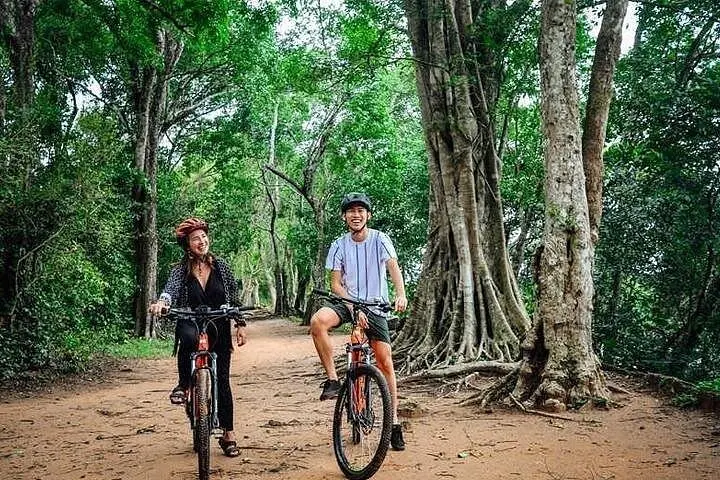
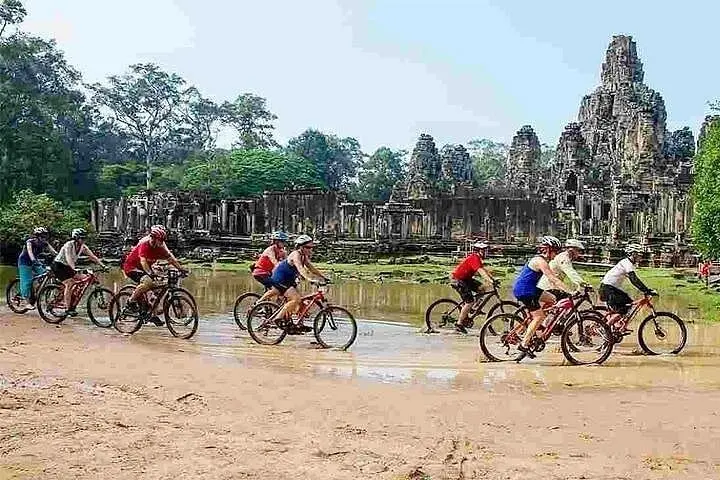
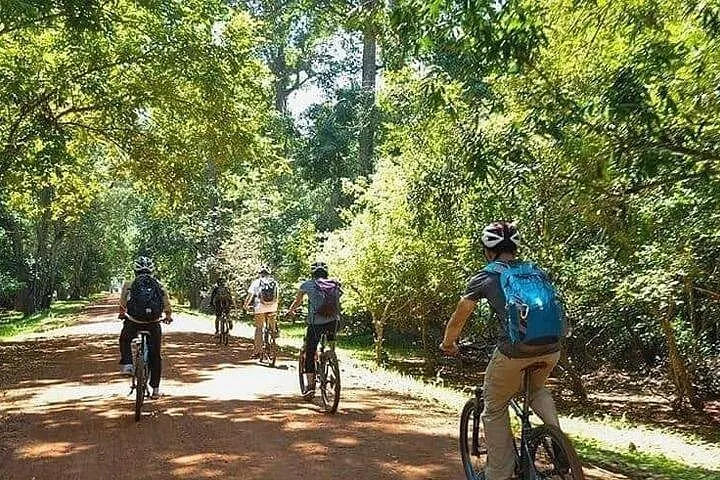
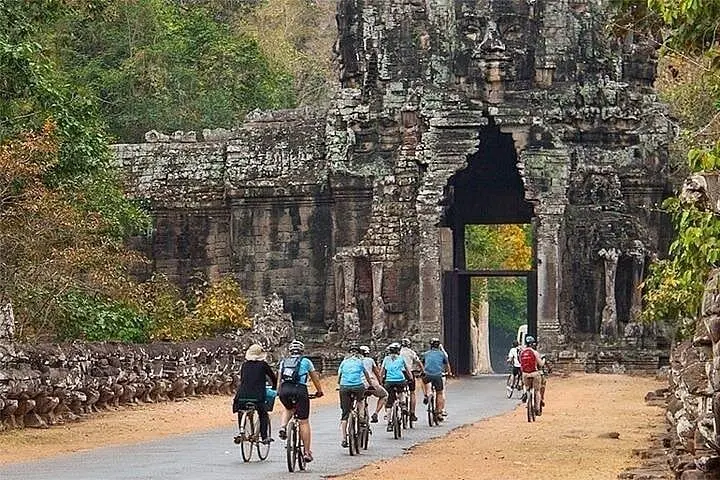
A single-speed wheel hums past temple moats as morning light throws long shadows across sandstone bas-reliefs. Cyclists thread quiet forest trails, palms and banyans leaning like curious spectators while macaques dart through the roadside trees. The ride moves at a deliberate, unhurried pace — a chance to approach Angkor Wat and the Bayon without crowds, guided narration spacing out history between pedal strokes.
A single-speed wheel hums past temple moats as morning light throws long shadows across sandstone bas-reliefs. Cyclists thread quiet forest trails, palms and banyans leaning like curious spectators while macaques dart through the roadside trees. The ride moves at a deliberate, unhurried pace — a chance to approach Angkor Wat and the Bayon without crowds, guided narration spacing out history between pedal strokes.
The Angkor complex was the heart of the Khmer Empire from the 9th to the 15th century; Angkor Wat’s five towers reflect Hindu cosmology, while Bayon’s 216 smiling faces were carved under King Jayavarman VII. Geologically, the temples sit on a low-lying alluvial plain fed by the Tonlé Sap system; seasonal floods shaped ancient water management that still frames the landscape. Locally, village life brushes the monuments — rice paddies, small markets, and monks in saffron provide cultural texture to the route.
Practical guidance: this is an easy, mostly flat 5-hour cycling tour suitable for casual riders. Expect compacted dirt lanes, paved service roads and occasional ruts; a well-maintained hybrid or mountain bike is supplied along with helmets and a guide. Start early to avoid midday heat and to catch the sculpted faces in crisp light. Dress respectfully for temple entry—shoulders and knees covered—and carry water, sun protection, and a light rain layer in wet months. Keep a steady cadence, lock your bike when stopping, and give space to local traffic and wildlife. The tour balances relaxed sightseeing with enough ground to feel like an active exploration of Angkor’s layered history and living landscape.