THE ADVENTURE COLLECTIVE® · Independent discovery and booking for outdoor travel

Trade temple crowds for rice-field tracks on a quad and Jeep tour that visits local markets, family homes where Khmer noodles are made, and ends with a Tonlé Sap sunset boat ride. Expect dusty tracks, hands-on cultural moments, and a calm lakeside finish.
Trade temple crowds for rice-field tracks on a quad and Jeep tour that visits local markets, family homes where Khmer noodles are made, and ends with a Tonlé Sap sunset boat ride. Expect dusty tracks, hands-on cultural moments, and a calm lakeside finish.
Dust lifts behind the quad as you leave Siem Reap’s roadside bustle and enter a pattern of rice paddies, palms and lotus ponds. The track winds between wooden stilt houses; children wave and water buffalo graze in slow concentration. By midafternoon the air tastes of earth and frying noodles as you stop at a village kitchen to watch—and try—hand-pulled Khmer noodles.
Verified experiences and guided adventures in the surrounding area.
Operated by Travel to Inspire · Siem Reap, Siem Reap Province
Dust lifts behind the quad as you leave Siem Reap’s roadside bustle and enter a pattern of rice paddies, palms and lotus ponds. The track winds between wooden stilt houses; children wave and water buffalo graze in slow concentration. By midafternoon the air tastes of earth and frying noodles as you stop at a village kitchen to watch—and try—hand-pulled Khmer noodles.
This route threads living history: irrigation barays first built by Angkor rulers shape the landscape, and Baray Teuk Kla remains a working reservoir and local hub. Geologically the region sits on flat alluvial plains fed by the Mekong and Tonlé Sap, which reverses flow seasonally and swells the lakeshore communities. Culturally, the ride is less about monuments and more about routine—market trade, rice planting, and communal boat traffic at dusk.
Expect a mix of dirt tracks, packed-earth service roads and short paved stretches; the final leg opens onto Tonlé Sap where a short boat ride delivers the sunset—fishermen returning, floating houses shifting with the light. Riders should be comfortable on variable terrain and ready for dust, heat and intermittent bumps.
Practical notes: wear closed-toe shoes, bring sun protection and a light waterproof layer for sudden rains during the wet season. Hydrate frequently; guides supply mineral water and helmets. Pickup from central Siem Reap is typically included, and the full excursion runs about five hours—enough time to move from market colors to lakeside gold.
No—most operators provide a brief safety briefing and basic instruction; prior riding experience helps but is not required.
Yes; the tour typically includes pickup and drop-off from central Siem Reap hotels—confirm your pickup point when booking.
Policies vary by provider; many set minimum age limits and require children to ride with an adult—check booking requirements.
Light rain often doesn’t cancel the trip; guides may adapt the route and provide waterproof options, but confirm the operator’s weather policy before departure.
Travel to Inspire operates guided outdoor trips and adventures with an emphasis on safety, stewardship, and memorable experiences.
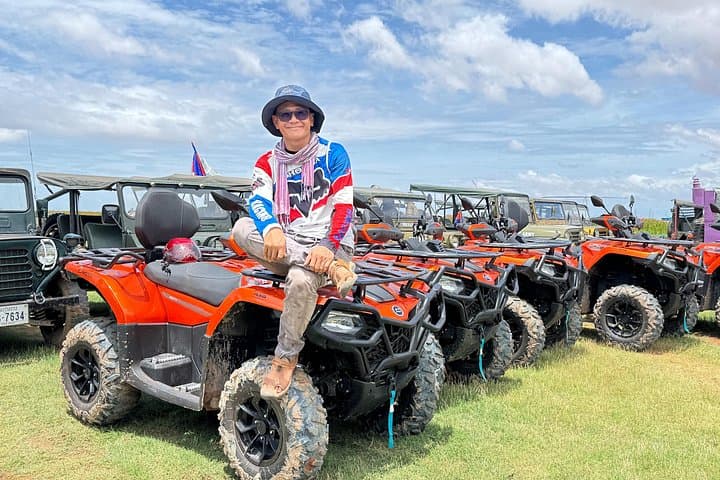


Dust lifts behind the quad as you leave Siem Reap’s roadside bustle and enter a pattern of rice paddies, palms and lotus ponds. The track winds between wooden stilt houses; children wave and water buffalo graze in slow concentration. By midafternoon the air tastes of earth and frying noodles as you stop at a village kitchen to watch—and try—hand-pulled Khmer noodles.
Dust lifts behind the quad as you leave Siem Reap’s roadside bustle and enter a pattern of rice paddies, palms and lotus ponds. The track winds between wooden stilt houses; children wave and water buffalo graze in slow concentration. By midafternoon the air tastes of earth and frying noodles as you stop at a village kitchen to watch—and try—hand-pulled Khmer noodles.
This route threads living history: irrigation barays first built by Angkor rulers shape the landscape, and Baray Teuk Kla remains a working reservoir and local hub. Geologically the region sits on flat alluvial plains fed by the Mekong and Tonlé Sap, which reverses flow seasonally and swells the lakeshore communities. Culturally, the ride is less about monuments and more about routine—market trade, rice planting, and communal boat traffic at dusk.
Expect a mix of dirt tracks, packed-earth service roads and short paved stretches; the final leg opens onto Tonlé Sap where a short boat ride delivers the sunset—fishermen returning, floating houses shifting with the light. Riders should be comfortable on variable terrain and ready for dust, heat and intermittent bumps.
Practical notes: wear closed-toe shoes, bring sun protection and a light waterproof layer for sudden rains during the wet season. Hydrate frequently; guides supply mineral water and helmets. Pickup from central Siem Reap is typically included, and the full excursion runs about five hours—enough time to move from market colors to lakeside gold.