THE ADVENTURE COLLECTIVE® · Independent discovery and booking for outdoor travel

A full-day private tour that pairs Beng Mealea’s jungle-swallowed ruins with the remote grandeur of Koh Ker—both set east of Angkor and rich in 10th-century history. Expect uneven terrain, a long day on the road, and rare quiet at two atmospheric Khmer sites.
A full-day private tour that pairs Beng Mealea’s jungle-swallowed ruins with the remote grandeur of Koh Ker—both set east of Angkor and rich in 10th-century history. Expect uneven terrain, a long day on the road, and rare quiet at two atmospheric Khmer sites.
The morning light pours across cracked sandstone and braided tree roots as your air-conditioned vehicle drops you onto an overgrown causeway. Here at Beng Mealea the jungle pushes back like an impatient guest, trunks and vines daring you to climb over low walls and peer into collapsed galleries.
Verified experiences and guided adventures in the surrounding area.
Operated by Siem Reap Experience · Siem Reap, Siem Reap Province
The morning light pours across cracked sandstone and braided tree roots as your air-conditioned vehicle drops you onto an overgrown causeway. Here at Beng Mealea the jungle pushes back like an impatient guest, trunks and vines daring you to climb over low walls and peer into collapsed galleries.
Both sites sit on the eastern edge of the Angkorian world: Beng Mealea’s ruined corridors, strewn with moss-covered blocks, give the feel of a lost city reclaimed by the forest, while Koh Ker—briefly the Khmer capital in the 10th century—rises with a different authority in its stepped-prasat and monumental lintels.
Geology is plain in the stone: coarse sandstone quarried and carved, weathering to warm ochres that darken with rain. The culture here is unmistakable—Apsara reliefs, laterite platforms, nearby villages where daily life continues largely unchanged. Recent conservation efforts include periodic reflooding of ancient barays to restore hydrology and stabilize foundations.
Practical guidance: this private, full-day itinerary runs about seven hours including drives; expect roughly 60–90 minutes of walking at each temple on uneven, slippery surfaces and tree-entangled rubble. Admission is not included—bring cash or arrange passes in advance—and wear grippy shoes, long sleeves to guard from sun and insects, and a light daypack. Hydration matters: carry at least 1.5–2 liters; cold water and towels may be provided in-vehicle. Early starts cut the heat and crowds; steady, careful footing rewards you with quiet corners and photographic angles few visitors see.
No—admission is not included in the tour price; pay local site fees or arrange passes through your operator before departure.
Beng Mealea and Koh Ker are each about 60–90 minutes to two hours from Siem Reap depending on traffic and road conditions; the full itinerary is roughly a seven-hour day.
The tour provider notes infants must sit on laps; uneven terrain and climbing make supervision necessary for young children.
Yes—private tours typically allow unhurried exploration, but expect guided segments and limited on-site facilities; bring essentials and allow time for photography and short walks.
Siem Reap Experience operates guided outdoor trips and adventures with an emphasis on safety, stewardship, and memorable experiences.
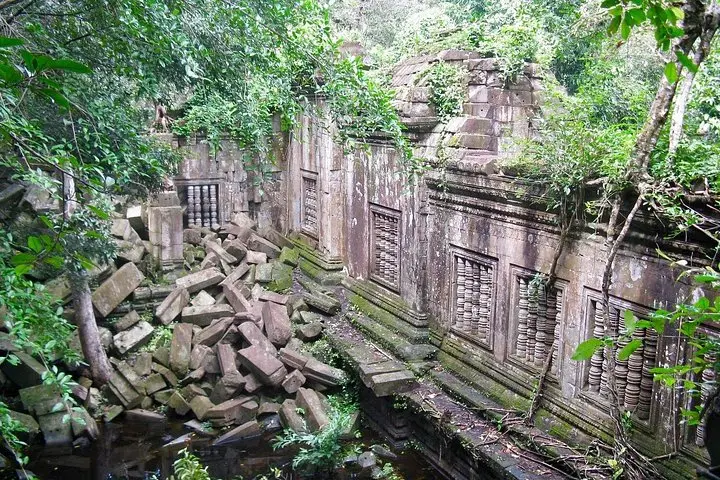
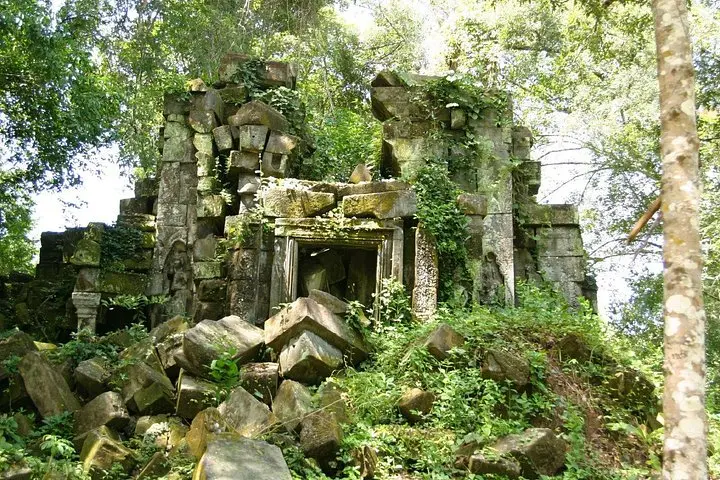
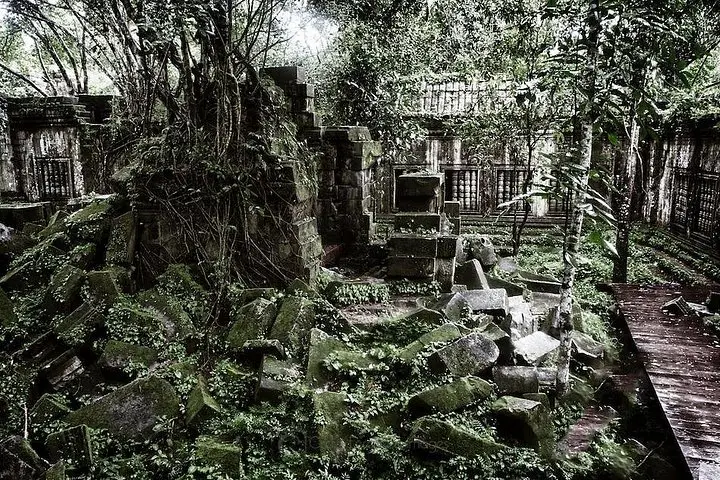
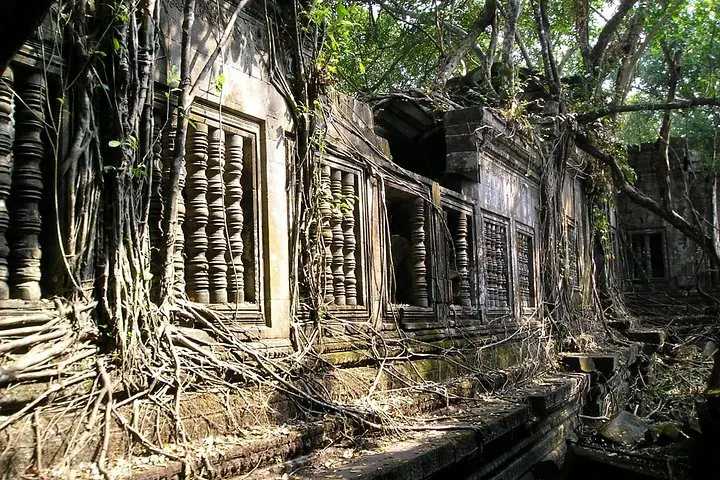
The morning light pours across cracked sandstone and braided tree roots as your air-conditioned vehicle drops you onto an overgrown causeway. Here at Beng Mealea the jungle pushes back like an impatient guest, trunks and vines daring you to climb over low walls and peer into collapsed galleries.
The morning light pours across cracked sandstone and braided tree roots as your air-conditioned vehicle drops you onto an overgrown causeway. Here at Beng Mealea the jungle pushes back like an impatient guest, trunks and vines daring you to climb over low walls and peer into collapsed galleries.
Both sites sit on the eastern edge of the Angkorian world: Beng Mealea’s ruined corridors, strewn with moss-covered blocks, give the feel of a lost city reclaimed by the forest, while Koh Ker—briefly the Khmer capital in the 10th century—rises with a different authority in its stepped-prasat and monumental lintels.
Geology is plain in the stone: coarse sandstone quarried and carved, weathering to warm ochres that darken with rain. The culture here is unmistakable—Apsara reliefs, laterite platforms, nearby villages where daily life continues largely unchanged. Recent conservation efforts include periodic reflooding of ancient barays to restore hydrology and stabilize foundations.
Practical guidance: this private, full-day itinerary runs about seven hours including drives; expect roughly 60–90 minutes of walking at each temple on uneven, slippery surfaces and tree-entangled rubble. Admission is not included—bring cash or arrange passes in advance—and wear grippy shoes, long sleeves to guard from sun and insects, and a light daypack. Hydration matters: carry at least 1.5–2 liters; cold water and towels may be provided in-vehicle. Early starts cut the heat and crowds; steady, careful footing rewards you with quiet corners and photographic angles few visitors see.