THE ADVENTURE COLLECTIVE® · Independent discovery and booking for outdoor travel

Spend a focused half-day in Siem Reap with an English-speaking driver to visit Wat Thmey (killing fields), the war museum, artisan workshops, a Buddhist pagoda and the old market. This private 4–5 hour tour offers contextual history and local insights beyond the Angkor temples.
Spend a focused half-day in Siem Reap with an English-speaking driver to visit Wat Thmey (killing fields), the war museum, artisan workshops, a Buddhist pagoda and the old market. This private 4–5 hour tour offers contextual history and local insights beyond the Angkor temples.
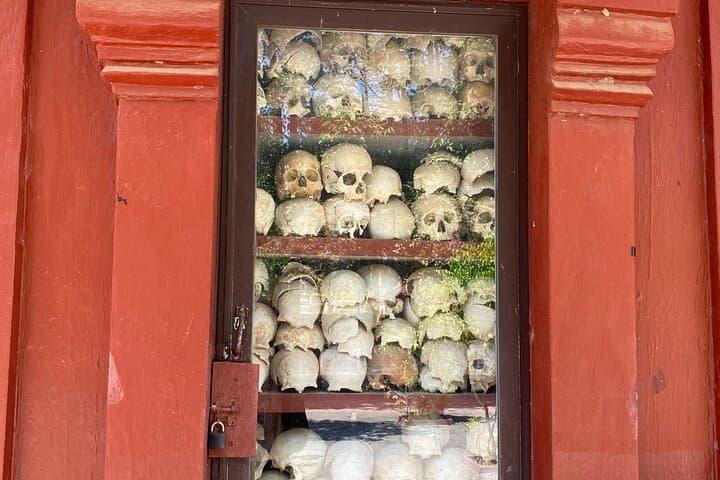
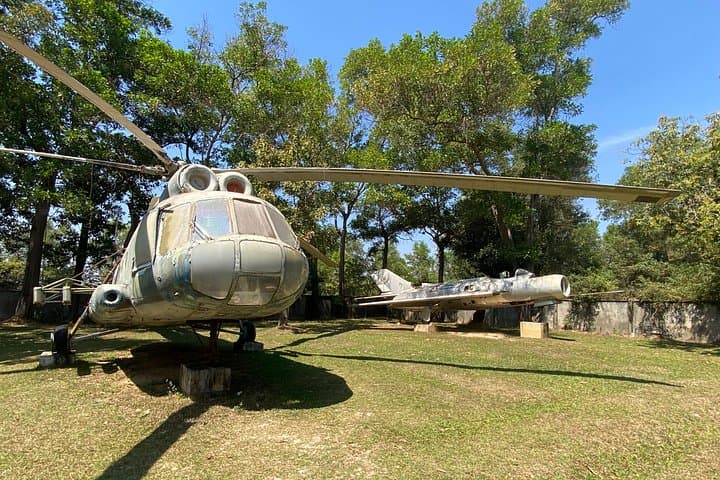
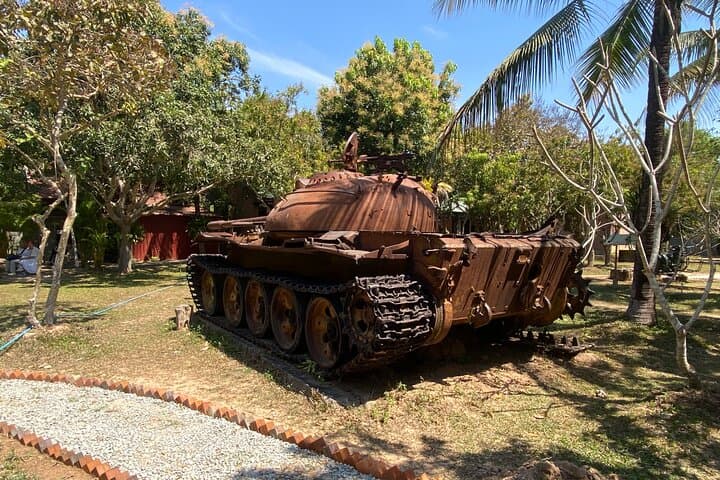
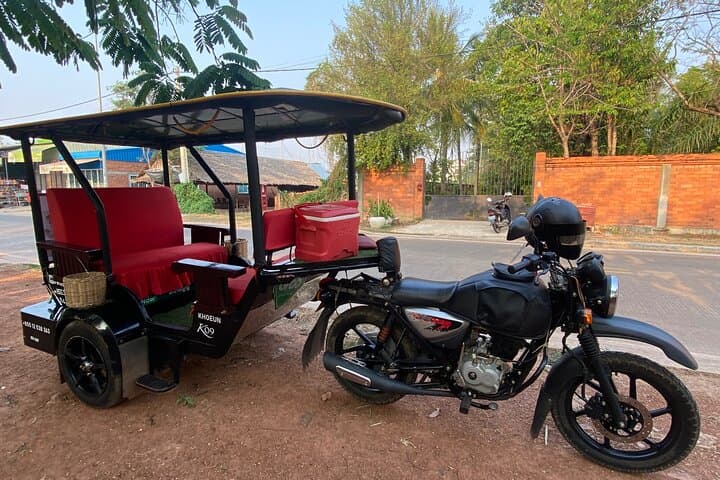
The tuk‑tuk rolls away from the hotel into humid morning light and Siem Reap opens like a map of stories — a temple-laden skyline traded for low-slung pagodas, street markets and memorials that insist you look. Your English-speaking driver threads quiet lanes, pausing where concrete meets memory: a provincial killing field, a war museum, then the softer commerce of artisans and the steady pulse of the old market.
Verified experiences and guided adventures in the surrounding area.
Operated by Siem Reap Locals · Siem Reap, Siem Reap Province
The tuk‑tuk rolls away from the hotel into humid morning light and Siem Reap opens like a map of stories — a temple-laden skyline traded for low-slung pagodas, street markets and memorials that insist you look. Your English-speaking driver threads quiet lanes, pausing where concrete meets memory: a provincial killing field, a war museum, then the softer commerce of artisans and the steady pulse of the old market.
The tour balances recent history with living culture. Wat Thmey (the local killing field) and the nearby war exhibits chronicle the Khmer Rouge era—harsh, recent, and essential to understand Cambodia’s revival. Geologically the region is flat red-alluvial plain fed by the Tonle Sap basin, so expect little elevation change; culturally, Siem Reap is both Angkor’s gateway and a working Cambodian city where Buddhist rituals and market bargaining continue daily.
Practical guidance: the experience runs about 4–5 hours with short walks (roughly 1–3 km on mixed paved and dusty surfaces). Wear lightweight long sleeves for sun and respectful dress at memorials and temples; comfortable walking shoes handle uneven temple approaches and market alleys. Bring water — the tour includes bottled water — and keep photography considerate at memorial sites. Timing matters: mornings are cooler and quieter; late afternoons bring market activity and softer light for photos.
This private format with hotel pickup makes the itinerary flexible: more time at a museum, a longer stop with an artisan, or extra moments at the riverside. It’s a grounded half-day that reframes Siem Reap beyond Angkor: history, craft, and the city’s daily rhythms all in one route.
Admissions are typically not included for memorials and some private museums; confirm with the provider — the tour description notes some stops have separate fees.
Yes — this is a private tour with tuk‑tuk transport and an English-speaking driver who stays with you; timing is flexible within the 4–5 hour window.
The tour is rated physically easy and is suitable for most ages, but memorial content can be intense for young children and emotional for some visitors.
Private format allows adjustments; tell your driver or the booking operator in advance if you want longer time at a museum or a specific artisan workshop.
Siem Reap Locals operates guided outdoor trips and adventures with an emphasis on safety, stewardship, and memorable experiences.
The tuk‑tuk rolls away from the hotel into humid morning light and Siem Reap opens like a map of stories — a temple-laden skyline traded for low-slung pagodas, street markets and memorials that insist you look. Your English-speaking driver threads quiet lanes, pausing where concrete meets memory: a provincial killing field, a war museum, then the softer commerce of artisans and the steady pulse of the old market.
The tuk‑tuk rolls away from the hotel into humid morning light and Siem Reap opens like a map of stories — a temple-laden skyline traded for low-slung pagodas, street markets and memorials that insist you look. Your English-speaking driver threads quiet lanes, pausing where concrete meets memory: a provincial killing field, a war museum, then the softer commerce of artisans and the steady pulse of the old market.
The tour balances recent history with living culture. Wat Thmey (the local killing field) and the nearby war exhibits chronicle the Khmer Rouge era—harsh, recent, and essential to understand Cambodia’s revival. Geologically the region is flat red-alluvial plain fed by the Tonle Sap basin, so expect little elevation change; culturally, Siem Reap is both Angkor’s gateway and a working Cambodian city where Buddhist rituals and market bargaining continue daily.
Practical guidance: the experience runs about 4–5 hours with short walks (roughly 1–3 km on mixed paved and dusty surfaces). Wear lightweight long sleeves for sun and respectful dress at memorials and temples; comfortable walking shoes handle uneven temple approaches and market alleys. Bring water — the tour includes bottled water — and keep photography considerate at memorial sites. Timing matters: mornings are cooler and quieter; late afternoons bring market activity and softer light for photos.
This private format with hotel pickup makes the itinerary flexible: more time at a museum, a longer stop with an artisan, or extra moments at the riverside. It’s a grounded half-day that reframes Siem Reap beyond Angkor: history, craft, and the city’s daily rhythms all in one route.