THE ADVENTURE COLLECTIVE® · Independent discovery and booking for outdoor travel

Watch the sun lift over Angkor Wat with a small-group guide, then explore Angkor Thom, Ta Prohm and Banteay Kdei. This early-start tour pairs quiet morning light with expert local context—ideal for photographers and history-minded travelers.
Watch the sun lift over Angkor Wat with a small-group guide, then explore Angkor Thom, Ta Prohm and Banteay Kdei. This early-start tour pairs quiet morning light with expert local context—ideal for photographers and history-minded travelers.
Before dawn the causeway feels like a drawn breath: low light against the three-tiered silhouette of Angkor Wat, mirrored in the still pool and punctured by birdsong. Your small-group guide positions you, the air cooling the heat of the coming day, as the first sun edges over carved towers and bas-reliefs come alive in ochre and shadow.
Verified experiences and guided adventures in the surrounding area.
Operated by Siem Reap Experience · Siem Reap, Siem Reap Province
Before dawn the causeway feels like a drawn breath: low light against the three-tiered silhouette of Angkor Wat, mirrored in the still pool and punctured by birdsong. Your small-group guide positions you, the air cooling the heat of the coming day, as the first sun edges over carved towers and bas-reliefs come alive in ochre and shadow.
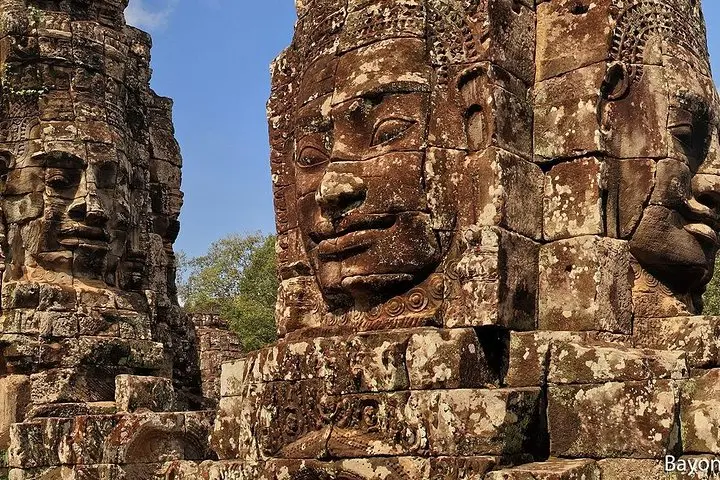
Angkor Wat was raised in the early 12th century by King Suryavarman II as a Hindu temple to Vishnu and later became a Buddhist pilgrimage site—its sandstone galleries and laterite foundations speak to Khmer engineering and a landscape shaped by monsoon rhythms and ancient river systems. The complex’s geology—soft sandstone layered over tougher laterite—explains the rounded faces and worn stairways you’ll climb.
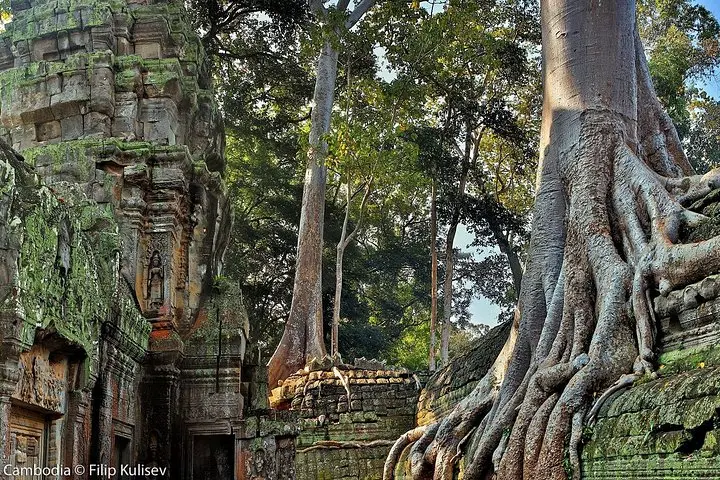
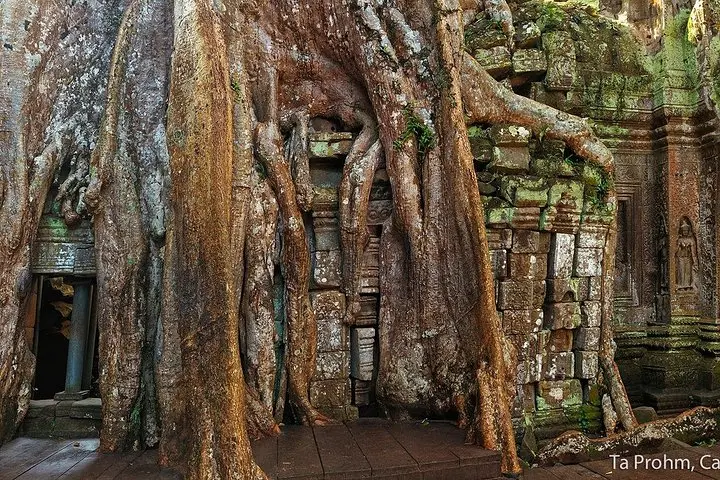
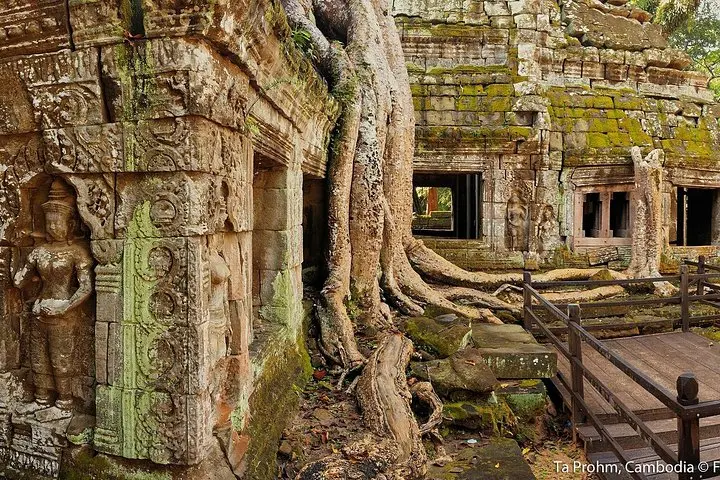
Culturally, the site is both national symbol and sacred place; local guides read inscriptions, point out apsara dancers in relief and explain how waterways once supported city-scale irrigation. Ta Prohm’s strangler figs will grab your attention—roots push and pry, giving the jungle a voice.
Practical notes: tours start well before sunrise (hotel pickup around 4:45 a.m.), and the Angkor Pass is not included—buy a pass at the ticket center in Siem Reap ahead of time. Wear breathable, respectful clothing that covers shoulders and knees; footwear should handle uneven stone and damp reflection pools. Bring a refillable water bottle, sun protection, and a small daypack for a camera, light snack, and cash for lunch. Expect about eight hours of gentle walking with stairs and patches of loose stone; your guide times stops for photos, shade and cultural context so you see Angkor’s landmark temples—Angkor Wat, Angkor Thom, Ta Prohm and Banteay Kdei—while avoiding the worst of the midday heat.
No—this tour does not include the Angkor Archaeological Park pass; purchase single-day or multi-day passes at the official ticket center in Siem Reap before entry.
Pickup is typically around 4:45 a.m. for sunrise viewing; the full shared tour runs about eight hours with breaks for lunch and photos.
Yes, infants are allowed but must sit on an adult’s lap; the tour is suitable for all fitness levels but includes stairs and uneven surfaces.
Drone use is restricted and generally prohibited within the Angkor Archaeological Park without special permits—check APSARA Authority rules before planning aerial shots.
Siem Reap Experience operates guided outdoor trips and adventures with an emphasis on safety, stewardship, and memorable experiences.
Before dawn the causeway feels like a drawn breath: low light against the three-tiered silhouette of Angkor Wat, mirrored in the still pool and punctured by birdsong. Your small-group guide positions you, the air cooling the heat of the coming day, as the first sun edges over carved towers and bas-reliefs come alive in ochre and shadow.
Before dawn the causeway feels like a drawn breath: low light against the three-tiered silhouette of Angkor Wat, mirrored in the still pool and punctured by birdsong. Your small-group guide positions you, the air cooling the heat of the coming day, as the first sun edges over carved towers and bas-reliefs come alive in ochre and shadow.
Angkor Wat was raised in the early 12th century by King Suryavarman II as a Hindu temple to Vishnu and later became a Buddhist pilgrimage site—its sandstone galleries and laterite foundations speak to Khmer engineering and a landscape shaped by monsoon rhythms and ancient river systems. The complex’s geology—soft sandstone layered over tougher laterite—explains the rounded faces and worn stairways you’ll climb.
Culturally, the site is both national symbol and sacred place; local guides read inscriptions, point out apsara dancers in relief and explain how waterways once supported city-scale irrigation. Ta Prohm’s strangler figs will grab your attention—roots push and pry, giving the jungle a voice.
Practical notes: tours start well before sunrise (hotel pickup around 4:45 a.m.), and the Angkor Pass is not included—buy a pass at the ticket center in Siem Reap ahead of time. Wear breathable, respectful clothing that covers shoulders and knees; footwear should handle uneven stone and damp reflection pools. Bring a refillable water bottle, sun protection, and a small daypack for a camera, light snack, and cash for lunch. Expect about eight hours of gentle walking with stairs and patches of loose stone; your guide times stops for photos, shade and cultural context so you see Angkor’s landmark temples—Angkor Wat, Angkor Thom, Ta Prohm and Banteay Kdei—while avoiding the worst of the midday heat.